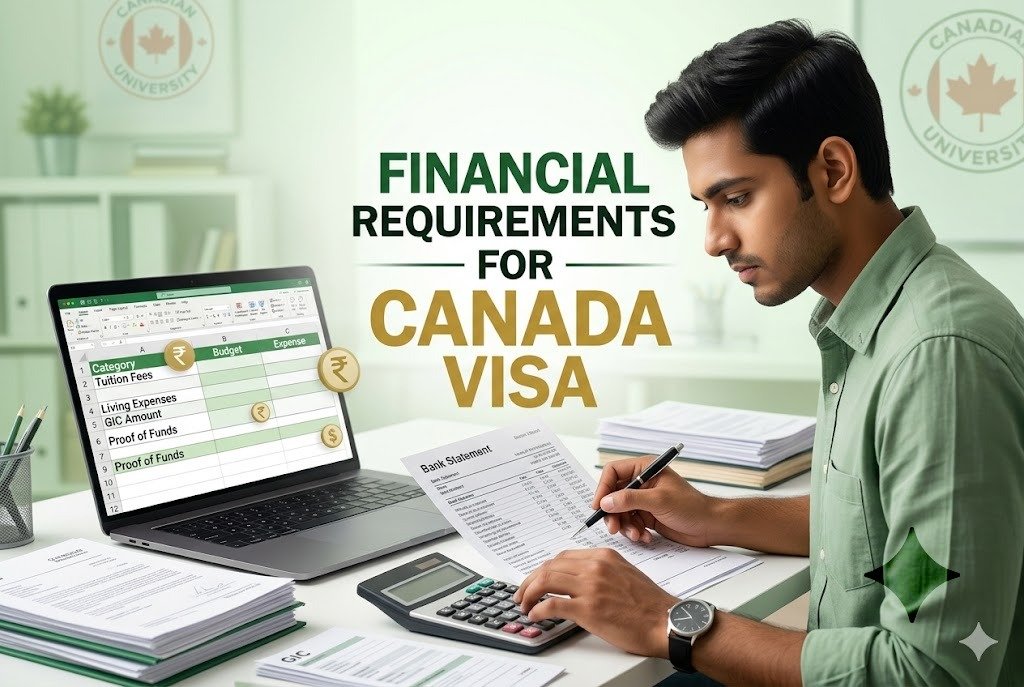
Canada remains one of the top study destinations for international students because of its globally recognized education system, strong career opportunities, and immigration pathways. However, before receiving a Canadian study permit, students must prove they have enough financial resources to support themselves during their studies. Understanding the complete structure of Canada student visa funds is extremely important for students planning to study in Canada in 2026.
Canadian immigration authorities carefully evaluate financial documents to ensure students can manage tuition fees, living expenses, housing, transportation, and other daily costs without financial instability. Financial proof is one of the most important parts of the visa process, and many applications are rejected because of weak or unclear financial documentation.
According to the official Government of Canada immigration guidelines, students must demonstrate sufficient funds for tuition, living expenses, and transportation costs. (Canada)
Why Financial Proof Is Important for Canada Student Visa
The Canadian government wants to ensure international students can live and study in Canada comfortably without depending entirely on part-time work.
Visa officers evaluate:
Tuition affordability
Living expense coverage
Financial stability of sponsors
Source of funds
Consistency of bank transactions
Long-term financial planning
Strong financial documentation significantly improves visa approval chances.
Minimum Funds Required for Canada Student Visa (2026)
Students must show proof of:
First-year tuition fees
Living expenses
Transportation costs
Additional funds for accompanying family members if applicable
As per updated IRCC guidelines for applications after September 1, 2025, a single student outside Quebec must show at least CAD 22,895 for living expenses alone, excluding tuition and travel costs. (Canada)
Estimated Financial Requirement Breakdown
Expense Category
Approximate Amount
Living expenses
CAD 22,895
Tuition fees
CAD 15,000–45,000+
Air travel & setup
CAD 2,000–5,000
Health insurance
CAD 600–1,200
Emergency buffer
Recommended additional savings
Students applying with family members must show higher financial amounts depending on family size. (Canada)
What Is Proof of Funds?
Proof of funds refers to documents showing that students or sponsors genuinely possess enough money for education and living expenses.
Accepted proof includes:
Bank statements
GIC certificates
Education loans
Scholarship letters
Tuition fee receipts
Sponsor financial documents
Income tax returns
Salary slips
Visa officers carefully verify the authenticity and consistency of these documents.
Guaranteed Investment Certificate (GIC)
A Guaranteed Investment Certificate is one of the strongest forms of financial proof for Canadian student visas. Students transfer money into a Canadian bank account before traveling to Canada.
Benefits of GIC:
Strong financial credibility
Safer proof of funds
Monthly fund release after arrival
Simplifies financial verification
Many banks such as Scotiabank, CIBC, RBC, and TD offer student GIC programs. (Collegedunia)
The GIC amount commonly required for a single student in 2026 is around CAD 22,895 for living expenses. (Canada)
Bank Statements and Savings
Students can also show financial proof using personal or sponsor bank statements.
Important guidelines:
Maintain stable balances for at least 4 months
Avoid sudden large deposits without explanation
Show consistent financial history
Include supporting income documents
IRCC carefully reviews transaction history to identify suspicious or temporary fund arrangements. (Canada)
Education Loans for Canada Visa
Education loans from recognized banks are accepted as financial proof for Canada student visas.
Loan documents should clearly mention:
Approved loan amount
Student name
Disbursement details
Bank authorization
Education loans are common among Indian students because Canadian education costs can be high.
Sponsorship by Parents or Relatives
Parents commonly sponsor students studying in Canada.
Required sponsor documents usually include:
Sponsorship letter or affidavit
Bank statements
Salary slips
Income tax returns
Employment proof
Asset documents if applicable
Visa officers evaluate whether sponsors genuinely have stable financial capacity.
Tuition Fee Payment Proof
Students are strongly advised to pay at least part of their tuition fees before visa application.
Accepted tuition proof:
Official tuition receipt
Payment confirmation letter
Bank transfer proof
University invoice showing payment status
Prepaid tuition often strengthens the financial profile because it demonstrates commitment and preparedness. (Canada)
Financial Requirements for Students With Family
Students bringing spouses or children must show additional funds.
Approximate living expense requirements:
Student + 1 family member: CAD 28,502
Student + 2 family members: CAD 35,040
Student + 3 family members: CAD 42,543
These amounts exclude tuition and transportation costs. (Canada)
Common Financial Documents Required
Students usually need:
Passport
Letter of Acceptance (LOA)
Bank statements
GIC certificate
Tuition payment receipts
Education loan sanction letter
Sponsor documents
Income tax returns
Affidavit of support
Proper organization of documents improves visa processing efficiency.
How Visa Officers Evaluate Financial Documents
Visa officers do not only check total money amounts. They also analyze:
Source of funds
Financial consistency
Sponsor credibility
Family income stability
Tuition affordability
Long-term study affordability
Students must clearly demonstrate they can complete their studies without financial difficulties.
Common Financial Mistakes Leading to Visa Refusal
Many visa refusals happen because of avoidable financial mistakes.
Common issues include:
Sudden unexplained bank deposits
Insufficient proof of income
Fake financial documents
Weak sponsor profile
Inconsistent financial history
Insufficient funds beyond minimum requirement
Reddit discussions from study permit applicants also highlight that showing only minimum funds without strong supporting documentation may increase refusal risks. (Reddit)
Latest Trends in Canada Student Visa Financial Requirements (2026)
Increase in Minimum Living Expense Requirements
Canada has increased proof-of-funds requirements because of rising housing, transportation, and food costs. Students applying after September 2025 now need to show significantly higher living expense amounts compared to previous years. (Canada)
Stronger Scrutiny of Financial Documents
Visa officers are now examining bank statements, sponsorships, and fund sources more carefully due to increasing fraud concerns. Sudden deposits and unclear transactions can create major problems during visa evaluation. (Collegedunia)
GIC Becoming More Important for Visa Approval
Many students increasingly use GIC accounts because they provide stronger proof of accessible living funds. Students and immigration communities frequently recommend combining tuition payment proof with GIC documentation for stronger applications. (Reddit)
Rising Focus on Long-Term Financial Planning
IRCC increasingly expects students to explain how they will financially support multi-year programs instead of showing only first-year expenses. Stable sponsor income and long-term funding plans are becoming more important. (Canada)
Increased Financial Pressure in Major Cities
Students studying in Toronto and Vancouver often require higher actual living budgets than official minimum amounts because of expensive housing markets and rising living costs. Many immigration discussions emphasize maintaining additional savings above minimum requirements. (Reddit)
More Students Using Education Loans and Multiple Sponsors
Students increasingly combine education loans, sponsor support, scholarships, and GIC accounts to strengthen financial profiles and reduce rejection risks.
Expert Insight: Why Financial Planning Matters More Than Ever
Immigration experts suggest that financial preparation is one of the most critical aspects of a successful Canada student visa application. Visa officers want evidence that students can remain financially stable throughout their academic journey.
Experts recommend:
Maintaining stable bank balances
Avoiding last-minute fund transfers
Paying tuition early if possible
Combining GIC with sponsor documents
Keeping financial documentation transparent and organized
Students who prepare finances several months in advance generally build much stronger applications.
Real-Life Example
Aman from Hyderabad received admission to a postgraduate diploma program in Ontario. Initially, his visa consultant suggested showing only minimum bank balance requirements. However, Aman improved his application by paying partial tuition fees, opening a GIC account, attaching his father’s salary documents, and showing stable four-month bank statements.
His visa application was later approved smoothly because his financial profile appeared organized, transparent, and reliable.
Pros and Cons of Canada Student Visa Financial Requirements
Financial requirements for Canada student visas have become more detailed and stricter in 2026 because of rising living costs and increased visa scrutiny. Students must now demonstrate strong financial planning, transparent documentation, and realistic long-term affordability.
Those who carefully prepare GIC accounts, sponsor documents, stable bank statements, tuition payment proof, and additional financial buffers significantly improve their chances of visa approval. Strong financial preparation not only supports visa success but also helps students begin their Canadian education journey with greater confidence and stability.
FAQs
A single student outside Quebec generally needs at least CAD 22,895 for living expenses, excluding tuition and travel costs. (Canada)
GIC is not always mandatory, but it is one of the strongest and most accepted proofs of financial support. (Collegedunia)
Yes, parents commonly sponsor students by providing bank statements, income proof, sponsorship letters, and tax documents.
No, living expense requirements are separate from tuition fees and travel expenses. (Canada)
Common reasons include insufficient funds, unexplained deposits, fake documents, weak sponsor profiles, and inconsistent financial records.

 May 14, 2026
 8 Min
 No Comment