Canada student visa funds are essential to understand before applying, as they determine the minimum bank balance, GIC amount, and documentation needed for a successful 2026 study permit.
Understanding Canada student visa funds requirements
Canada is one of the most popular study destinations for international students because of its high-quality education system, strong career opportunities, and immigration-friendly policies. However, before receiving a Canadian study permit, students must prove that they have sufficient financial resources to support themselves during their education journey. Understanding the Canada visa bank balance requirement is extremely important for students planning to study in Canada in 2026.
The Canadian government requires international students to show proof of funds covering tuition fees, living expenses, travel costs, and other basic necessities. This financial proof helps immigration authorities confirm that students can manage expenses without facing financial hardship after arriving in Canada. According to Immigration, Refugees and Citizenship Canada (IRCC), financial documentation is one of the most important components of the student visa approval process. https://www.canada.ca
Why Financial Proof is Important for Canada Student Visa
Financial proof demonstrates that a student is genuinely prepared for studying abroad and has the resources necessary to live comfortably in Canada. Visa officers carefully examine financial documents to ensure students will not face economic difficulties after entering the country.
Strong financial documentation also improves the credibility of the visa application. Students who clearly demonstrate stable finances often have a better chance of visa approval. Moreover, proper financial planning reflects seriousness, responsibility, and long-term academic commitment.
Apart from tuition fees, Canada is known for its relatively high cost of living in cities like Toronto and Vancouver. Therefore, immigration authorities expect students to maintain sufficient funds for accommodation, food, healthcare, transportation, and emergency expenses.
Minimum Bank Balance Required for Canada Student Visa
The required bank balance depends on:
Tuition fees
Living expenses
Number of family members accompanying the student
Province and city of study
For 2026, students are generally expected to show:
First-year tuition fees
Living expenses of at least CAD 20,635 (updated IRCC requirement for single students outside Quebec)
Additional travel and miscellaneous expenses
For example: If tuition fees are CAD 25,000 annually, students may need to show total available funds of approximately CAD 47,000–50,000 including living and travel costs.
What is GIC in Canada?
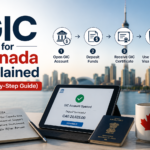
A Guaranteed Investment Certificate (GIC) is a financial investment required under the Student Direct Stream (SDS) visa process for many international students, including students from India.
Under the GIC system:
Students deposit a fixed amount into a Canadian bank before visa approval
The amount is gradually released monthly after arrival in Canada
It helps students manage living expenses safely and systematically
The GIC acts as proof that students already possess funds for their initial living expenses in Canada.
Minimum GIC Amount for Canada (2026)
As per updated IRCC guidelines, international students under SDS are generally required to purchase a GIC worth CAD 20,635.
This amount is intended to cover:
Accommodation expenses
Food and groceries
Transportation
Utilities and personal costs
Students usually receive:
Initial lump-sum payment after arrival
Remaining amount in monthly installments
Different Canadian banks may offer slightly different disbursement structures.
Banks Offering GIC for Canada
Popular banks providing GIC services include:
Scotiabank
CIBC
ICICI Canada
SBI Canada Bank
RBC Royal Bank
HSBC Canada
Students should compare:
Processing speed
Transfer fees
Monthly payout structures
Online banking facilities
Choosing the right bank can simplify financial management after arrival.
Documents Required for Financial Proof
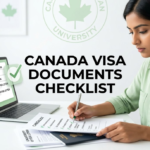
Students generally need:
Bank statements (last 4–6 months)
Tuition fee payment receipts
GIC certificate
Education loan sanction letters (if applicable)
Income tax returns of sponsors
Salary slips or business proof
Affidavit of financial support
Financial documents must clearly demonstrate legitimate and stable sources of funds.
Can Education Loans Be Used as Financial Proof?
Yes, education loans from recognized banks are accepted by Canadian immigration authorities. Many Indian students use education loans to satisfy proof-of-funds requirements.
However:
Loan approval must be official and verifiable
Sanction letters should clearly mention approved amounts
Partial loan disbursement may sometimes strengthen credibility
Students often combine education loans with savings accounts and sponsor funds for stronger applications.
Common Reasons for Visa Rejection Due to Financial Issues
Financial issues are among the most common reasons for Canadian visa refusals.
Major mistakes include:
Insufficient bank balance
Sudden large deposits without explanation
Fake financial documents
Unstable income sources
Incomplete financial proof
Visa officers carefully evaluate the authenticity and consistency of financial records.
Living Expenses Covered Under Proof of Funds
The Canadian government expects students to demonstrate their ability to manage:
Housing and rent
Food and groceries
Transportation
Healthcare and insurance
Utility bills
Miscellaneous personal expenses
Students planning to live in expensive cities should prepare additional financial backup beyond minimum requirements.
Latest Trends in Canada Student Visa Financial Requirements (2026)
Increased GIC Requirement
Canada has significantly increased the required GIC amount in recent years due to rising living costs across major cities. Earlier, students only needed CAD 10,000, but the updated requirement now exceeds CAD 20,000. This change reflects inflation, rising accommodation expenses, and the growing cost of daily necessities for international students. Students must now prepare stronger financial plans before applying for study permits.
Stronger Financial Verification Checks
Visa officers are becoming more strict regarding financial document verification. Immigration authorities now carefully analyze transaction history, sponsor income stability, tax returns, and the authenticity of financial records. Sudden unexplained deposits or inconsistent financial statements can negatively impact visa approval chances. As a result, students are increasingly focusing on maintaining transparent and stable financial records well before applying.
Rise of Digital Banking and Faster GIC Processing
Canadian banks are improving online banking systems for international students. Many banks now offer fully digital GIC account creation, online document uploads, and faster international money transfer systems. This trend has simplified the visa preparation process and reduced processing delays for students applying through the SDS category.
Higher Living Cost Awareness Among Students
Students are becoming more aware that tuition fees alone are not enough for financial planning. Rising housing costs, transportation expenses, healthcare charges, and food inflation are encouraging students to calculate realistic monthly budgets before moving to Canada. Financial literacy and budgeting awareness are now becoming essential parts of study abroad planning.
Growing Dependence on Education Loans
Due to rising study and living costs, many students are increasingly relying on education loans from banks and financial institutions. Loan-based applications have become more common, especially among middle-class families. Banks are also introducing specialized education loan products for Canada-focused study programs with flexible repayment options.
More Financial Planning Before Visa Applications
Students now begin financial preparation much earlier than before. Families are maintaining savings accounts, fixed deposits, investment proofs, and sponsor documents well in advance to build stronger visa applications. Early financial planning is becoming a major trend because financially well-prepared applications generally have higher visa approval rates.
Expert Insight: How Much Financial Backup Should Students Actually Have?
Experts suggest students should maintain funds beyond the official minimum requirement because unexpected expenses are common during the first few months in Canada. Rental deposits, winter clothing, transportation setup, and emergency medical expenses often increase initial spending.
Financial advisors generally recommend maintaining at least 20–30% additional backup funds beyond official IRCC requirements. Students with stronger financial stability usually experience smoother settlement and reduced stress after arrival.
Real-Life Example
Rahul from India planned to pursue a postgraduate diploma in Toronto. Initially, he only prepared the minimum required GIC amount and tuition proof. However, after consulting a visa advisor, he also included additional savings proof, sponsor income documents, and education loan sanction letters.
His stronger financial profile improved the credibility of his application significantly. After arriving in Canada, the additional financial backup also helped him manage higher-than-expected accommodation and transportation expenses comfortably.
Understanding the Canada visa bank balance requirement is essential for every international student planning to study in Canada. Proper financial preparation not only improves visa approval chances but also helps students settle comfortably after arrival.
Students who plan early, maintain transparent financial records, and prepare realistic budgets are more likely to experience a smooth and successful Canadian education journey in 2026.
FAQs
Students generally need to show first-year tuition fees plus at least CAD 20,635 for living expenses.
A GIC is a Guaranteed Investment Certificate used as proof of living expenses for international students under SDS applications.
Yes, GIC is generally mandatory for SDS visa applicants from countries like India.
Yes, officially approved education loans from recognized banks are accepted.
Common reasons include insufficient funds, fake documents, unexplained deposits, and weak financial stability.

 May 14, 2026
 9 Min
 No Comment