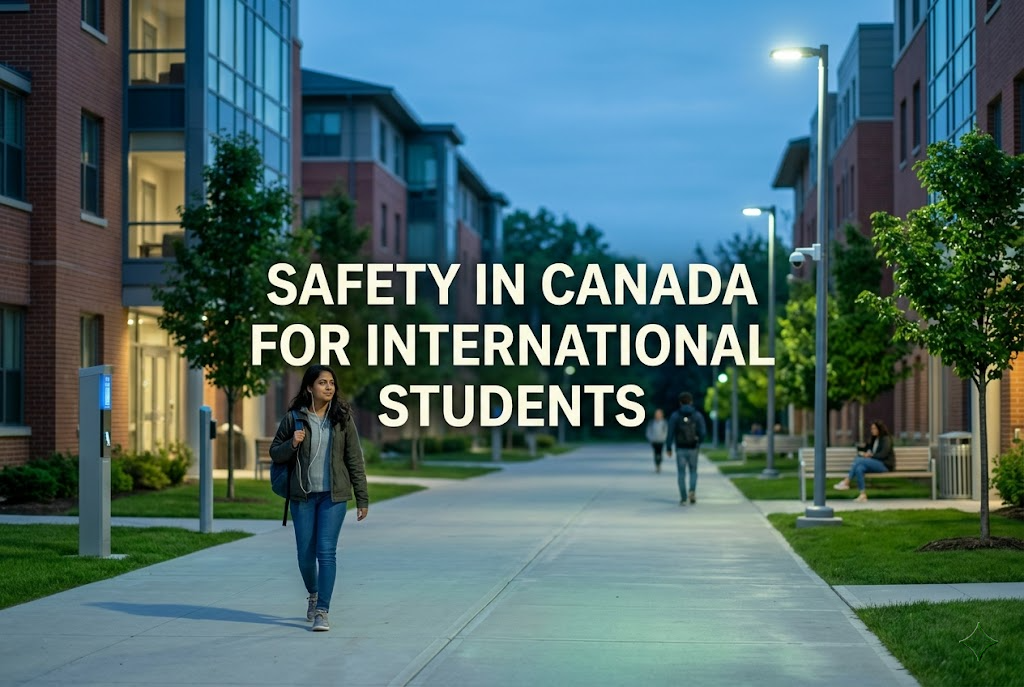
Canada is widely considered one of the safest countries in the world for international students. With strong law enforcement, strict regulations, and a multicultural society, Canada student safety remains one of the key reasons why thousands of Indian students choose Canada every year.
According to Statistics Canada, the country maintains relatively low crime rates compared to other major study destinations like the USA and UK, especially in student-friendly cities. (statcan.gc.ca)
Canada provides a secure environment for international students.
Key highlights:
Low violent crime rates in most cities
Strict legal system and enforcement
Strong community policing
High awareness about student protection
Most universities also have dedicated campus security teams.
Safest Cities in Canada for Students
Toronto
Multicultural and highly populated
Safe campus zones
Strong public transport security
Vancouver
Very safe urban environment
High student population
Active community support
Ottawa
Capital city with low crime rate
Peaceful environment
Ideal for focused study life
Calgary
Clean and safe city
Affordable compared to Toronto/Vancouver
Strong student communities
Montreal
Safe but requires basic urban awareness
Large international student population
Campus Safety in Canadian Universities
Canadian universities prioritize student security.
Facilities include:
24/7 campus security patrols
Emergency alert systems
CCTV monitoring
Safe residence halls
Escort services at night
Students are encouraged to use official campus safety apps.
Crime Rate and Student Risk Level
While Canada is safe, students should be aware of minor risks:
Petty theft in crowded areas
Rare incidents in isolated locations
Seasonal risks in winter conditions
Serious crimes against students are very rare.
Emergency Services in Canada
Canada has efficient emergency response systems.
Emergency number: 911
Police, fire, and ambulance services available nationwide
Quick response in urban areas
University helplines available 24/7
Students should save emergency contacts immediately after arrival.
Safety Tips for International Students
Stay Aware in Public Places
Avoid isolated areas at night and stay alert in crowded places.
Secure Accommodation
Choose verified housing near campus or safe neighborhoods.
Use Trusted Transport
Prefer public transit or registered ride services.
Protect Personal Information
Avoid sharing personal details with strangers.
Follow Local Laws
Canada has strict legal rules; even minor violations can affect visa status.
Safety in Student Accommodation
Housing safety is important for international students.
Options include:
University dormitories (safest)
Shared apartments (moderate risk if unknown roommates)
Homestays (safe with local families)
Always verify rental agreements before signing.
Part-Time Job Safety
Students working part-time should:
Avoid illegal job offers
Work only within visa limits
Choose registered employers
Be cautious of scams
Expert Insight: Why Canada is Considered Safe
Experts highlight that Canada’s safety comes from:
Strong governance and law enforcement
Social welfare systems
Multicultural acceptance
Strict gun control laws
High education institution standards
This combination creates a secure environment for students.
Latest Safety Trends in Canada (2026)
Increased Campus Security Tech
Canadian universities are rapidly adopting smart security systems, including AI-powered surveillance cameras, emergency alert platforms, smart access control, and campus safety mobile apps. These technologies help authorities respond faster to emergencies, improve incident monitoring, and create a safer environment for both domestic and international student
Digital Safety Awareness
With the rise of online fraud and cybercrime, educational institutions are actively training students to recognize phishing attacks, rental scams, identity theft, and financial fraud. Workshops, cybersecurity campaigns, and digital safety programs are now an essential part of student orientation across many Canadian campuses.
Community Policing Growth
Police departments across Canada are increasing engagement with international student communities through outreach programs, campus visits, safety seminars, and multilingual support initiatives. This community-focused policing approach helps students feel more comfortable reporting concerns and building trust with local authorities.
Housing Safety Regulations
Major Canadian cities are implementing stricter rental property inspections and tenant protection measures to improve student housing safety. Enhanced regulations focus on fire safety, legal rental standards, building security, and protection against fraudulent landlords, helping students secure safer and more reliable accommodation.
Mental Health Support Expansion
Canadian universities are significantly expanding mental health services to support student wellbeing. Institutions now offer easier access to counseling, stress-management programs, wellness centers, crisis support, peer mentoring, and culturally inclusive mental health resources designed specifically for international students adjusting to life abroad.
Real-Life Example
Ananya from India studies in Toronto.
Her experience:
Lives in university residence
Uses campus safety app regularly
Travels via public transport safely
Participates in student safety workshops
She reports feeling secure and well-supported in her daily life.
Canada remains one of the safest destinations for international students in 2026. With strong law enforcement, secure campuses, and supportive communities, Canada student safety is generally high. However, students must still stay aware, follow guidelines, and make informed decisions to ensure a safe and comfortable study experience.
Frequently Asked Questions (FAQs) – Safety for International Students in Canada (2026)
Yes, Canada remains one of the safest countries for international students. Universities, local authorities, and communities continue to improve campus security, student support services, and emergency response systems to ensure a safe learning environment.
Common concerns include online scams, rental fraud, theft, nightlife safety, and mental health challenges. Most universities provide safety workshops, awareness programs, and support services to help students stay informed and protected.
Most Canadian universities have strong campus security systems, including 24/7 security staff, emergency helplines, surveillance cameras, safe-walk programs, and mobile safety apps for students.
Students should verify landlords, avoid sending money without signed agreements, visit properties whenever possible, and use trusted university housing resources or verified rental platforms.
Students should immediately contact emergency services by dialing 911 for police, fire, or medical emergencies. Universities also provide campus emergency numbers and safety support services.

 May 14, 2026
 6 Min
 No Comment