Almost every student and working professional eventually faces one difficult career question:
“Should I choose higher salary or better career growth?”
At first glance, salary seems like the obvious winner. After all, financial stability matters. However, long-term professional success often depends on much more than immediate income.
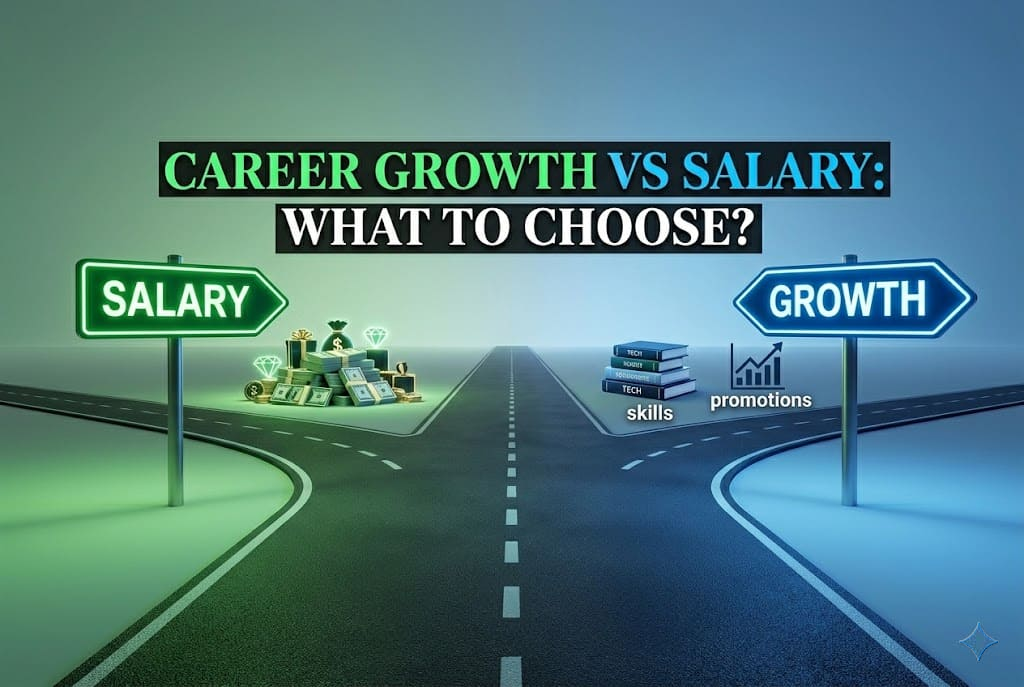
Some jobs pay well initially but offer limited future opportunities. Meanwhile, other roles may start modestly but provide strong learning, leadership exposure, and faster long-term growth.
This is why understanding career growth vs salary has become extremely important in today’s rapidly changing job market.
According to workforce insights from LinkedIn Career Development Resources, professionals increasingly prioritize learning opportunities, flexibility, and long-term advancement alongside compensation.
As a result, jobs with strong growth potential often create larger long-term rewards than short-term salary jumps alone.
For professionals exploring future-ready skills, online learning, and career development opportunities, OneGrasp’s career resources also provide useful guidance on modern education and professional growth.
What Is Career Growth?
Career growth refers to long-term professional development and advancement opportunities.
This includes:
Promotions
Leadership exposure
Skill development
Industry reputation
Learning opportunities
Network expansion
Future salary scalability
Career growth is often slower initially but compounds over time.
What Is Salary Growth?
Salary growth focuses mainly on immediate financial benefits.
This includes:
Higher monthly income
Bonuses
Incentives
Better compensation packages
Financial stability
While salary is important, short-term income alone does not always guarantee long-term professional satisfaction or security.
Career Growth vs Salary: Which Is Better?
The answer depends on career stage, financial responsibilities, and long-term goals.
Early Career Professionals
For freshers and early professionals, career growth often matters more.
Why?
Because the first few years strongly influence:
Skill foundation
Industry exposure
Learning habits
Professional network
Future opportunities
A lower-paying role with strong mentorship and learning may create far greater future value.
Mid-Career Professionals
For experienced professionals, balancing both becomes critical.
At this stage, professionals usually prioritize:
Leadership roles
Stability
Financial responsibilities
Work-life balance
Strategic promotions
Senior Professionals
Senior professionals often prioritize:
Influence
Long-term wealth
Flexibility
Leadership impact
Equity opportunities
Interestingly, salary becomes only one factor among many.
High Salary Jobs vs High Growth Careers
High Salary Jobs
High Growth Careers
Immediate financial rewards
Long-term opportunities
Faster short-term lifestyle improvement
Strong future scalability
May involve repetitive work
Continuous learning
Sometimes limited advancement
Better adaptability
Short-term satisfaction
Long-term career strength
The strongest careers usually combine both gradually.
Why Career Growth Often Creates Bigger Long-Term Rewards
A professional earning slightly less today but gaining:
Strong technical skills
Leadership exposure
Industry credibility
Networking opportunities
may eventually outperform someone stuck in a high-paying but stagnant role.
For example:
Startup employees often accept lower salaries initially for growth potential
Professionals entering AI or analytics fields may prioritize learning opportunities first
Employees in leadership tracks often focus on strategic exposure instead of immediate compensation
According to McKinsey Career Insights, adaptability and continuous skill development are becoming critical drivers of long-term career success.
When Salary Should Be Prioritized
There are situations where salary becomes more important.
Financial Responsibilities
Professionals supporting families or repaying loans may prioritize stable income.
Limited Growth Industries
If a role offers both poor growth and low salary, switching strategically becomes necessary.
Burnout Prevention
Sometimes a higher-paying role with better work-life balance improves overall wellbeing.
Economic Uncertainty
Stable compensation becomes highly valuable during uncertain economic periods.
Expert Insight: The Smartest Professionals Balance Both
The most successful professionals rarely think in extremes.
Instead, they ask:
Will this role increase my future value?
What skills will I gain?
Does this industry have long-term demand?
Will this experience strengthen my career profile?
This explains why many professionals intentionally accept learning-heavy roles early in their careers.
Latest Trends and Updates
AI and automation are increasing demand for adaptable professionals with continuous learning mindsets instead of static skill profiles.

Companies increasingly reward employees who combine technical skills, communication ability, and strategic thinking.

Remote work opportunities are allowing professionals to optimize both salary and lifestyle flexibility simultaneously.

Skill-based hiring is reducing dependence on traditional career paths and enabling faster growth opportunities.

Professionals are increasingly prioritizing meaningful work, flexibility, and learning culture alongside compensation packages.
Real-Life Example: Choosing Growth Over Immediate Salary
Arjun received two job offers after graduation.
The first offered higher immediate salary but involved repetitive support tasks with limited learning opportunities.
The second paid less initially but provided exposure to cloud computing, AI tools, and mentorship.
He chose the second option.
Within three years, his advanced skills and project experience helped him secure a significantly better role with far higher compensation than the first path could likely offer.
His decision highlights how strategic growth choices can compound over time.
Common Mistakes Professionals Should Avoid
Chasing Salary Without Learning
High income without skill growth can create long-term stagnation.
Ignoring Financial Reality
Career growth should not come at the cost of severe financial stress.
Comparing Constantly With Others
Career journeys differ significantly between industries and individuals.
Staying Too Comfortable
Lack of challenge often slows long-term progress.
Beginner vs Strategic Professional Mindset
Beginner Mindset
Strategic Professional Mindset
Focuses only on salary
Evaluates future growth
Chooses comfort quickly
Prioritizes skill-building
Avoids challenges
Seeks learning opportunities
Thinks short-term
Thinks long-term
Depends only on employer
Builds independent value
Pros and Cons of Prioritizing Salary
Pros
Cons
Financial security
Possible skill stagnation
Faster lifestyle upgrades
Lower long-term adaptability
Reduced financial stress
Limited future growth
Immediate rewards
Risk during industry changes
Pros and Cons of Prioritizing Career Growth
Pros
Cons
Strong future opportunities
Slower short-term income
Better long-term earning potential
Higher learning pressure
Improved adaptability
Requires patience
Strong professional reputation
Temporary sacrifices
What to Do Next (Actionable Steps)
If you are deciding between salary and growth:
Analyze long-term opportunities
Evaluate learning exposure carefully
Research industry future demand
Consider financial responsibilities realistically
Build transferable skills
Focus on sustainable career paths
Most importantly, avoid purely emotional decisions.
Quick Checklist
Evaluate future skill value
Compare learning opportunities
Analyze promotion potential
Assess financial stability
Research industry growth
Build long-term strategy
Avoid short-term thinking
Maintain continuous learning
Conclusion
The debate around career growth vs salary does not have one universal answer. Both matter — but their importance changes depending on career stage, financial needs, industry trends, and long-term goals.
In many cases, prioritizing growth early creates stronger long-term financial rewards. However, ignoring financial realities completely can also create stress and instability.
The smartest professionals focus on building sustainable careers where skills, adaptability, learning, and compensation grow together over time.
In 2026, the most valuable professionals will not simply be the highest-paid — they will be the ones who continue evolving with the future of work.
FAQs
For many early-career professionals, long-term growth often creates larger future opportunities.
Freshers usually benefit more from strong learning environments and skill development.
Sometimes yes, especially if the role lacks learning, innovation, or advancement opportunities.

 May 20, 2026
 6 Min
 No Comment