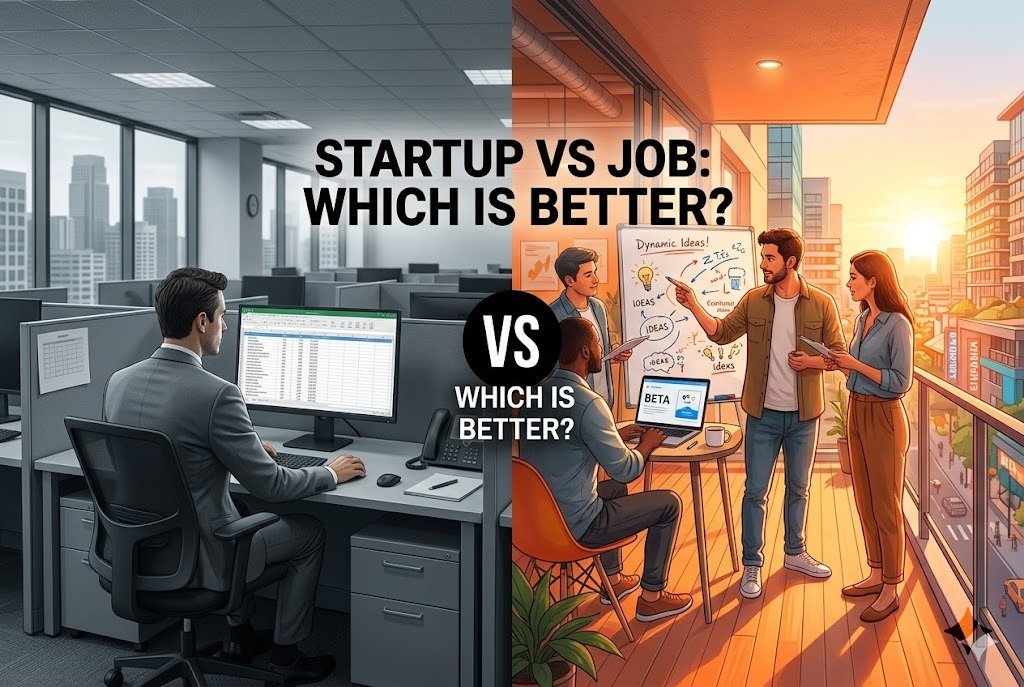
One of the biggest career decisions many people face today is choosing between building a startup or pursuing a traditional job. Both options offer unique advantages, challenges, and long-term opportunities.
In recent years, startups have become increasingly attractive because of entrepreneurship culture, social media success stories, and rapid digital growth. However, traditional jobs still provide financial stability, structured career paths, and lower risk.
Therefore, the answer to “Startup vs Job: Which is Better?” depends heavily on personal goals, financial situation, risk tolerance, and lifestyle preferences.
Understanding the Difference Between Startup and Job
A traditional job usually involves working for an employer in exchange for a fixed salary and benefits.
Meanwhile, a startup involves building a business from scratch, often with uncertain outcomes and higher financial risks.
Jobs generally provide:
Stable income
Structured work systems
Employee benefits
Predictable schedules
Startups usually offer:
Higher risk
Greater flexibility
Ownership opportunities
Unlimited growth potential
Both paths can lead to successful careers depending on individual priorities.
Why Many People Prefer Startups Today
Startup culture has grown significantly because technology has made entrepreneurship more accessible.
Many people now launch businesses using:
Social media
AI tools
E-commerce platforms
SaaS systems
Remote work models
Startups attract ambitious individuals who want freedom, creativity, and control over their work.
Moreover, successful startups can generate substantial financial rewards and personal satisfaction.
Some founders also enjoy solving problems and building products independently rather than working under corporate structures.
Why Traditional Jobs Still Matter
Despite startup popularity, jobs remain highly valuable for millions of professionals.
A stable job offers:
Regular salary
Lower financial uncertainty
Professional training
Work-life balance
Career progression
Jobs are especially beneficial for people who prefer stability and predictable income.
In addition, working in established companies helps individuals gain industry experience, networking opportunities, and skill development.
Many successful entrepreneurs actually begin their careers in jobs before launching startups later.
Financial Comparison: Startup vs Job
Financially, startups and jobs operate very differently.
Jobs
Jobs provide:
Monthly salary
Bonuses
Insurance benefits
Retirement support
Predictable cash flow
Employees usually know exactly how much they will earn each month.
Startups
Startup income is often unpredictable during early stages.
Some startups may generate little or no revenue initially. However, successful businesses can eventually produce much higher earnings than traditional jobs.
Therefore, startups offer higher upside potential but also greater financial uncertainty.
Experts often recommend maintaining financial backup before starting a business full-time.
Work-Life Balance Comparison
Work-life balance differs significantly between startups and jobs.
Startup Lifestyle
Startup founders often work:
Long hours
Weekends
High-pressure schedules
Uncertain routines
Building a business usually requires intense commitment during early stages.
Job Lifestyle
Traditional jobs generally provide:
Fixed schedules
Paid leave
Structured responsibilities
Better short-term balance
However, some corporate roles can also become highly stressful depending on industry and workload.
The ideal choice depends on personal priorities and career expectations.
Expert Insight and Analysis
Career experts believe neither startups nor jobs are universally better.
Instead, success depends on:
Personality type
Risk tolerance
Financial responsibilities
Long-term goals
Professional interests
People who enjoy stability, predictable routines, and structured growth may perform better in jobs.
Meanwhile, individuals who enjoy innovation, risk-taking, and independent problem-solving may thrive in startups.
Experts also suggest that entrepreneurship is not only about money. It often involves emotional resilience, leadership, adaptability, and long-term vision.
Latest Trends in Careers and Entrepreneurship
Several major trends are reshaping modern career choices in 2026.
Rise of Solopreneurs
Many individuals now build online businesses independently using digital tools and AI systems.
Remote Work Expansion
Remote jobs allow professionals to work globally without relocation.
Content creators are transforming personal brands into businesses.
AI-Driven Opportunities
AI tools are reducing startup costs and making entrepreneurship more accessible.
These trends show that career paths are becoming more flexible than ever before.
Startup vs Job: Pros and Cons
Startup Pros
Unlimited earning potential
Creative freedom
Ownership and independence
Flexible work structure
Opportunity to build long-term wealth
Startup Cons
Financial uncertainty
High stress and pressure
Long working hours
Risk of failure
Unstable income initially
Job Pros
Stable salary
Lower financial risk
Employee benefits
Structured growth
Better short-term security
Job Cons
Limited earning growth
Less independence
Fixed schedules
Workplace politics
Slower wealth creation potential
Common Mistakes People Make
Starting businesses without financial planning
Quitting jobs too early
Following social media hype blindly
Ignoring personal strengths and interests
Comparing success timelines unrealistically
What You Should Do Next
Evaluate your risk tolerance honestly
Build skills before making career decisions
Start side projects gradually
Create financial backup plans
Focus on long-term career goals instead of trends
Conclusion
The debate around Startup vs Job: Which is Better does not have a universal answer. Both career paths offer valuable opportunities depending on individual priorities, lifestyle preferences, and long-term goals.
Jobs provide stability, predictable income, and structured career development. Meanwhile, startups offer freedom, ownership, creativity, and potentially higher financial rewards.
Instead of blindly following trends, individuals should focus on understanding their strengths, financial readiness, and professional ambitions before making major career decisions.
In today’s evolving economy, success is increasingly about adaptability, continuous learning, and building meaningful value regardless of the path chosen.
FAQs
It depends on personal goals, financial situation, and career preferences.
Yes, startups generally involve higher financial and operational risks.
Yes, jobs help individuals gain experience, skills, and financial stability.
Successful startups can generate higher income, but many businesses also fail.
Yes, many people build side businesses while working full-time jobs.

 May 11, 2026
 5 Min
 No Comment