May 23, 2026
 7 Min
 No Comment
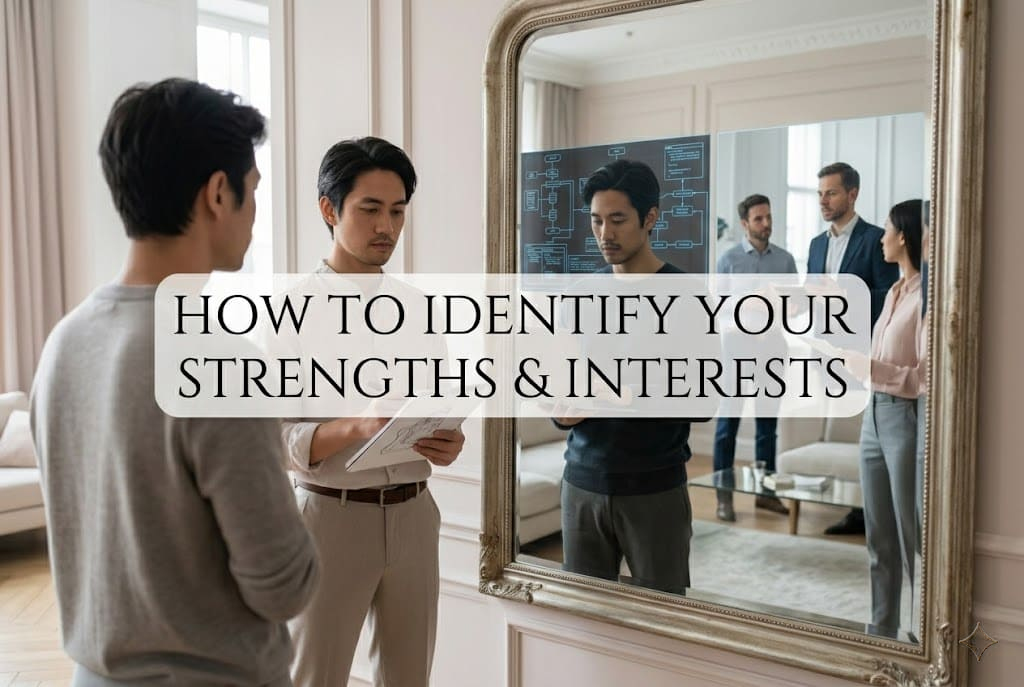
Many people spend years pursuing careers, degrees, or goals that do not truly match their natural abilities or personal interests. As a result, they often feel stuck, unmotivated, or uncertain about their future. Learning how to identify strengths and interests early can completely change the direction of both career growth and personal satisfaction.
The challenge is that most students and professionals are rarely taught how to understand themselves properly. Traditional education usually focuses more on marks and qualifications than self-awareness, curiosity, or practical strengths.
However, in today’s rapidly changing world, understanding your natural abilities has become more important than ever. Whether someone wants career clarity, better confidence, or long-term success, self-discovery plays a major role.
According to research published by Harvard Business Review, professionals who align their work with their strengths often show higher engagement, productivity, and career satisfaction.
Students and professionals exploring future-ready career development can also discover guidance through OneGrasp Career Insights.
Why Identifying Strengths and Interests Matters
Understanding your strengths helps you make smarter decisions.
When people choose careers aligned with their abilities and interests, they usually experience:
- Better motivation
- Faster skill development
- Higher confidence
- Improved performance
- Greater long-term satisfaction
Meanwhile, ignoring personal strengths often leads to frustration, burnout, and poor career alignment.
For example, someone naturally skilled at communication may struggle in isolated technical roles but thrive in leadership, marketing, or consulting positions.
What Are Strengths and Interests?
Although people often confuse them, strengths and interests are different.
Strengths
Strengths are abilities you naturally perform well.
Examples include:
- Communication
- Leadership
- Problem-solving
- Creativity
- Analytical thinking
- Empathy
- Organization
Interests
Interests are activities or topics you genuinely enjoy learning or engaging with.
Examples include:
- Technology
- Design
- Finance
- Writing
- Healthcare
- Business
- Psychology
The ideal career usually combines both strengths and interests together.
Pay Attention to What Feels Natural
One of the easiest ways to identify strengths is observing tasks that feel easier for you compared to others.
Ask yourself:
- What do people frequently compliment me for?
- Which activities make me lose track of time?
- What problems do I solve naturally?
- Which tasks feel energizing instead of exhausting?
For example:
| Natural Behavior | Possible Strength |
|---|---|
| Explaining concepts clearly | Communication |
| Organizing events smoothly | Leadership |
| Solving logical puzzles | Analytical thinking |
| Creating visuals easily | Creativity |
Often, strengths become invisible because they feel “normal” to us.
Look at Childhood Interests and Curiosity
Childhood curiosity often reveals authentic interests before social pressure influences decisions.
Think about:
- Activities you enjoyed naturally
- Subjects you explored voluntarily
- Hobbies you repeatedly returned to
- Problems you liked solving
For example, a child fascinated by computers may naturally align with technology careers later in life.
Meanwhile, someone who enjoyed storytelling and creativity may thrive in media, branding, or teaching roles.
Feedback From Others Can Reveal Hidden Strengths
Sometimes other people notice our strengths before we do.
Trusted feedback from:
- Teachers
- Friends
- Managers
- Mentors
- Colleagues
can reveal recurring patterns.
For example:
- “You explain things really well.”
- “You stay calm under pressure.”
- “You’re good at motivating teams.”
Repeated feedback often points toward genuine abilities.
According to workplace psychology studies discussed by Gallup Strengths Research, people who focus on their strengths tend to perform better professionally and personally.
Experiment With Different Activities
Many people discover interests only after trying new experiences.
This is especially important for students and young professionals.
Ways to explore include:
- Internships
- Freelancing
- Online courses
- Volunteering
- Side projects
- Student clubs
Practical exposure helps people distinguish between temporary excitement and genuine long-term interest.
Professionals researching future-ready skills and career exploration strategies can also find useful guidance through OneGrasp Skill Development Resources.
Personality Assessments Can Provide Direction
Career and personality assessments are not perfect, but they can offer useful insights.
Popular frameworks include:
- MBTI
- CliftonStrengths
- Holland Code
- DISC Assessment
These tools help individuals understand work preferences, communication styles, and behavioral tendencies.
However, assessments should guide exploration rather than define identity completely.
Identify Skills You Learn Faster Than Others
Some abilities develop faster because they align naturally with your strengths.
For example:
| Skill Learned Quickly | Potential Career Area |
|---|---|
| Video editing | Content creation |
| Coding | Software development |
| Negotiation | Sales or business |
| Public speaking | Leadership or training |
Rapid improvement often indicates strong natural alignment.
Expert Insight / Analysis
One of the biggest misconceptions about career success is believing passion appears instantly.
In reality, strengths and interests often develop gradually through exploration and experience.
Experts increasingly recommend focusing on:
- Curiosity
- Skill experimentation
- Practical exposure
- Continuous learning
instead of waiting for a single “perfect passion.”
Another important insight is that strengths alone are not enough. Market demand also matters.
For example, someone passionate about art may still need digital or business skills to create sustainable career opportunities in today’s economy.
The strongest career paths usually combine:
- Personal interest
- Practical strengths
- Industry demand
- Continuous adaptability
Common Mistakes People Make
Many students and professionals struggle with self-discovery because of avoidable mistakes.
Common issues include:
- Following social pressure blindly
- Comparing strengths with others
- Confusing hobbies with careers
- Ignoring market realities
- Avoiding experimentation
- Expecting instant clarity
Another major mistake is believing weaknesses define future limitations.
Most successful professionals focus more on maximizing strengths than obsessing over every weakness.
Latest Trends / Updates
Career planning in India is increasingly shifting toward skill-based and personality-based decision making.

AI-powered career assessment platforms are helping students identify strengths more accurately.

Companies are prioritizing adaptability, communication, and problem-solving skills alongside technical expertise.

Hybrid careers combining creativity and technology are becoming more valuable in modern industries.

Students are increasingly using internships, freelancing, and side projects to explore career interests early.

Personal branding and online portfolios are helping professionals showcase strengths beyond academic degrees.
Real-Life Example / Mini Case Study
Consider the example of Priya, a commerce student from Hyderabad.
Initially, she planned to prepare for banking exams because many friends were doing the same. However, during college events, she consistently enjoyed organizing campaigns, speaking publicly, and managing social media activities.
After experimenting with digital marketing internships and content creation projects, she realized her strengths were communication, creativity, and audience engagement.
Today, she works as a brand strategist for a startup and enjoys far greater satisfaction than she felt pursuing careers chosen purely through social influence.
Her journey highlights the importance of self-awareness and experimentation.
Pros and Cons of Following Your Strengths
| Pros | Cons |
|---|---|
| Better career satisfaction | Self-discovery takes time |
| Faster skill growth | Interests may evolve |
| Higher motivation | Market demand must still matter |
| Improved confidence | Requires experimentation |
| Greater long-term alignment | Initial uncertainty is common |
Beginner vs Expert Self-Discovery Approach
| Beginner Thinking | Expert Thinking |
|---|---|
| Waits for instant clarity | Explores gradually |
| Follows trends blindly | Studies personal fit |
| Avoids trying new things | Experiments actively |
| Focuses only on marks | Focuses on strengths and adaptability |
| Compares constantly | Builds self-awareness consistently |
How Students Can Start Discovering Strengths Early
Students can begin self-discovery with simple practical actions:
- Try multiple activities and clubs.
- Explore online courses in different fields.
- Observe tasks that feel energizing.
- Seek honest feedback from mentors.
- Reflect on achievements and enjoyable experiences.
- Build small side projects.
- Stay curious without fearing mistakes.
Career clarity usually improves through action, not overthinking alone.
Quick Checklist
- Observe natural abilities
- Explore multiple interests
- Seek honest feedback
- Try internships and projects
- Study market demand
- Build practical skills
- Stay open to learning
Conclusion
Learning how to identify your strengths and interests is one of the most valuable investments you can make for long-term career growth and personal fulfillment. In today’s rapidly evolving world, self-awareness matters just as much as technical skills or academic qualifications.
The key is to stay curious, experiment consistently, and pay attention to patterns in what energizes you naturally. Career clarity rarely appears overnight — it develops through experience, reflection, and continuous learning.
Whether you are a student planning your future or a professional considering career growth, understanding your strengths can help you make smarter, more confident decisions. Platforms like OneGrasp can also support learners with career insights, skill development guidance, and future-ready opportunities in India.
FAQs
Understanding strengths helps people choose careers and goals aligned with their natural abilities and long-term satisfaction.
Yes. Interests often evolve as people gain experience, exposure, and maturity.
They can provide useful direction, but they should not completely define career decisions.
Having multiple interests is normal. Many successful professionals combine different skills into hybrid careers.
Self-discovery is an ongoing process. Most people gain clarity gradually through exploration and experience.