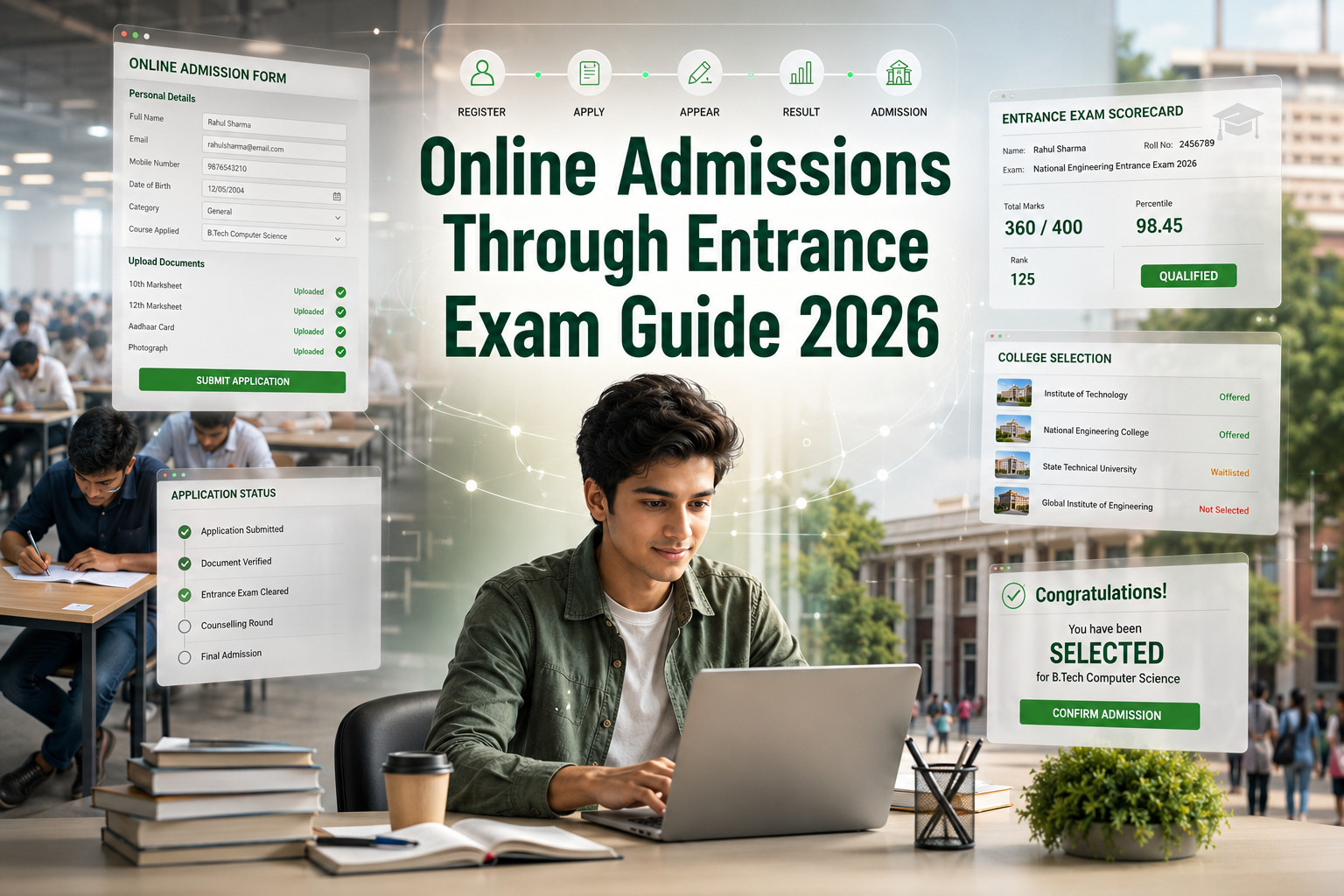
For millions of students in India, one examination can shape an entire career path. Whether it is engineering, medicine, law, management, or central university admissions, entrance exams have become the gateway to higher education. Today, the entire ecosystem has shifted online, making the online admissions entrance exam process faster, more transparent, and significantly more competitive.
A few years ago, students had to travel long distances to collect forms, attend offline counseling, and verify documents physically. Now, everything from registration and admit cards to counseling and seat allotment happens digitally. This transformation has reduced administrative delays while giving students access to institutions across India from their homes.
However, despite the convenience, the system can feel overwhelming. Different entrance exams follow different rules, timelines, and counseling procedures. Missing a single step can result in losing a valuable admission opportunity.
Understanding the online admission ecosystem is no longer optional. It is essential for every student aiming for higher education success in India.
What Are Online Admissions Through Entrance Exams?
Online admissions through entrance exams refer to the digital process where students apply for colleges or universities based on scores obtained in competitive examinations.
These admissions usually involve:
Online registration
Application submission
Admit card download
Computer-based examination
Result declaration
Online counseling
Seat allotment
Digital fee payment
Document verification
Popular entrance-based admission systems in India include:
JEE Main and JEE Advanced
NEET UG
CUET
CAT
CLAT
GATE
NATA
Most admissions are now managed through centralized digital platforms under organizations such as the National Testing Agency.
Students can also explore educational resources and admission guidance through OneGrasp Education Resources for better planning and decision-making.
Why Entrance-Based Online Admissions Are Becoming Dominant
The Indian higher education sector has expanded rapidly in the last decade. Universities now receive applications from students across multiple states simultaneously.
Several reasons explain why entrance-based online admissions dominate today:
Traditional Admission System
Modern Entrance-Based System
Offline applications
Fully digital applications
Manual merit preparation
Automated ranking systems
Localized admissions
Nationwide participation
Delayed counseling
Real-time seat allocation
Paper-based communication
Instant notifications
Moreover, entrance exams create a standardized evaluation process, helping universities compare students fairly from different education boards.
Major Entrance Exams That Drive Online Admissions
JEE Main and JEE Advanced
Engineering admissions in institutions like the Indian Institutes of Technology and NITs depend heavily on JEE scores.
The process includes:
NTA registration
Exam city selection
Computer-based testing
Rank generation
JoSAA counseling
NEET UG
Medical admissions across India rely on NEET scores. Students participate in centralized counseling after results are declared.
This includes:
AIQ counseling
State quota counseling
College selection
Seat locking
CUET
The Common University Entrance Test has transformed undergraduate admissions in central universities.
Instead of relying solely on board marks, universities increasingly use CUET scores for admissions.
CAT and MBA Admissions
Business schools use CAT scores for MBA admissions followed by group discussions and interviews.
Private universities may also combine entrance scores with academic performance.
Step-by-Step Online Admissions Entrance Exam Process
Registration and Application
Students create accounts on official exam portals and fill personal details carefully.
Key information includes:
Aadhaar details
Academic qualifications
Category certificates
Exam preferences
Errors during registration can create complications later.
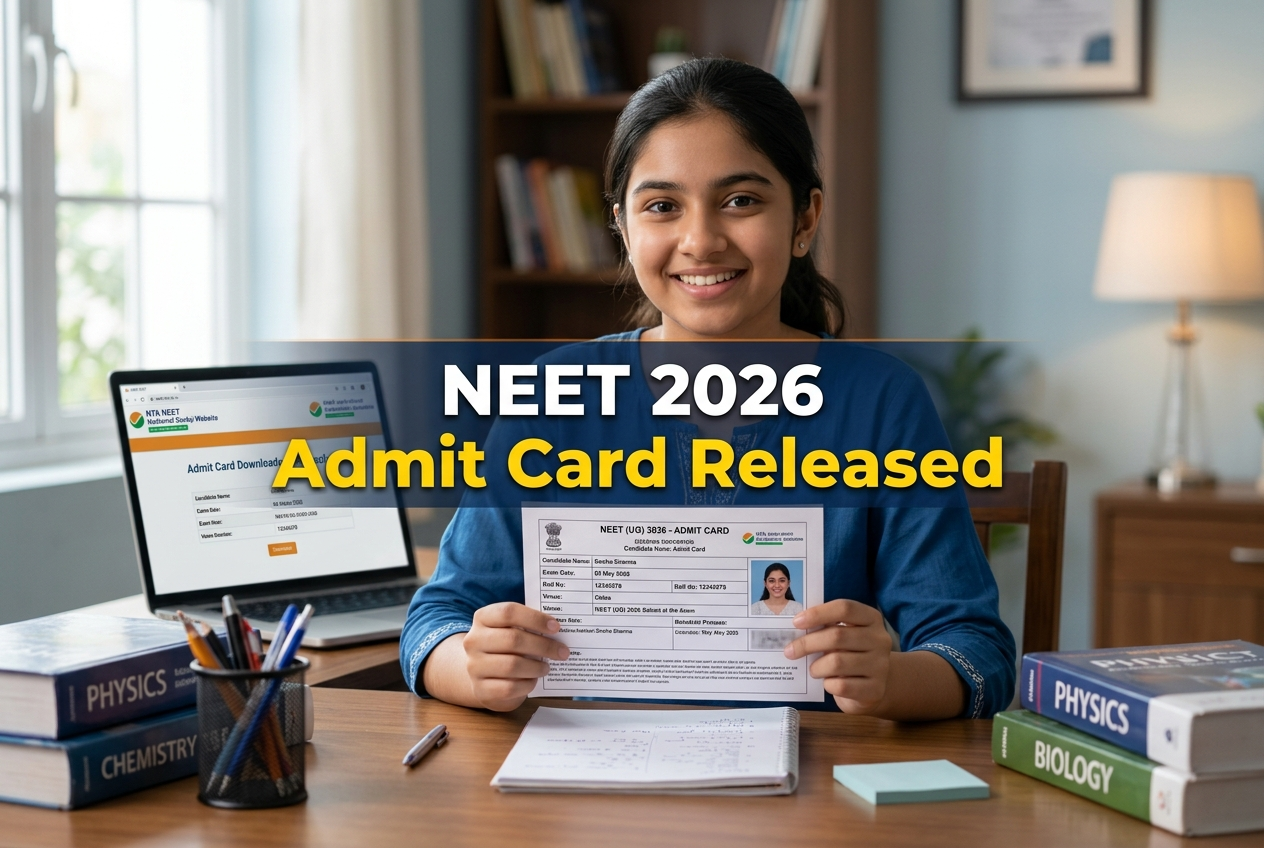
Admit Card Download
After successful registration, admit cards become available online.
Students must verify:
Name spelling
Exam center
Photograph
Exam timing
Entrance Examination
Most major entrance exams are now computer-based.
This approach improves:
Result accuracy
Faster evaluation
Reduced malpractice
Scalable testing capacity
Results and Rank Lists
After examinations, official authorities publish:
Raw scores
Percentiles
Rank lists
Cutoffs
Students then become eligible for counseling rounds.
Counseling and Seat Allotment
Online counseling is one of the most critical stages.
Students choose colleges based on:
Rank
Category
Seat availability
Preferences
The system automatically allocates seats based on merit and availability.
Online Admissions Entrance Exam: Common Challenges Students Face
Despite digitization, many students still struggle with the process.
One major issue is confusion between multiple counseling systems. For example, engineering aspirants may simultaneously handle JoSAA, CSAB, and state counseling platforms.
Another challenge involves document verification delays. Incorrect uploads or unclear scans often result in rejection.
Technical issues also increase stress during peak deadlines. Slow portals, failed transactions, and server overloads are still common during high-traffic periods.
Additionally, students sometimes rely on unofficial YouTube channels or social media rumors instead of checking official notifications.
Expert Insight: How Entrance-Based Digital Admissions Are Changing Education
The entrance-based online admission model is reshaping the entire Indian education system.
Universities now use centralized databases and AI-powered analytics to improve student enrollment forecasting. Some institutions analyze application trends to predict demand for emerging courses like AI, cybersecurity, and data science.
Moreover, the shift toward national-level entrance systems is gradually reducing dependence on board exam variability.
Educational experts also believe that future admission systems may include:
AI-driven counseling assistants
Predictive college recommendation engines
Blockchain certificate verification
Personalized career mapping
Remote proctored entrance tests
This evolution reflects India’s larger digital governance and education modernization goals.
Common Mistakes to Avoid During Entrance-Based Admissions
Students often lose opportunities because of avoidable errors.
Mistake
Consequence
Missing counseling deadlines
Seat cancellation
Ignoring mock seat allotment
Poor preference strategy
Uploading invalid documents
Verification failure
Not researching cutoff trends
Unrealistic college choices
Following unofficial advice
Misinformation risks
Students should maintain organized folders for every exam and counseling process.
Parents should also encourage research-based decisions instead of emotionally driven course selection.
Latest Trends and Updates
Artificial intelligence tools are increasingly being used to streamline entrance exam counseling and seat allocation systems across India.

Several universities now provide AI-powered chatbots that answer admission-related questions instantly, reducing pressure on support teams.

Hybrid verification systems combining digital and physical document checks are improving fraud detection while speeding up approvals.

Centralized testing systems like CUET are reshaping undergraduate admissions by reducing dependence on individual university entrance exams.

Meanwhile, predictive analytics and automation tools are helping institutions forecast enrollment demand, optimize counseling rounds, and reduce vacant seats more effectively.
Real-Life Example: Engineering Admission Through JEE Counseling
Consider the case of Arjun, a student from Hyderabad preparing for engineering admissions.
After clearing JEE Main, he participated in JoSAA counseling online. Initially, he selected only top-tier colleges without studying previous cutoff trends carefully.
In the mock allotment round, he realized his preferences were unrealistic. He then adjusted his choices strategically by including balanced options across NITs and IIITs.
Eventually, he secured admission in a reputed institute without traveling for counseling even once.
His experience highlights how strategic decision-making matters just as much as entrance exam scores.
Beginner vs Expert Admission Strategy
Beginner Strategy
Expert Strategy
Applies emotionally
Applies strategically
Ignores previous cutoffs
Studies historical trends
Selects random colleges
Builds layered preferences
Waits until deadlines
Prepares documents early
Relies on rumors
Tracks official notifications
Experienced students treat admissions as a structured process rather than a last-minute activity.
Pros and Cons of Entrance-Based Online Admissions
Pros
Cons
Transparent merit system
High competition
Nationwide accessibility
Technical issues possible
Faster counseling process
Stressful timelines
Reduced paperwork
Dependence on internet access
Standardized evaluation
Coaching pressure
What Students Should Do Next
Students planning entrance-based admissions should prepare both academically and strategically.
Here are the most effective next steps:
Create an admission timeline calendar
Track counseling dates carefully
Analyze previous year cutoffs
Prepare digital document folders
Research accreditation and placements
Attend official webinars and counseling sessions
Keep backup college options ready
Students should also verify institutional quality through official bodies like National Assessment and Accreditation Council (NAAC) before confirming admissions.
Quick Checklist
Register early for entrance exams
Double-check uploaded details
Save admit cards and receipts
Research counseling procedures
Compare colleges carefully
Study previous cutoff trends
Monitor official portals daily
Conclusion
The modern admission ecosystem in India is becoming increasingly digital, centralized, and competitive. The online admissions entrance exam process now plays a defining role in shaping academic and career opportunities for millions of students.
While technology has simplified applications and counseling significantly, success still depends on preparation, awareness, and strategic planning. Students who understand cutoff trends, counseling systems, and document requirements gain a clear advantage.
As AI tools, automation, and centralized platforms continue evolving, entrance-based online admissions will become even more efficient in the coming years.
For students and parents, the key takeaway is simple: prepare early, stay informed, and approach the admission journey with clarity rather than confusion.
FAQs
It is a digital admission system where colleges select students based on entrance examination scores and online counseling.
Major exams include JEE, NEET, CUET, CAT, CLAT, and GATE depending on the course.
Yes, official counseling portals use secure digital systems for seat allocation and payments.
Yes, many students participate in both national and state-level counseling simultaneously.
Students should research previous cutoffs, track deadlines carefully, and rely only on official notifications.

 May 25, 2026
 8 Min
 No Comment