May 20, 2026
 6 Min
 No Comment
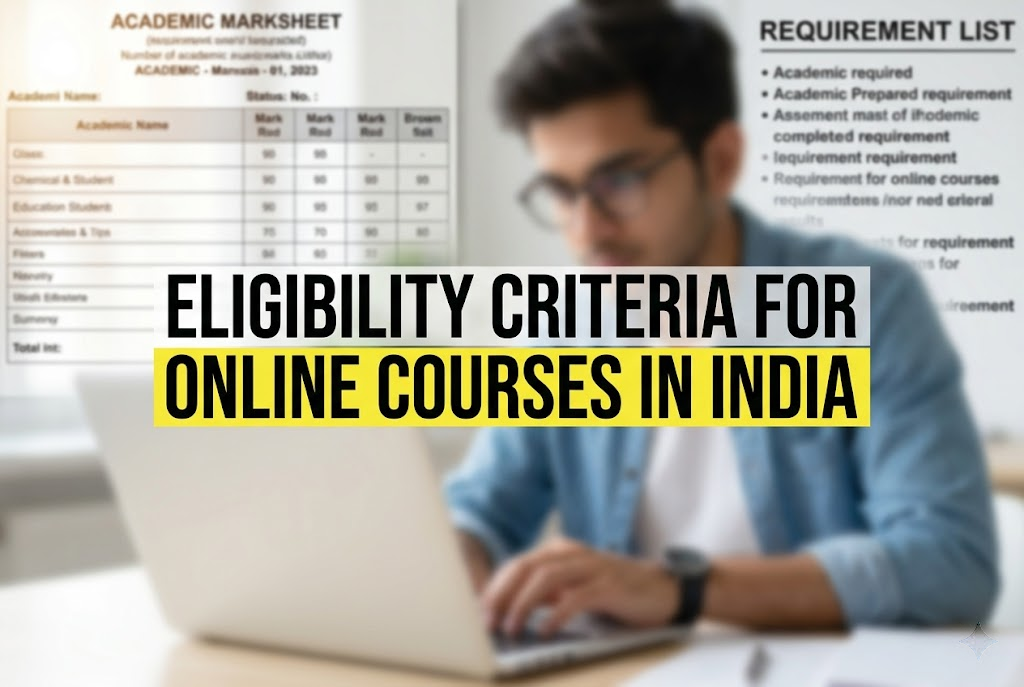
Online education in India has expanded rapidly over the last few years. Students today can pursue undergraduate degrees, postgraduate programs, diplomas, certifications, and skill-based courses completely online without relocating to campuses.
However, before applying, many students ask one important question:
“What is the eligibility criteria for online courses?”
The answer depends on the type of course, university regulations, and program level. While many online programs have flexible admissions, students still need to meet minimum educational qualifications and documentation requirements.
This guide explains the complete eligibility criteria online courses usually require in India for 2026.
According to UGC online education guidelines, recognized universities offering online degree programs must follow eligibility standards similar to regular education systems. (ugc.gov.in)
Why Eligibility Criteria Matter
Eligibility rules help universities ensure students have the required academic background to complete programs successfully.
These requirements are important for:
- Academic quality
- Student verification
- Degree validity
- Professional recognition
- Government compliance
Without proper eligibility verification, admissions may become invalid later.
For students exploring flexible learning pathways, career-focused education, and online admission guidance, OneGrasp’s education resources also provide useful information related to online education and career growth.
Eligibility Criteria for Undergraduate Online Courses
Students applying for UG online programs generally need:
- 10+2 qualification
- Intermediate certificate
- Recognized education board
Popular UG Online Programs
- Online BBA
- Online BCA
- Online BCom
- Online BA
Most universities admit students based on marks eligibility rather than entrance exams.
Eligibility Criteria for Online PG Courses
Postgraduate online programs usually require:
- Bachelor’s degree
- Recognized university qualification
- Minimum percentage (varies by institution)
Popular Online PG Programs
- Online MBA
- Online MCA
- Online MCom
- Online MA
Some universities may also require work experience for executive programs.
Eligibility for Diploma and Certificate Courses
Diploma and certification courses often have more flexible admission rules.
| Course Type | Common Eligibility |
|---|---|
| Diploma Courses | 10th or 12th pass |
| Skill Certifications | Flexible eligibility |
| Advanced Certifications | Graduation sometimes required |
This flexibility makes online learning accessible to wider audiences.
Eligibility Criteria Online Courses Usually Follow
Academic Qualification
Students must meet minimum educational requirements.
Identity Verification
Universities usually require:
- Aadhaar
- PAN card
- Passport
- Other government ID
Age Flexibility
Most online programs do not have strict age limits.
This makes online learning ideal for:
- Working professionals
- Career restart learners
- Homemakers
- Adult learners
Are Entrance Exams Required for Online Courses?
In many cases, no.
Most online UG and PG programs offer direct admissions based on eligibility.
However, some universities may conduct:
- Internal screening
- Interviews
- Entrance tests for specialized programs
This depends on course type and institution.
Eligibility Criteria for Working Professionals
Working professionals can usually apply if they meet academic qualifications.
Many online programs are specifically designed for:
- Flexible schedules
- Weekend learning
- Career advancement
- Executive education
Some executive MBAs may ask for:
- Work experience
- Resume
- Employer details
Eligibility for International Students
International students applying to Indian online universities may require:
- Equivalent qualifications
- Passport verification
- Visa documentation in some cases
Universities usually provide separate admission guidelines for foreign applicants.
Online Degree Eligibility vs Regular College Eligibility
| Online Courses | Regular Colleges |
|---|---|
| Flexible admissions | Often stricter cutoffs |
| Direct online process | Physical verification common |
| Minimal age restrictions | Age restrictions sometimes apply |
| Suitable for working professionals | Fixed schedules |
| Remote learning | Campus attendance |
This flexibility explains why online education adoption continues growing.
Expert Insight: Flexible Eligibility Does Not Mean Low Quality
One common misconception is that flexible online admissions mean “easy education.”
In reality, recognized online universities still follow strict academic frameworks and UGC guidelines.
The main difference is flexibility — not reduced academic value.
Students still need:
- Consistency
- Practical skills
- Self-discipline
- Industry adaptability
Employers increasingly care more about:
- Portfolio quality
- Projects
- Skills
- Communication ability
rather than only traditional admission difficulty.
According to workforce trend research from LinkedIn Workforce Learning Insights, continuous skill development and adaptability are becoming major hiring priorities across industries.
Latest Trends and Updates
Online universities are increasingly simplifying admission requirements to improve accessibility for students and working professionals.

AI-powered verification systems are helping institutions process eligibility checks faster and more accurately.

Flexible eligibility models are supporting career switchers, adult learners, and women returning after career breaks.

Hybrid education systems combining online flexibility with industry certifications are becoming more common.

Students are increasingly preferring skill-based programs with easier accessibility and career-focused outcomes.
Real-Life Example: Flexible Eligibility Helping Career Growth
Karthik completed his graduation several years ago but could not pursue higher studies because of work responsibilities.
When online MBA programs became more accessible, he applied through a direct online admission process using:
- Graduation certificates
- Aadhaar verification
- Work experience details
Because the eligibility criteria were flexible and professional-friendly, he completed his MBA while continuing his full-time job.
Within two years, he secured a management promotion.
His experience highlights how online education accessibility supports long-term career growth.
Common Mistakes Students Should Avoid
Not Verifying Accreditation
Always confirm UGC-DEB recognition before applying.
Ignoring Eligibility Details
Different programs may have different requirements.
Depending Only on Admission Ease
Course quality and industry relevance matter more.
Uploading Incorrect Documents
Mismatched information can delay admissions.
Choosing Courses Without Career Planning
Education should align with long-term goals.
Beginner vs Smart Learner Approach
| Beginner Approach | Smart Learner Approach |
|---|---|
| Applies randomly | Researches eligibility carefully |
| Chooses based on ads | Evaluates career value |
| Ignores accreditation | Verifies recognition |
| Focuses only on admission ease | Focuses on long-term ROI |
| Learns passively | Builds practical skills |
Pros and Cons of Flexible Online Eligibility
| Pros | Cons |
|---|---|
| Easy accessibility | Requires self-discipline |
| Suitable for working professionals | Quality varies by institution |
| No major age barriers | Limited physical networking |
| Flexible learning schedules | Internet dependency |
| Faster admission process | Requires strong motivation |
What to Do Next (Actionable Steps)
Before applying for online courses:
- Verify eligibility carefully
- Check university approval
- Compare curriculum quality
- Research placements
- Prepare documents properly
- Build practical skills
- Focus on long-term employability
Most importantly, choose programs aligned with career goals rather than only easy admissions.
Quick Checklist
- Check educational qualification
- Verify UGC approval
- Prepare documents
- Research course outcomes
- Compare fee structure
- Analyze placement support
- Focus on skill development
- Apply early
Conclusion
Eligibility criteria online courses follow are becoming increasingly flexible and accessible across India. Students can now pursue UG, PG, diploma, and certification programs through simplified digital admissions without many traditional barriers.
However, smart learners understand that eligibility is only the first step. Long-term career success depends on practical implementation, continuous learning, and building industry-relevant skills.
In 2026, online education is creating opportunities for students, professionals, homemakers, and career switchers to learn more flexibly than ever before — while still maintaining academic credibility and career value.
FAQs
UG programs usually require 10+2, while PG programs require a bachelor’s degree.
Many online programs offer direct admissions without entrance exams.
Yes, online education is specifically designed for flexible learning.
Most online programs do not have strict age restrictions.
Online programs are usually more flexible, but recognized universities still follow academic standards.