September 5, 2025
 4 Min
 No Comment

In this guide on The Role of Big Data and AI in Student Success, we cover everything you need to know about Big Data AI.
Education is undergoing a profound transformation. As institutions navigate a competitive and digital-first world, the convergence of Big Data and Artificial Intelligence (AI) is redefining how learning outcomes are measured, managed, and optimized. The integration of these technologies is no longer a future aspiration—it is a strategic necessity for driving student success.
Big Data in Education: Unlocking Hidden Insights
Every interaction a student has within a learning environment generates valuable data—attendance, performance metrics, online behavior, and even extracurricular engagement. Traditionally, much of this information remained underutilized. Big Data analytics now allows institutions to uncover patterns, forecast challenges, and design interventions that were previously impossible at scale.
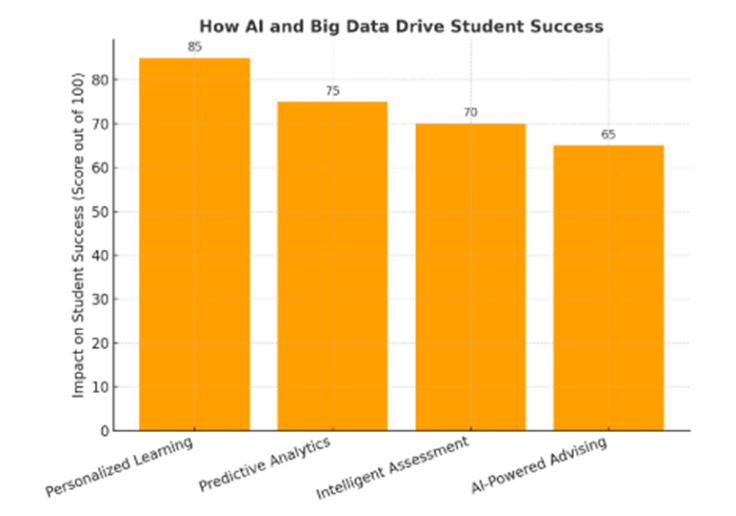
The Strategic Role of AI
AI elevates Big Data by converting raw information into actionable intelligence. Its applications in education are reshaping student experiences and institutional strategies:
- Personalized Learning Journeys: AI tailors curricula to individual strengths, learning speeds, and preferences.
- Predictive Analytics: Early-warning systems identify at-risk students and recommend timely support.
- Intelligent Assessment: Automated grading and adaptive testing improve accuracy and reduce administrative workload.
- AI-Powered Advising: Smart systems guide students toward academic pathways and career opportunities aligned with their skills and aspirations.
Business Benefits for Institutions
For universities and schools, the adoption of Big Data and AI extends beyond student outcomes. It drives operational efficiency, strengthens institutional reputation, and enhances decision-making by:
- Enabling data-driven policy design
- Optimizing resource allocation
- Improving student retention and graduation rates
- Supporting global competitiveness in education markets
Challenges and Considerations
Despite the promise, implementation requires addressing critical challenges:
- Data Privacy & Governance: Safeguarding sensitive student data is a non-negotiable priority.
- Digital Equity: Ensuring equal access to AI-driven tools across diverse student populations.
- Change Management: Equipping educators and administrators with the skills to leverage new technologies effectively.
Empowering the Future
By 2030, institutions leveraging Big Data and AI will set new benchmarks for student achievement and institutional excellence. The future of education is not about replacing educators—it is about empowering them with insights and tools to foster measurable success.
To fully harness the potential of Big Data and AI, institutions must invest in educator training and development, ensuring that teachers are equipped to effectively integrate these technologies into their teaching practices. This may involve providing ongoing professional development opportunities, as well as incentives for educators to experiment with new approaches.
Furthermore, institutions must prioritize data governance and ethics, establishing clear guidelines and protocols for the collection, storage, and analysis of student data. This will help to build trust with students, parents, and the broader community, while also ensuring that the use of Big Data and AI is aligned with the values and mission of the institution.
In addition to these efforts, institutions can also leverage Big Data and AI to support student mental health and wellbeing, identifying early warning signs of distress and providing targeted interventions and support services. By taking a holistic approach to student success, institutions can create a more supportive and inclusive learning environment that fosters the academic, social, and emotional growth of all students.
Frequently Asked Questions
What is Big Data in education?
Big Data in education refers to the collection and analysis of large amounts of data generated by students, teachers, and institutions to improve learning outcomes.
How does AI elevate Big Data?
AI converts raw Big Data into actionable intelligence, enabling personalized learning journeys, predictive analytics, and intelligent assessment.
What are the business benefits of Big Data and AI for institutions?
Big Data and AI drive operational efficiency, strengthen institutional reputation, and enhance decision-making by enabling data-driven policy design and optimizing resource allocation.
What are the challenges in implementing Big Data and AI in education?
Implementation requires addressing critical challenges such as data privacy and governance, digital equity, and change management.
How will Big Data and AI shape the future of education?
By 2030, institutions leveraging Big Data and AI will set new benchmarks for student achievement and institutional excellence, empowering educators with insights and tools to foster measurable success.