June 12, 2026
 7 Min
 No Comment
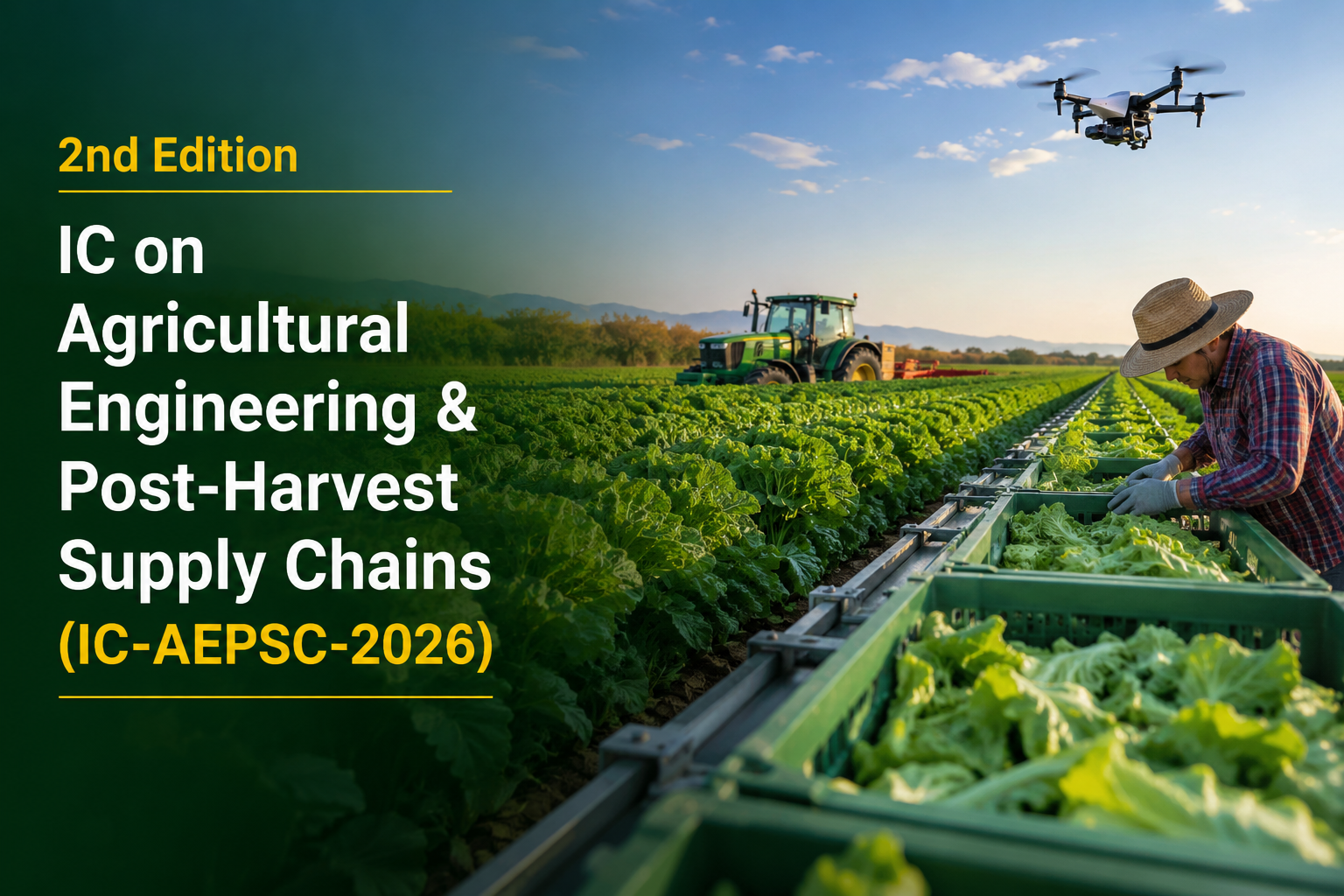
Agriculture is undergoing one of the most significant transformations in human history. From AI-powered crop monitoring to intelligent cold-chain logistics, engineering innovations are reshaping how food is produced, stored, transported, and delivered. The Agricultural Engineering Supply Chains sector sits at the heart of this transformation, connecting farm productivity with global food security.
Against this backdrop, the 2nd Edition International Conference on Agricultural Engineering & Post-Harvest Supply Chains (IC-AEPSC-2026) provides an important platform for researchers, engineers, policymakers, agribusiness leaders, and students to discuss emerging technologies and sustainable solutions for modern agriculture. The conference focuses on mechanization, precision farming, automation, food logistics, and post-harvest systems designed to improve efficiency and reduce losses across agricultural value chains.
Register for IC-AEPSC-2026
Researchers, students, and industry professionals can register through the official conference page:
What Is IC-AEPSC-2026 About?
IC-AEPSC-2026 is an international conference dedicated to agricultural engineering innovations, post-harvest technologies, food logistics, precision agriculture, automation, and supply chain optimization aimed at improving global food systems.
The conference brings together experts from academia, industry, and government sectors to address one of the world’s most pressing challenges: producing more food while reducing waste and environmental impact.
According to the conference organizers, the event emphasizes engineering-driven solutions that improve productivity, reduce post-harvest losses, and strengthen food security through smarter supply chains.
Why Agricultural Engineering Supply Chains Matter Today
Efficient agricultural engineering and supply chains help reduce food losses, improve farmer incomes, strengthen food security, and support sustainable development.
The United Nations highlights that reducing food loss and waste is essential for achieving sustainable food systems and global development goals.
Globally, nearly one-third of food produced for human consumption is lost or wasted across supply chains. Improvements in storage, transportation, packaging, and post-harvest technologies can significantly reduce these losses and improve food availability.
Therefore, innovations discussed at conferences like IC-AEPSC-2026 have implications that extend far beyond agriculture alone.
Agricultural Engineering Supply Chains Conference Themes
The conference covers emerging technologies and research areas that improve agricultural productivity and supply chain efficiency.
Major tracks include:
- Agricultural Machinery and Mechanization Systems
- Automation, Robotics, and IoT in Agriculture
- Post-Harvest Technology and Food Processing
- Agricultural Energy Systems
- Precision Agriculture
- Climate-Smart Engineering
- Cold Chain and Food Logistics
- Smart Sensors and Artificial Intelligence
- Agricultural Waste Management
- Supply Chain Optimization
- Digital Agriculture Systems
These research areas reflect the growing integration of engineering, data science, automation, and sustainability within agriculture.
Technology Driving the Future of Food Systems
Digital agriculture technologies are enabling farmers and supply chain operators to make smarter, data-driven decisions.
Research from McKinsey suggests that digital agriculture technologies can improve productivity, resource efficiency, and sustainability outcomes across agricultural systems.
Examples include:
- Drone-based crop monitoring
- AI-powered disease detection
- Precision irrigation systems
- Autonomous tractors
- Smart warehousing
- Blockchain-enabled traceability
Studies on blockchain adoption in agriculture indicate significant potential for improving transparency and traceability across food supply chains.
Conference Schedule and Important Dates
The conference is scheduled for 15–16 April 2026 and will be conducted online. The abstract submission deadline is 6 April 2026, while registration closes on 8 April 2026.
| Event | Date |
|---|---|
| Conference Dates | 15–16 April 2026 |
| Abstract Submission Deadline | 6 April 2026 |
| Registration Deadline | 8 April 2026 |
| Mode | Online |
| Time | 8:00 AM – 12:00 PM IST |
Researchers should prepare abstracts according to the conference guidelines and submit them before the deadline.
Opportunities for Researchers, Students and Industry Professionals
Participants gain opportunities for publication, networking, collaboration, and professional development.
Benefits include:
- International research exposure
- Collaboration opportunities
- Peer-reviewed publication possibilities
- Industry-academia interaction
- Knowledge sharing
- Certificate of participation
- Conference proceedings publication opportunities
The conference specifically welcomes researchers, agribusiness professionals, logistics experts, engineers, innovators, and students working on agricultural technologies and food systems.
Expert Analysis: The Future of Agricultural Engineering
Agricultural engineering is moving rapidly toward intelligent, interconnected ecosystems rather than isolated technologies.
The next decade will likely see greater integration of:
- Artificial Intelligence
- Internet of Things (IoT)
- Precision Agriculture
- Climate Analytics
- Autonomous Machinery
- Circular Economy Systems
The OECD continues to emphasize the role of innovation and technology in building resilient agricultural systems.
Researchers participating in conferences such as IC-AEPSC-2026 are helping shape solutions for global challenges involving food security, climate resilience, sustainability, and resource efficiency.
Latest Trends & Updates
Artificial Intelligence is increasingly being used to optimize crop management, predict disease outbreaks, and automate agricultural operations. Researchers are focusing on explainable AI models that farmers can trust and adopt effectively.
Digital public infrastructure initiatives are improving access to agricultural advisory services, weather intelligence, and market information for rural communities worldwide.
Cold-chain innovations are becoming essential as governments and private organizations seek to reduce food spoilage and improve logistics efficiency.
Climate-smart agriculture continues to gain attention as researchers develop technologies that improve productivity while reducing environmental impact.
Global policymakers are supporting sustainable supply chains, renewable energy integration, and circular agricultural systems that minimize waste and maximize resource utilization.
Emerging research areas include agricultural robotics, smart sensors, predictive analytics, carbon-neutral farming systems, and blockchain-enabled traceability networks.
[/Latest Trends & Updates]
Real-Life Example
Imagine a university research team developing an IoT-based grain storage monitoring system. The researchers present their findings at IC-AEPSC-2026 and receive feedback from agricultural engineers, logistics experts, and agribusiness professionals.
Following the conference, the team collaborates with an agri-tech startup to pilot the technology in rural warehouses. Within a year, storage losses are reduced significantly, attracting investment and creating opportunities for commercialization.
This example demonstrates how conference participation can accelerate innovation and real-world impact.
Traditional Agriculture vs Smart Agriculture
| Traditional Agriculture | Smart Agriculture |
|---|---|
| Manual monitoring | Sensor-based monitoring |
| Reactive decisions | Predictive analytics |
| Limited data usage | Real-time insights |
| High resource wastage | Optimized resource use |
| Lower traceability | End-to-end visibility |
Beginner vs Expert Perspective
| Beginners | Experts |
|---|---|
| Focus on machinery | Focus on systems integration |
| Single-farm solutions | End-to-end value chains |
| Basic technology adoption | Data-driven optimization |
| Short-term gains | Long-term sustainability |
| Limited scalability | Ecosystem thinking |
Pros and Cons of Participating
| Pros | Cons |
|---|---|
| Global networking opportunities | Time commitment |
| Research visibility | Preparation effort |
| Publication opportunities | Competitive submissions |
| Industry exposure | Requires strong abstract |
| Collaboration possibilities | Learning curve for newcomers |
Common Mistakes to Avoid
Many participants make avoidable mistakes that reduce the value of conference participation.
Submitting Weak Abstracts
Focus on clear objectives, methodology, and outcomes.
Ignoring Industry Relevance
Connect research findings with real-world agricultural challenges.
Missing Sustainability Dimensions
Modern agricultural research increasingly requires sustainability considerations.
Poor Networking Preparation
Review speakers, sessions, and participants beforehand.
Focusing Only on Technology
Consider economic, environmental, and social implications as well.
What to Do Next
- Review conference themes carefully.
- Select a relevant research topic.
- Conduct a literature review.
- Prepare an abstract.
- Submit before the deadline.
- Register early.
- Prepare presentation materials.
- Engage actively during networking sessions.
Quick Checklist
✔ Review conference tracks
✔ Prepare abstract
✔ Verify formatting guidelines
✔ Submit before deadline
✔ Complete registration
✔ Prepare presentation
✔ Network with participants
✔ Follow current agri-tech trends
Conclusion
The 2nd Edition IC on Agricultural Engineering & Post-Harvest Supply Chains (IC-AEPSC-2026) arrives at a time when agriculture faces unprecedented opportunities and challenges. From precision farming and robotics to smart logistics and sustainable food systems, the innovations discussed at this conference have the potential to transform global agriculture.
For researchers, students, industry professionals, and policymakers, IC-AEPSC-2026 offers more than a conference—it provides a platform to exchange ideas, build collaborations, and contribute to solutions that can shape the future of food security and sustainable development. As agricultural systems become increasingly data-driven and interconnected, participation in such forums can provide valuable insights and long-term professional benefits.
FAQs
Yes, the conference is scheduled to be conducted online.
Yes. Students are encouraged to present research and engage with experts.
Selected abstracts may be considered for publication in conference proceedings or indexed journals.
It helps reduce food losses, improve logistics efficiency, strengthen food security, and increase agricultural sustainability.