May 11, 2026
 4 Min
 No Comment
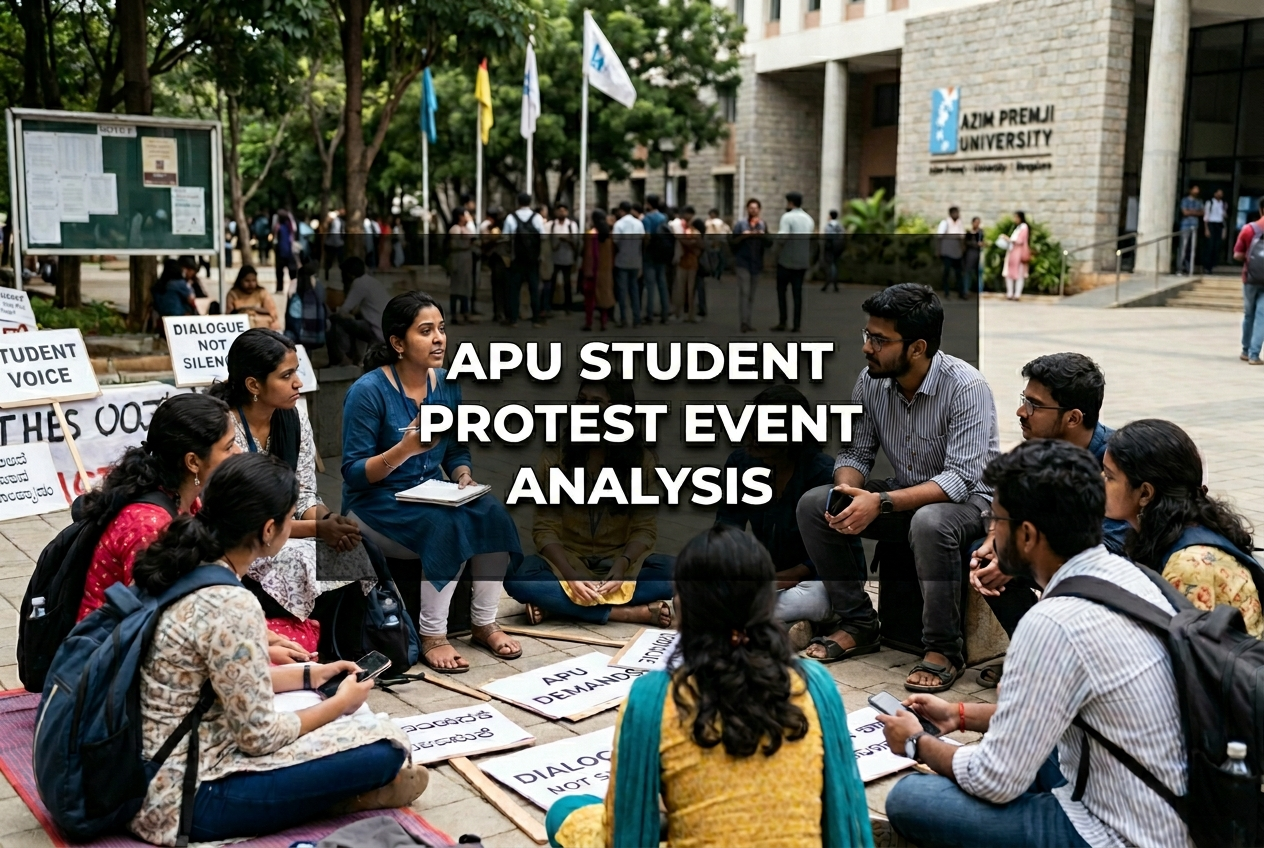
The APU student protest event has recently gained attention in India’s higher education discussions due to a campus-level disruption involving students and organized student groups. The incident highlights ongoing debates around student expression, campus politics, and freedom of participation in university events. In 2026, such incidents are becoming more visible as student voices grow stronger in academic institutions.
APU student protest event and what happened on campus
The APU student protest event refers to a situation where a student-led gathering or academic activity faced disruption during a university program. Reports suggest that tensions arose during a scheduled event, leading to arguments, objections, and eventual interruption of proceedings.
Such incidents are not isolated, as campuses across India often witness differing viewpoints between student groups on political, social, or cultural discussions. The situation at APU reflects this broader pattern of active student engagement.
APU student protest event and student activism in India
The APU student protest event is part of a larger rise in student activism across Indian universities. Over the past few years, students have increasingly participated in:
- Debates on academic freedom
- Social justice discussions
- Campus governance issues
- Policy-related protests
- Representation and inclusion demands
This growing activism shows that students are no longer passive learners but active participants in shaping campus environments.
Moreover, universities are becoming spaces where political and social awareness often intersects with education.
Causes behind APU student protest event
Several factors may contribute to incidents like the APU student protest event:
- Differing political ideologies among student groups
- Lack of structured dialogue platforms on campus
- Sensitivity around invited speakers or topics
- Increasing polarization in public discourse
- Communication gaps between administration and students
In many cases, misunderstandings escalate quickly when proper mediation channels are not available.
Expert insight on APU student protest event
Education experts believe that the APU student protest event reflects a critical need for better conflict resolution systems in universities.
According to academic observers, student disagreements are natural in democratic spaces, but they should be managed through structured dialogue rather than disruption.
Experts also emphasize that universities must balance two key aspects:
- Freedom of expression
- Maintenance of academic order
Striking this balance is essential for healthy campus environments.
Common mistakes that worsen campus conflicts
Incidents like the APU student protest event often escalate due to avoidable mistakes:
- Lack of prior communication between stakeholders
- Emotional reactions instead of structured discussion
- Absence of neutral moderators during disputes
- Ignoring student concerns before events
- Social media amplification without context
Addressing these issues early can significantly reduce campus tensions.
What students and universities should do next
To handle situations similar to the APU student protest event, the following steps are important:
- Create clear guidelines for campus events
- Establish student-administration dialogue committees
- Encourage peaceful protest frameworks
- Train moderators for sensitive discussions
- Promote awareness of campus code of conduct
These steps can help maintain both freedom and discipline in academic spaces.
Latest trends in student activism
The APU student protest event aligns with a broader national trend in India’s education system:
- Increased student participation in policy discussions
- More organized campus-based movements
- Digital platforms amplifying student voices
- Growing awareness of rights and representation
- Higher sensitivity around public academic events
This shows that student engagement is evolving and becoming more structured and visible.
Conclusion
The APU student protest event highlights the growing role of student voices in Indian universities. While such incidents reflect active participation and democratic expression, they also underline the need for better communication and structured dialogue systems on campus. With proper management, universities can ensure that both academic freedom and institutional harmony coexist effectively
Frequently Asked Questions
It refers to a campus incident where a student-related event faced disruption due to disagreements or objections.
They usually arise due to ideological differences, administrative issues, or concerns about campus decisions.
Yes, peaceful protests are allowed, but they must follow university rules and legal boundaries.
By improving communication, providing dialogue platforms, and ensuring fair event planning.
It helps raise awareness of issues but can also lead to conflict if not managed properly.