April 22, 2026
  4 Min
4 Min  No Comment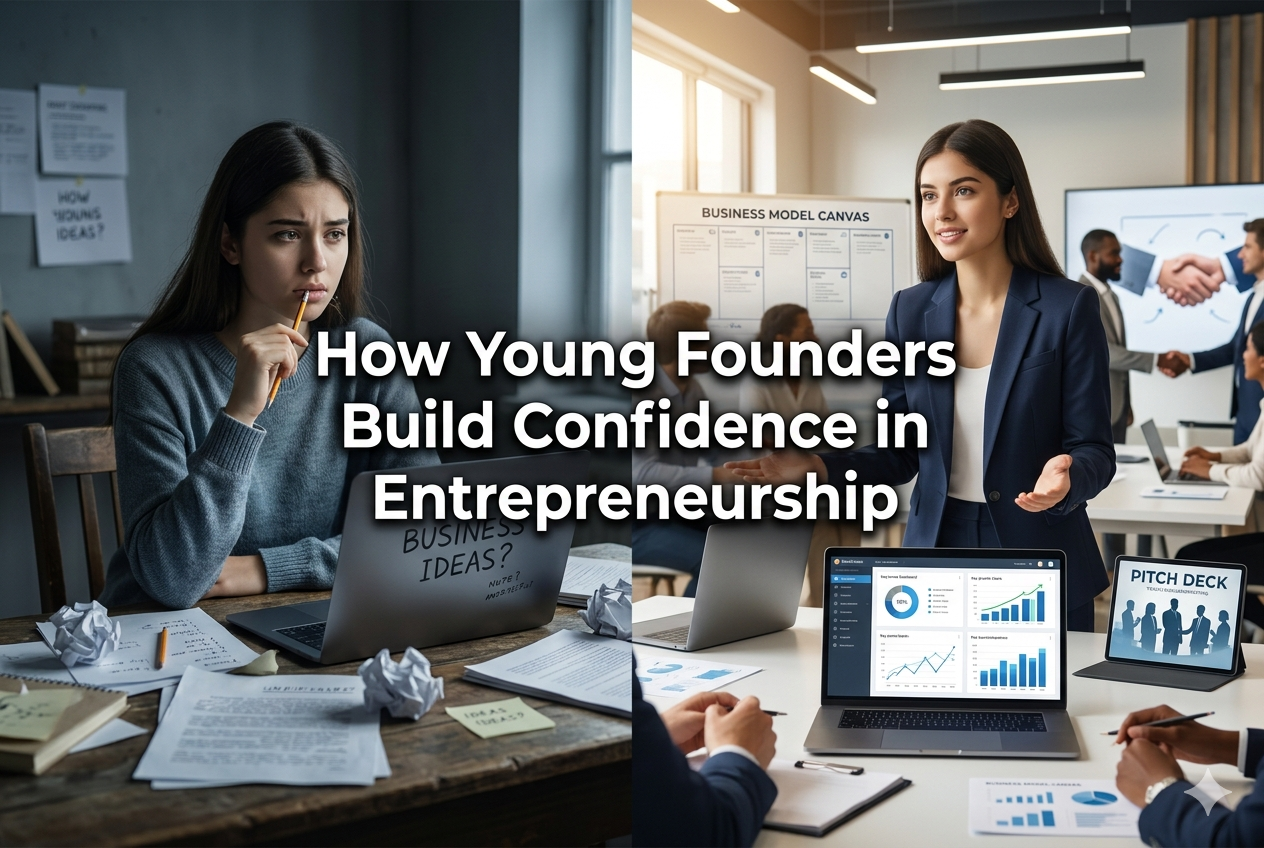
Starting a business sounds exciting—until self-doubt kicks in. Many students dream of building startups but hesitate because they lack confidence.
Understanding how young founders build confidence can make the difference between an idea that stays in your mind and one that becomes a real business.
Why confidence is the biggest challenge for young founders
In India, nearly 80% of startups fail within the first few years, and lack of confidence plays a hidden but powerful role.
Young founders often struggle with:
- Fear of failure
- Lack of experience
- Limited resources
- Uncertainty about decisions
However, confidence is not something you’re born with—it’s something you build over time.
How young founders build confidence step by step
Confidence doesn’t come instantly. It develops through consistent action and learning.
Here’s how successful founders approach it:
- Start small and validate ideas
Instead of aiming big immediately, test your idea with a small audience. - Learn through action, not just theory
Real-world experience builds more confidence than reading or watching content. - Accept failure as feedback
Every mistake teaches something valuable. - Surround yourself with the right people
Mentors and peers can guide and motivate you. - Keep improving your skills
Confidence grows when your abilities improve.
You can explore startup opportunities and resources here:
https://onegrasp.com/startups/
The role of skills in building entrepreneurial confidence
Many students assume confidence comes from motivation. In reality, it comes from competence.
Important skills include:
- Communication and pitching
- Problem-solving
- Financial basics
- Leadership and teamwork
Moreover, when you know what you’re doing, you naturally feel more confident.
For example, a student who understands how to pitch an idea will feel more comfortable presenting it to investors.
Real-world exposure builds stronger confidence
Classroom learning alone is not enough for entrepreneurship.
Young founders gain confidence through:
- Internships in startups
- Participating in hackathons
- Building small projects
- Networking with industry professionals
According to reports from https://www.education.gov.in and startup ecosystem insights, practical exposure significantly improves entrepreneurial success rates.
Therefore, experience is the fastest way to build confidence.
Common mistakes young founders make
While trying to build confidence, many students make avoidable mistakes:
- Waiting too long to start
- Comparing themselves with experienced entrepreneurs
- Avoiding risks completely
- Not seeking feedback
- Trying to be perfect before launching
However, confidence comes from action, not perfection.
How mindset shapes entrepreneurial confidence
Your mindset determines how you respond to challenges.
Successful young founders:
- See failures as learning opportunities
- Stay consistent even when results are slow
- Focus on growth rather than immediate success
- Remain adaptable in changing situations
In addition, a positive and realistic mindset helps you stay motivated during difficult phases.
Why choosing the right college matters
The right college environment can significantly boost entrepreneurial confidence.
A good college:
- Encourages innovation and creativity
- Provides startup incubation support
- Offers mentorship and networking opportunities
- Promotes hands-on learning through projects
- Helps build essential business skills
Therefore, choosing the right college can give you a strong foundation for entrepreneurship.
Tips to Choose the Right College
- Look for colleges with startup incubators
- Check availability of entrepreneurship programs
- Evaluate industry exposure and partnerships
- Prefer institutions encouraging practical learning
- Ensure access to mentorship and networking
Common Mistakes to Avoid
- Ignoring skill development
- Relying only on theory
- Not building a network
- Avoiding real-world exposure
- Expecting instant success
FAQs
1. Can students become successful entrepreneurs?
Yes, many successful founders started during their college years.
2. How can I build confidence as a beginner?
Start small, gain experience, and continuously improve your skills.
3. Do I need a business degree to start a startup?
No, practical skills and problem-solving ability matter more.
4. What is the biggest challenge for young founders?
Lack of confidence and fear of failure.
5. How important is mentorship in entrepreneurship?
Mentorship provides guidance, reduces mistakes, and builds confidence faster.
Conclusion
Confidence is not a starting point—it’s a result of consistent effort, learning, and experience. By understanding how young founders build confidence, you can take small but powerful steps toward your entrepreneurial journey.
Every successful founder once started with uncertainty—but they moved forward anyway.