May 7, 2026
 5 Min
 No Comment
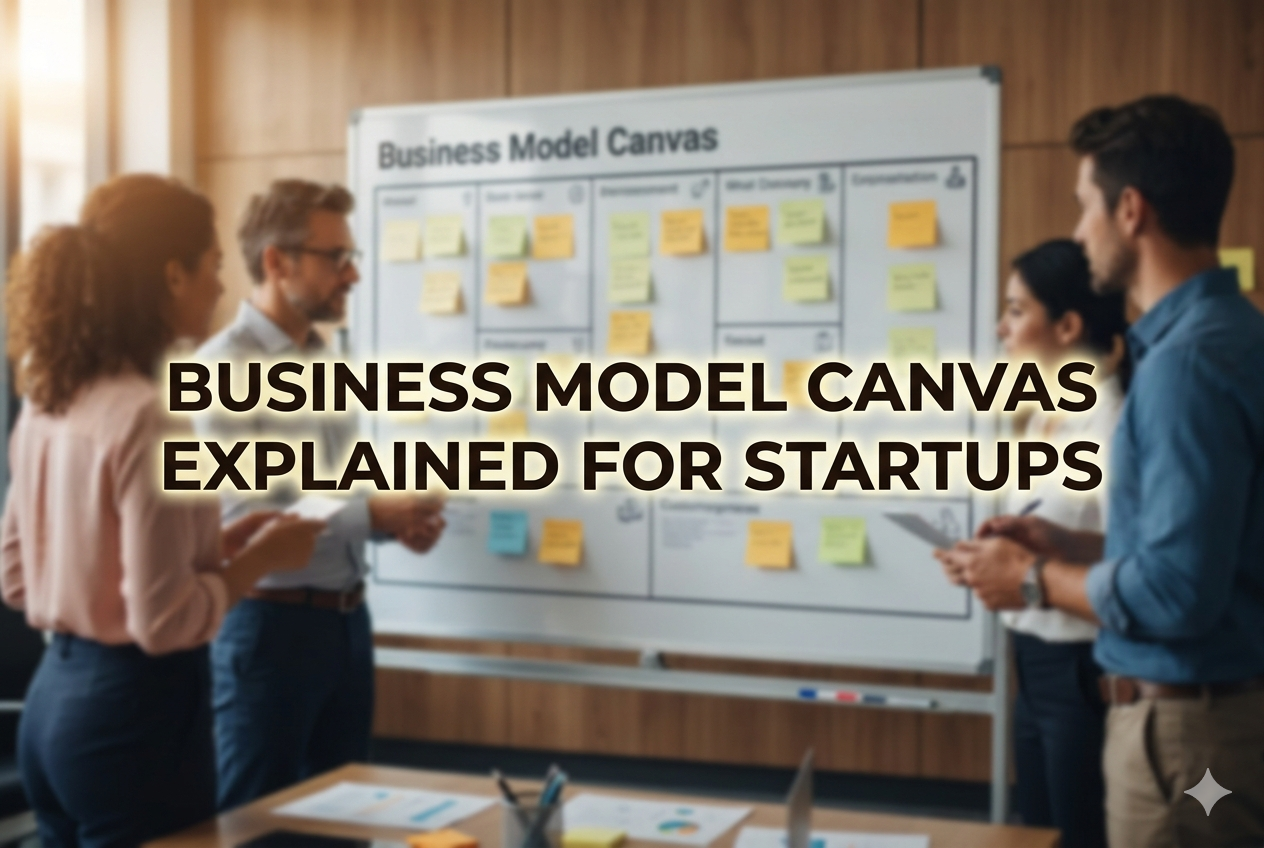
Understanding the Business Model Canvas explained in simple terms can help startup founders organize their ideas, identify opportunities, and build scalable businesses. In 2026, startups move quickly, and founders need frameworks that simplify planning without creating unnecessary complexity.
Traditional business plans are often long, time-consuming, and difficult to update. Modern startups prefer lean and flexible systems that help them adapt faster. This is where the Business Model Canvas becomes extremely valuable.
The Business Model Canvas is a one-page business framework that helps startups visualize how their business works. It covers customers, revenue, operations, value propositions, and growth strategies in a structured format.
If you’re exploring startup planning and business-building strategies, you can also discover more startup-focused insights on https://onegrasp.com/startups/ to understand how modern startups structure and scale their businesses.
What is the Business Model Canvas?
The Business Model Canvas explained simply means breaking down a business into key components so founders can understand how the company creates, delivers, and captures value.
The framework was developed by Alexander Osterwalder and became widely popular among startups because of its simplicity and flexibility.
Instead of writing lengthy business plans, startups can map their business model visually using nine essential building blocks.
These building blocks help founders:
- Understand customer needs
- Define revenue streams
- Plan operations
- Identify growth opportunities
- Reduce strategic confusion
According to startup planning insights from https://www.strategyzer.com/, the Business Model Canvas is widely used by startups, entrepreneurs, and innovation teams globally.
The 9 Components of the Business Model Canvas
1. Customer Segments
Customer segments define the group of people your startup serves.
Every successful startup solves a problem for a specific audience.
Examples:
- Students
- Small businesses
- Content creators
- E-commerce companies
One of the biggest startup mistakes is trying to target everyone at once.
2. Value Proposition
The value proposition explains why customers should choose your startup over competitors.
This includes:
- Solving a problem
- Saving time
- Reducing costs
- Improving convenience
Strong value propositions clearly explain the benefit customers receive.
Companies like Uber succeeded because they simplified transportation convenience.
3. Channels
Channels describe how your startup reaches customers.
This may include:
- Websites
- Social media
- Mobile apps
- Online marketplaces
- Sales teams
Modern startups rely heavily on digital channels for growth and customer acquisition.
4. Customer Relationships
This section explains how your startup interacts with customers.
Examples include:
- Customer support
- Automated systems
- Community engagement
- Personalized communication
Strong customer relationships improve trust and retention.
5. Revenue Streams
Revenue streams define how the startup makes money.
Common startup revenue models include:
- Subscriptions
- Commissions
- Advertising
- Product sales
- SaaS pricing models
Understanding revenue clearly is essential for long-term sustainability.
6. Key Resources
Key resources are the assets needed to operate the business.
These may include:
- Technology
- Employees
- Intellectual property
- Brand identity
- Data systems
Without the right resources, startups struggle to scale efficiently.
7. Key Activities
Key activities are the most important tasks your startup performs.
Examples:
- Product development
- Marketing
- Customer support
- Sales operations
These activities directly impact growth and business performance.
8. Key Partnerships
Most startups rely on partnerships to grow faster.
Partnerships may include:
- Suppliers
- Technology providers
- Marketing partners
- Payment platforms
For example, many startups use services from Stripe or Shopify to simplify operations.
Strategic partnerships reduce operational complexity.
9. Cost Structure
This section explains the major expenses involved in operating the startup.
Common startup costs include:
- Salaries
- Marketing expenses
- Software subscriptions
- Infrastructure
- Operations
Understanding costs helps founders manage cash flow effectively.
Why Startups Use the Business Model Canvas
The biggest advantage of the Business Model Canvas explained is simplicity.
Startups use it because:
- It is easy to update
- Helps visualize the business clearly
- Supports faster decision-making
- Encourages strategic thinking
- Reduces planning complexity
Unlike traditional business plans, it adapts easily as startups evolve.
According to innovation and entrepreneurship discussions on Reddit, many startup founders prefer lean frameworks because startups often pivot multiple times before finding product-market fit. (reddit.com)
Common Mistakes Startups Make
While using the Business Model Canvas, startups often:
- Define customer segments too broadly
- Ignore revenue clarity
- Overestimate demand
- Focus too much on ideas instead of execution
The framework is only useful when founders validate assumptions using real market feedback.
Strategic Insight
The Business Model Canvas explained is not just a planning tool—it becomes a decision-making framework for startups.
According to business strategy research from https://www.strategyzer.com/, startups that regularly revisit and update their business model adapt faster to changing markets.
In 2026, flexibility and speed are major competitive advantages.
If you’re also exploring startup scaling, operations, and entrepreneurial systems, you can discover more startup insights on https://onegrasp.com/startups/.
Conclusion
Understanding the Business Model Canvas explained helps startup founders simplify business planning and focus on what truly matters.
Instead of spending months creating rigid plans, startups can quickly map ideas, validate assumptions, and improve strategies over time.
The framework is simple, practical, and highly effective for modern startups operating in fast-changing markets.
FAQ
It is a one-page framework used to describe how a business creates, delivers, and captures value.
Alexander Osterwalder developed the framework.
Because it simplifies planning and helps visualize the business structure clearly.
There are nine key components.
For early-stage startups, it is often more flexible and easier to update than traditional business plans.