May 7, 2026
 5 Min
 No Comment
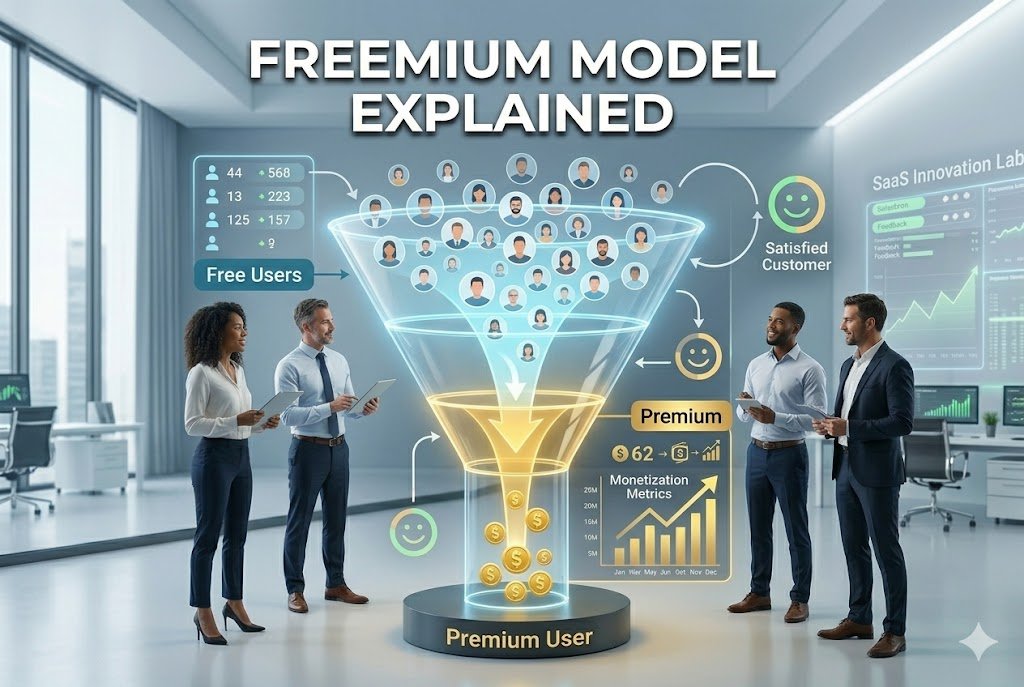
Understanding the Freemium Model explained simply means understanding how startups attract users by offering free services while charging for advanced features, premium access, or additional functionality.
In 2026, the freemium business model has become one of the most widely used growth strategies for digital startups, SaaS companies, mobile apps, creator platforms, and online tools.
The logic behind the model is simple:
- Offer enough value for free
- Build a large user base
- Convert a percentage of users into paying customers
Many successful technology companies have scaled globally using this approach because it reduces the barrier to entry for users.
If you’re exploring startup monetization models and growth strategies, you can also explore more startup-focused insights on https://onegrasp.com/startups/ to understand how modern startups build scalable business systems.
What is the Freemium Model?
The Freemium Model explained combines two words:
- “Free”
- “Premium”
Users get access to a free version of the product, while premium features require payment.
This strategy helps startups:
- Attract users faster
- Build trust before charging
- Increase product adoption
- Generate recurring revenue over time
Instead of forcing users to pay immediately, startups allow them to experience the product first.
According to SaaS business insights from https://www.forbes.com/, freemium models continue to drive user growth across software and digital platforms.
How the Freemium Model Works
Most freemium businesses follow a simple structure:
Free Tier
Users receive:
- Basic features
- Limited usage
- Entry-level access
Premium Tier
Paid users receive:
- Advanced features
- More storage or usage
- Better customization
- Priority support
- Additional tools
The goal is to make the free version useful while making the premium version significantly more valuable.
Examples of Successful Freemium Companies
Many global companies have successfully used the freemium strategy.
Spotify
Spotify allows users to stream music for free with advertisements, while premium users get:
- Ad-free listening
- Offline downloads
- Better audio quality
Dropbox
Dropbox offers limited free storage while charging for larger storage plans and business features.
Zoom
Zoom became highly popular by offering free meetings with usage limitations while monetizing businesses through premium plans.
These examples show how the freemium model helps companies grow rapidly before maximizing revenue.
Why Startups Use the Freemium Model
The Freemium Model explained is popular because it supports fast user acquisition.
Benefits include:
- Lower entry barriers
- Faster product adoption
- Viral growth potential
- Stronger brand visibility
- Easier customer trust building
Users are more willing to try products when no upfront payment is required.
This becomes especially important for SaaS and app-based startups operating in highly competitive markets.
Challenges of the Freemium Model
While powerful, the freemium model also has challenges.
Common issues include:
- High infrastructure costs
- Free users who never convert
- Difficulty balancing free vs paid features
- Customer support expenses
Many startups fail because they offer too much for free and struggle to generate enough premium revenue.
According to startup discussions on Reddit, maintaining a healthy conversion rate from free users to paying users becomes one of the biggest challenges in freemium businesses. (reddit.com)
Key Factors for a Successful Freemium Model
Successful startups using freemium models usually focus on:
- Strong product value
- Simple onboarding
- Clear premium benefits
- User engagement
- Scalable infrastructure
The free version should create enough value to keep users engaged, while premium features should solve more advanced problems.
Freemium vs Free Trial
Many people confuse freemium with free trials, but they are different.
Freemium
- Free access continues permanently
- Premium features require payment
Free Trial
- Full access is temporary
- Payment required after trial period
Both strategies are used in SaaS businesses, but freemium focuses more on long-term user acquisition.
Industries Where Freemium Works Best
The freemium model works especially well in:
- SaaS startups
- Mobile apps
- Productivity tools
- Streaming platforms
- Collaboration software
- Creator economy platforms
Digital businesses with scalable infrastructure benefit the most from this approach.
Strategic Insight
The Freemium Model explained is not just a pricing strategy—it is a growth strategy.
According to SaaS market research and growth analysis from https://www.mckinsey.com/capabilities/growth-marketing-and-sales/our-insights, companies that reduce user entry barriers often achieve faster adoption and stronger network effects.
In 2026, startups compete heavily for user attention. Freemium models help companies grow audiences quickly before monetizing at scale.
If you’re also exploring startup growth systems and monetization strategies, you can discover more startup resources on https://onegrasp.com/startups/.
Common Mistakes Startups Make
Many startups struggle with freemium models because they:
- Offer too many premium features for free
- Fail to communicate premium value clearly
- Ignore user engagement
- Focus only on growth without monetization
A successful freemium business balances user growth with sustainable revenue generation.
Conclusion
Understanding the Freemium Model explained helps founders build products that attract users quickly while creating long-term monetization opportunities.
The model works best when startups provide meaningful free value while giving users strong reasons to upgrade.
In 2026, freemium continues to remain one of the most powerful strategies for SaaS businesses, apps, and digital platforms looking to scale rapidly.
FAQs
A freemium model offers free basic services while charging for advanced or premium features.
Because it helps attract users quickly and increases product adoption.
Freemium provides permanent free access with limitations, while free trials offer temporary full access.
Spotify, Dropbox, and Zoom are popular examples.
Yes, if enough users convert from free plans to premium subscriptions.