May 11, 2026
 5 Min
 No Comment
SEO Title
SaaS Pricing Models Explained for Startups
Slug
saas-pricing-models-explained
Focus Keyphrase
SaaS Pricing Models Explained
Meta Description
SaaS Pricing Models Explained with subscription strategies, freemium plans, usage-based pricing, and startup monetization insights.
SEO Tags
SaaS pricing models, SaaS business model, SaaS subscription pricing, freemium pricing, SaaS monetization, startup SaaS guide, recurring revenue, SaaS growth strategy, SaaS startup, usage based pricing, SaaS billing, software pricing models, SaaS revenue, startup monetization, SaaS strategy
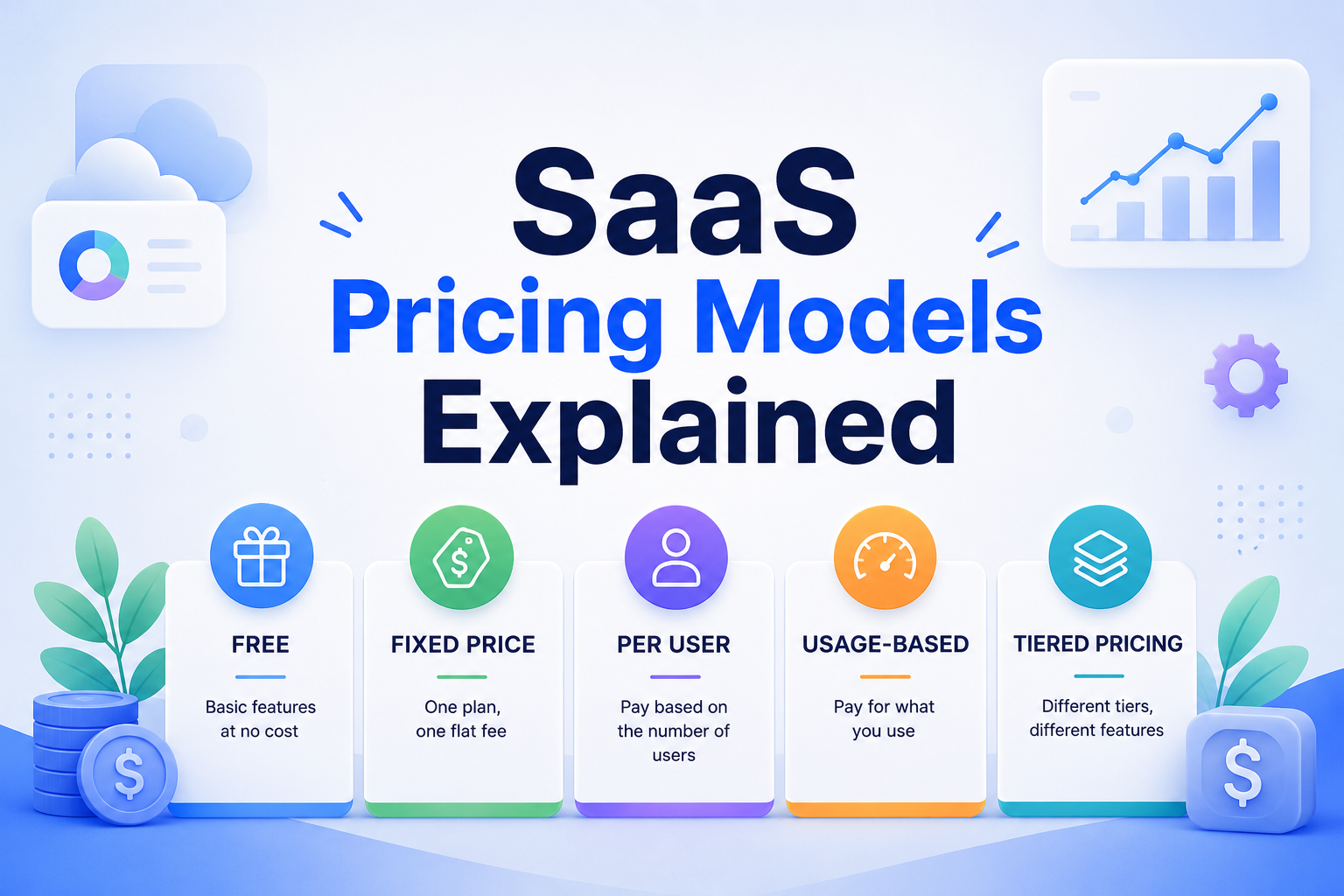
SaaS Pricing Models Explained
Pricing plays a major role in the success of SaaS businesses. Even with strong products and marketing, poor pricing strategies can limit growth, reduce conversions, and increase customer churn.
Modern SaaS companies use different pricing models depending on their target audience, product value, and business goals.
Understanding SaaS pricing models explained helps startups improve revenue generation, customer retention, and long-term scalability.
In 2026, SaaS pricing strategies are becoming increasingly data-driven, flexible, and customer-focused.
If you want more startup insights and SaaS growth guides, visit https://onegrasp.com/startups/
What Is a SaaS Pricing Model?
A SaaS pricing model is the method software companies use to charge customers for accessing cloud-based products or services.
Unlike traditional software sales, SaaS businesses usually focus on recurring revenue through subscriptions.
Pricing models directly impact:
- Customer acquisition
- Revenue growth
- Retention rates
- Profitability
- Product positioning
Therefore, choosing the right pricing structure is essential for sustainable SaaS growth.
Subscription-Based Pricing Model
Subscription pricing is the most common SaaS model.
Customers pay:
- Monthly
- Quarterly
- Annually
for continued product access.
Popular examples include:
- Netflix
- Spotify
- Canva
- Notion
Subscription pricing provides predictable recurring revenue, which improves financial stability for businesses.
Moreover, annual plans often improve customer retention and cash flow.
Freemium Pricing Model
Freemium models allow users to access limited features for free while charging for premium functionality.
This strategy helps SaaS companies:
- Acquire users quickly
- Increase product adoption
- Build brand awareness
Popular freemium businesses include:
- Dropbox
- Zoom
- Slack
However, startups must balance free usage carefully because excessive free access can increase operational costs without improving conversions.
Freemium works best when premium upgrades provide strong additional value.
Usage-Based Pricing Model
Usage-based pricing charges customers according to how much they use the product.
Examples include charging based on:
- API requests
- Storage usage
- Active users
- Transactions processed
Cloud platforms and AI tools increasingly use this model because it aligns pricing with actual customer value.
Usage-based systems are becoming more popular in modern SaaS ecosystems.
Tiered Pricing Model
Tiered pricing offers multiple plans with different features and pricing levels.
Typical SaaS plans include:
- Basic
- Pro
- Business
- Enterprise
This model helps businesses serve different customer segments efficiently.
For example:
- Small businesses choose lower-cost plans
- Larger companies purchase advanced enterprise solutions
Tiered pricing improves flexibility while increasing upselling opportunities.
Per-User Pricing Model
Per-user pricing charges businesses based on the number of users accessing the software.
This model is commonly used in:
- CRM platforms
- Collaboration tools
- Project management software
The simplicity of per-user pricing makes it easy for customers to understand.
However, some businesses may hesitate to add more users because costs increase directly with team size.
Hybrid SaaS Pricing Models
Many modern SaaS startups combine multiple pricing strategies.
Examples include:
- Freemium + subscription
- Tiered + usage-based
- Per-user + enterprise pricing
Hybrid systems provide greater flexibility and allow businesses to optimize monetization for different customer groups.
As SaaS competition increases, pricing innovation is becoming increasingly important.
Expert Insight and Analysis
SaaS experts believe pricing should reflect customer value rather than development costs alone.
Many startups make the mistake of underpricing products during early stages.
Experts recommend focusing on:
- Customer willingness to pay
- Market positioning
- Competitor analysis
- Retention metrics
- Lifetime customer value
Pricing should also evolve as products mature and deliver more value.
Additionally, businesses should continuously test pricing structures instead of treating pricing as permanent.
Latest Trends in SaaS Pricing in 2026
Several major trends are reshaping SaaS monetization strategies.
AI-Powered Usage Pricing
AI platforms increasingly charge customers based on usage volume.
Flexible Subscription Systems
Businesses now offer monthly, yearly, and customizable billing structures.
Product-Led Growth
Freemium models continue growing because they improve product adoption.
Enterprise Custom Pricing
Larger SaaS companies increasingly offer tailored enterprise pricing plans.
Value-Based Pricing
Modern SaaS businesses focus more on pricing based on customer outcomes and value delivered.
These trends show that SaaS pricing is becoming more adaptive and customer-centric.
Common SaaS Pricing Mistakes
- Underpricing products
- Offering confusing pricing structures
- Ignoring customer feedback
- Failing to optimize free plans
- Choosing models misaligned with user behavior
What SaaS Startups Should Do Next
- Study competitor pricing strategies
- Analyze customer usage patterns
- Test multiple pricing structures gradually
- Focus on customer lifetime value
- Optimize retention alongside revenue growth
Conclusion
Understanding SaaS Pricing Models Explained helps startups build stronger monetization systems while improving customer acquisition and long-term scalability.
From subscriptions to freemium and usage-based systems, each pricing strategy offers unique advantages depending on the product and target market.
Modern SaaS businesses increasingly focus on flexible, value-driven pricing models that align with customer behavior and product usage.
In today’s competitive software industry, startups that optimize pricing strategically are more likely to improve retention, revenue, and sustainable growth.
FAQs
Subscription-based pricing is the most widely used SaaS monetization model.
Freemium allows users to access basic features for free while charging for premium functionality.
Tiered pricing helps businesses serve multiple customer segments efficiently.
Usage-based pricing charges customers according to actual product usage.
Free plans can improve user acquisition if designed strategically.
Related Posts: