May 11, 2026
 5 Min
 No Comment
Choosing the right pricing strategy is one of the most important decisions for modern startups and online businesses. Two of the most popular monetization approaches today are subscription models and one-time payment models.
Both systems have advantages and challenges depending on the product, target audience, and long-term business goals.
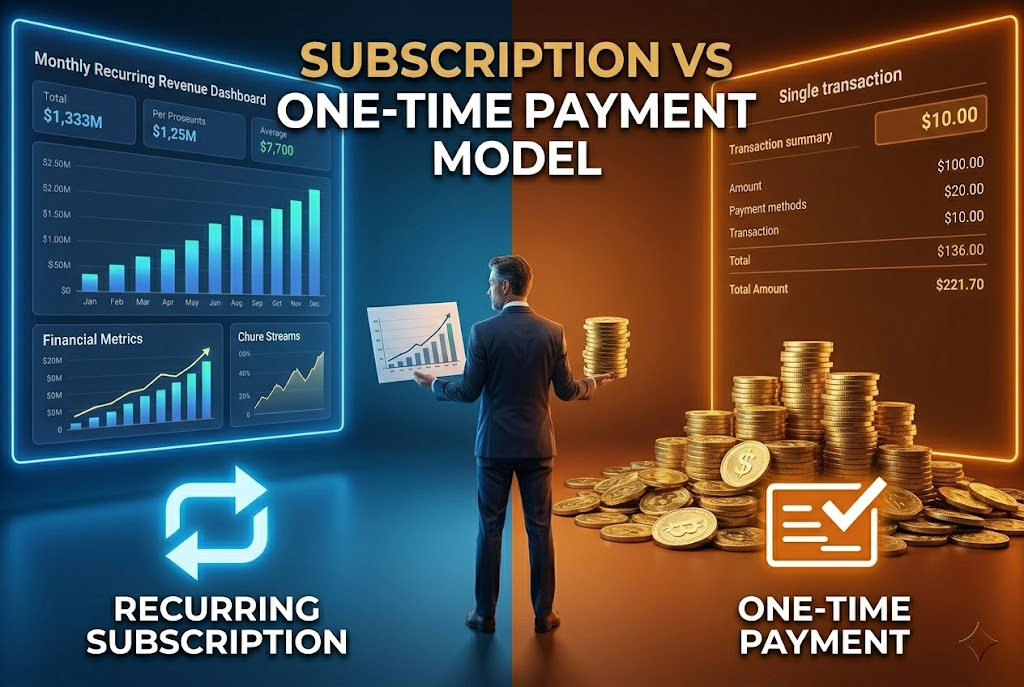
A subscription model focuses on recurring payments over time, while a one-time payment model charges customers only once for permanent access to a product or service.
Understanding the differences between these revenue models helps businesses improve profitability, customer retention, and scalability.
If you want more startup growth insights and business guides, visit https://onegrasp.com/startups/
What Is a Subscription Payment Model?
A subscription model allows customers to pay regularly for continued access to a product or service.
Payments may occur:
- Monthly
- Quarterly
- Yearly
Popular examples include:
- Netflix
- Spotify
- SaaS platforms
- Cloud software
- Membership communities
Subscription businesses focus heavily on long-term customer relationships and recurring revenue.
This model has become increasingly popular because predictable cash flow improves business stability.
What Is a One-Time Payment Model?
A one-time payment model charges customers once for full product ownership or access.
Examples include:
- Traditional software licenses
- E-books
- Online courses
- Electronics
- Physical products
After the purchase, customers usually do not make additional payments unless they buy upgrades or new products.
This model provides immediate revenue but may require constant new customer acquisition for sustained growth.
Why Subscription Models Are Growing Rapidly
The subscription economy has expanded significantly over the past decade.
Businesses increasingly prefer recurring revenue because it offers:
- Predictable income
- Better financial forecasting
- Higher customer lifetime value
- Stronger retention opportunities
Moreover, subscription businesses often scale more efficiently over time.
SaaS startups especially rely heavily on subscription pricing because it supports continuous product development and customer support.
Investors also tend to favor recurring revenue businesses due to stable cash flow patterns.
Advantages of Subscription Models
Recurring Revenue Stability
Subscription businesses generate predictable monthly or yearly income.
This helps companies:
- Plan budgets better
- Improve cash flow forecasting
- Scale operations more confidently
Higher Customer Lifetime Value
Long-term subscribers often generate more revenue than one-time buyers.
Therefore, businesses can grow sustainably even with smaller customer bases.
Stronger Customer Relationships
Subscriptions encourage ongoing engagement between businesses and customers.
This improves:
- Retention
- Upselling opportunities
- Brand loyalty
Easier Scaling Opportunities
Digital subscription businesses can scale rapidly with lower operational costs.
For example, SaaS platforms can serve thousands of users without proportional infrastructure growth.
Advantages of One-Time Payment Models
Faster Immediate Revenue
Businesses receive full payment upfront instead of waiting for recurring renewals.
This improves short-term cash flow.
Simpler Customer Decisions
Some customers prefer paying once rather than committing to ongoing subscriptions.
This reduces purchase hesitation.
Lower Retention Pressure
Businesses using one-time models do not depend heavily on recurring renewals.
Therefore, churn management becomes less critical.
Better for Certain Products
Physical products, digital downloads, and standalone tools often work better with one-time pricing.
Not every business benefits from recurring billing systems.
Subscription vs One-Time Payment Model for Startups
Startups must choose pricing models carefully based on product type and market behavior.
Subscription Models Work Best For:
- SaaS businesses
- AI platforms
- Membership communities
- Streaming services
- Productivity tools
One-Time Payment Models Work Best For:
- E-books
- Templates
- Online courses
- Physical products
- Simple software tools
The ideal choice depends heavily on customer usage patterns and business scalability goals.
Expert Insight and Analysis
Business experts believe recurring revenue models are becoming increasingly dominant in digital industries.
However, experts also warn that subscriptions require continuous customer satisfaction.
If users stop finding value, churn rates increase rapidly.
Meanwhile, one-time payment businesses often face pressure to constantly acquire new customers because revenue does not repeat automatically.
Experts recommend focusing on:
- Customer behavior
- Product value
- Retention capability
- Market competition
- Operational scalability
The best pricing model is the one aligned with user expectations and long-term sustainability.
Latest Trends in Business Revenue Models
Several major trends are shaping monetization strategies in 2026.
Rise of Subscription Economy
More businesses are shifting toward recurring revenue systems.
Hybrid Pricing Models
Many companies now combine:
- Subscription plans
- One-time purchases
- Premium upgrades
AI Subscription Platforms
AI-powered software increasingly uses subscription billing.
Membership Communities
Exclusive content and community subscriptions are growing rapidly.
Usage-Based Pricing
Some SaaS companies now charge customers based on actual usage instead of fixed subscriptions.
These trends show businesses are experimenting with more flexible monetization systems.
Common Mistakes Businesses Should Avoid
- Choosing subscriptions without long-term value delivery
- Overpricing recurring plans
- Ignoring customer churn rates
- Complicating pricing structures unnecessarily
- Using one-time models for continuously updated products
What Businesses Should Do Next
- Analyze customer buying behavior
- Study competitor pricing models
- Test pricing strategies gradually
- Focus on customer retention and satisfaction
- Build scalable revenue systems
FAQs
A subscription model charges customers recurring payments for continued product or service access.
A one-time payment model requires customers to pay only once for ownership or access.
It depends on the product type, customer behavior, and business scalability goals.
Subscriptions provide predictable recurring revenue and higher customer lifetime value.
Yes, many businesses use hybrid monetization systems with subscriptions and one-time purchases.