May 19, 2026
 7 Min
 No Comment
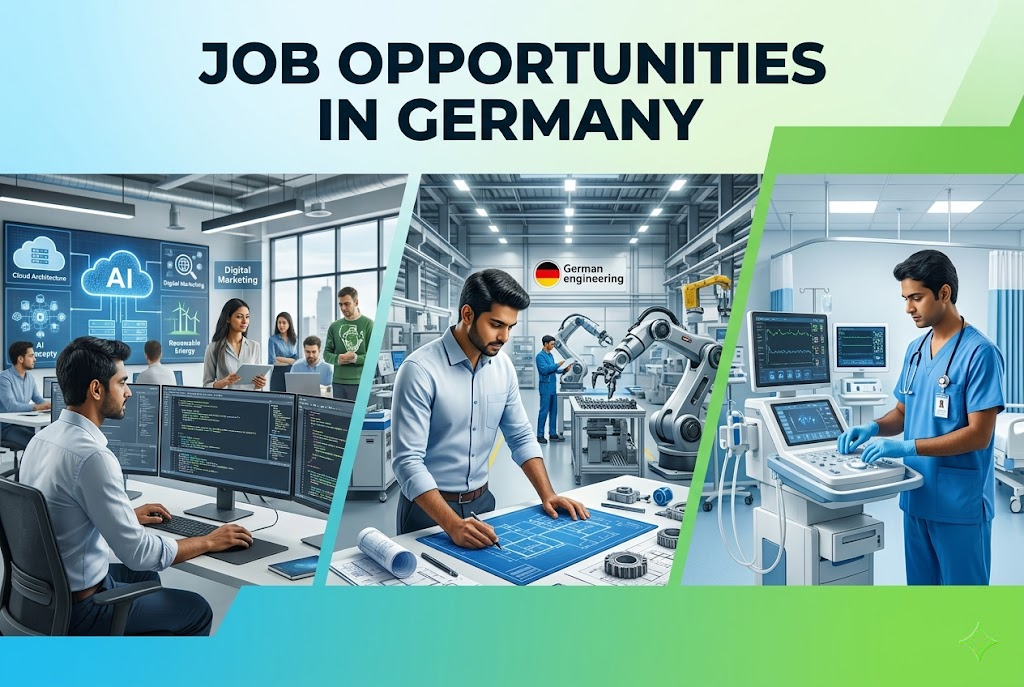
Germany has rapidly become one of the most attractive countries for Indian students not only because of affordable education, but also because of its strong job market and long-term career opportunities. Over the past few years, Germany’s demand for skilled professionals has increased dramatically due to labor shortages, industrial expansion, and digital transformation.
For Indian graduates, this creates a powerful opportunity.
The Germany jobs Indian students market is especially strong in sectors like:
- Software engineering
- Artificial intelligence
- Mechanical engineering
- Healthcare
- Data science
- Cybersecurity
- Renewable energy
- Manufacturing
Unlike several study abroad destinations where students struggle with extremely high debt, Germany offers a unique combination of low-cost education and access to Europe’s largest economy.
According to the Make it in Germany Official Portal, the country is actively encouraging skilled international graduates to remain in Germany through work permits, EU Blue Card pathways, and long-term residence opportunities.
However, finding a good job in Germany is not automatic. Students who succeed usually prepare strategically during their studies rather than waiting until graduation.
Why Germany Is Hiring More International Graduates
Germany faces a serious skilled worker shortage known locally as “Fachkräftemangel.”
The shortage is especially visible in:
- Technology
- Healthcare
- Industrial engineering
- Skilled trades
- Scientific research
Germany’s aging population is also increasing workforce pressure across multiple sectors.
As a result, companies are increasingly open to hiring international graduates with technical and analytical skills.
According to the Federal Employment Agency Germany, skilled international workers are becoming critical for Germany’s economic stability and industrial competitiveness.
This creates long-term career opportunities for Indian students willing to adapt and develop in-demand skills.
Best Job Sectors in Germany for Indian Students
Some industries currently offer significantly stronger opportunities than others.
Here are the most promising sectors:
| Industry | Job Demand Level |
|---|---|
| IT & Software Development | Very High |
| Artificial Intelligence | Very High |
| Mechanical Engineering | High |
| Healthcare & Nursing | Very High |
| Cybersecurity | High |
| Renewable Energy | High |
| Automotive Engineering | High |
| Data Science & Analytics | Very High |
Technology and engineering continue dominating the German employment market because of the country’s industrial foundation and digital transformation efforts.
Meanwhile, healthcare shortages are creating rapid hiring growth across hospitals, elderly care systems, and healthcare administration.
Germany Jobs Indian Students: IT and Software Careers
IT is currently one of the strongest industries for Indian graduates in Germany.
Major cities like:
- Berlin
- Munich
- Hamburg
- Frankfurt
have growing technology ecosystems filled with:
- Startups
- AI companies
- Software firms
- FinTech companies
- Cloud computing organizations
The biggest advantage?
Many technology companies work primarily in English.
This makes software engineering one of the easiest sectors for Indian students to enter even before achieving advanced German language fluency.
High-demand technical skills include:
- Python
- Java
- Cloud computing
- AI and machine learning
- Data engineering
- Cybersecurity
- DevOps
Students with strong technical portfolios and internship experience usually perform extremely well in Germany’s tech hiring market.
Engineering Jobs Remain Germany’s Backbone
Germany’s economy still revolves heavily around manufacturing and industrial innovation.
As a result, engineers remain highly valuable across:
- Automotive companies
- Industrial automation firms
- Renewable energy projects
- Manufacturing systems
- Robotics companies
Global brands such as:
- BMW
- Bosch
- Siemens
- Mercedes-Benz
- Volkswagen
continue hiring engineering graduates regularly.
Mechanical, electrical, and automotive engineering remain particularly strong career paths.
However, German language skills often become more important in traditional industrial environments compared to international tech startups.
Healthcare and Nursing Careers Are Growing Fast
Germany’s healthcare sector is facing enormous staffing shortages.
This is creating strong demand for:
- Nurses
- Healthcare administrators
- Public health professionals
- Medical technologists
- Elderly care specialists
Healthcare jobs often provide:
- Strong salary stability
- Long-term demand
- Easier residence pathways
However, healthcare careers generally require stronger German language proficiency because patient communication is essential.
Students interested in healthcare should begin German preparation early.
Part-Time Jobs for Indian Students in Germany
International students in Germany are allowed to work part-time during studies under specific regulations.
Popular student jobs include:
- Research assistant (HiWi jobs)
- Café and restaurant work
- Retail jobs
- Delivery services
- Tutoring
- Warehouse jobs
- University administration support
HiWi jobs are especially valuable because they:
- Improve resumes
- Build professional networks
- Offer flexible schedules
- Provide academic exposure
Technical students may also secure paid internships or working student positions with companies.
These opportunities often become full-time job pathways later.
Salary Expectations in Germany
Salary levels depend heavily on:
- Industry
- Experience
- City
- Language skills
- Technical specialization
Average starting salaries:
| Profession | Average Starting Salary |
|---|---|
| Software Engineer | €55,000–€75,000 |
| Data Scientist | €60,000–€80,000 |
| Mechanical Engineer | €50,000–€70,000 |
| AI Engineer | €70,000–€100,000 |
| Healthcare Professional | €45,000–€80,000 |
| Cybersecurity Analyst | €60,000–€90,000 |
Cities like Munich and Frankfurt generally offer higher salaries, though living costs are also higher.
Expert Insight: Germany Rewards Skills More Than Prestige
One major difference between Germany and some other countries is that employers often prioritize practical skills over university prestige.
Students who succeed most usually:
- Build technical portfolios
- Gain internships early
- Learn German gradually
- Develop networking skills
- Understand local workplace culture
For example, a student with:
- Strong cloud computing skills
- Internship experience
- AI certifications
- Practical projects
may outperform someone with a stronger university brand but limited real-world experience.
Germany’s economy is becoming increasingly skills-driven.
Latest Trends and Updates
Germany is expanding skilled migration reforms to attract more international professionals into sectors facing severe labor shortages, especially IT, engineering, healthcare, and renewable energy.

AI-driven recruitment systems and ATS-based hiring processes are becoming increasingly common, making optimized resumes and LinkedIn profiles more important than ever.

Technology startups across Berlin and Munich are also increasing English-speaking job opportunities for international graduates.

Meanwhile, Germany’s industrial companies are investing heavily in automation, AI, and sustainable manufacturing, creating new career opportunities for technically skilled students.

Employers are increasingly prioritizing practical internship experience, communication skills, and project portfolios instead of academic grades alone.
Real-Life Example: How Internships Helped Secure a Full-Time Role
Vikram moved to Germany for a master’s degree in computer science. During his second semester, he applied aggressively for working student positions instead of focusing only on coursework.
He eventually secured a part-time developer role with a Berlin startup while continuing to improve his German skills.
By graduation, he already had:
- German work experience
- Industry contacts
- Technical project exposure
- Professional references
As a result, he transitioned directly into a full-time software engineering role without struggling through long post-graduation job searches.
Pros and Cons of Working in Germany
| Pros | Cons |
|---|---|
| Strong demand for skilled workers | German language barriers |
| Affordable education leads to lower debt | Bureaucratic paperwork |
| Excellent work-life balance | Competitive housing markets |
| Strong engineering and tech sectors | Cultural adaptation challenges |
| Long-term EU career opportunities | Slower recruitment processes |
Beginner vs Expert Career Planning in Germany
| Beginner Approach | Expert Approach |
|---|---|
| Starts job search after graduation | Builds internships early |
| Focuses only on degree title | Develops industry-ready skills |
| Ignores networking | Attends career fairs and events |
| Avoids German language learning | Learns German gradually |
| Relies only on academics | Builds practical portfolios |
What to Do Next to Improve Your Career Chances
If you want strong career outcomes in Germany:
- Build technical and analytical skills
- Learn basic German early
- Apply for internships aggressively
- Optimize LinkedIn and CV
- Attend networking events
- Focus on high-demand industries
- Build practical project portfolios
Students planning overseas education can find more expert insights at OneGrasp International Study Guides.
Quick Checklist for Indian Students Seeking Jobs in Germany
- Learn basic German communication
- Create ATS-friendly CV
- Build technical certifications
- Apply for internships early
- Research shortage industries
- Improve LinkedIn profile
- Understand EU Blue Card rules
Conclusion
Germany has become one of the strongest career destinations for Indian students because it combines affordable education with real long-term employment potential.
From software engineering and AI to healthcare and industrial manufacturing, the country is actively searching for skilled international talent. However, success depends heavily on preparation.
Students who:
- Build practical skills
- Gain internships early
- Learn German gradually
- Understand the local job market
usually achieve the strongest career outcomes.
Germany is no longer just a study destination — for many Indian students, it is becoming a long-term professional growth ecosystem within Europe.
FAQs
Yes, especially in IT, engineering, AI, and healthcare sectors where Germany faces major labor shortages.
Not always in technology sectors, but German skills significantly improve long-term career opportunities.
Berlin, Munich, Frankfurt, Hamburg, and Stuttgart are among the strongest job markets.
Yes. International students can legally work part-time under Germany’s student employment regulations.
Yes. Skilled professionals may qualify for EU Blue Card and long-term residence pathways.