May 16, 2026
 10 Min
 No Comment
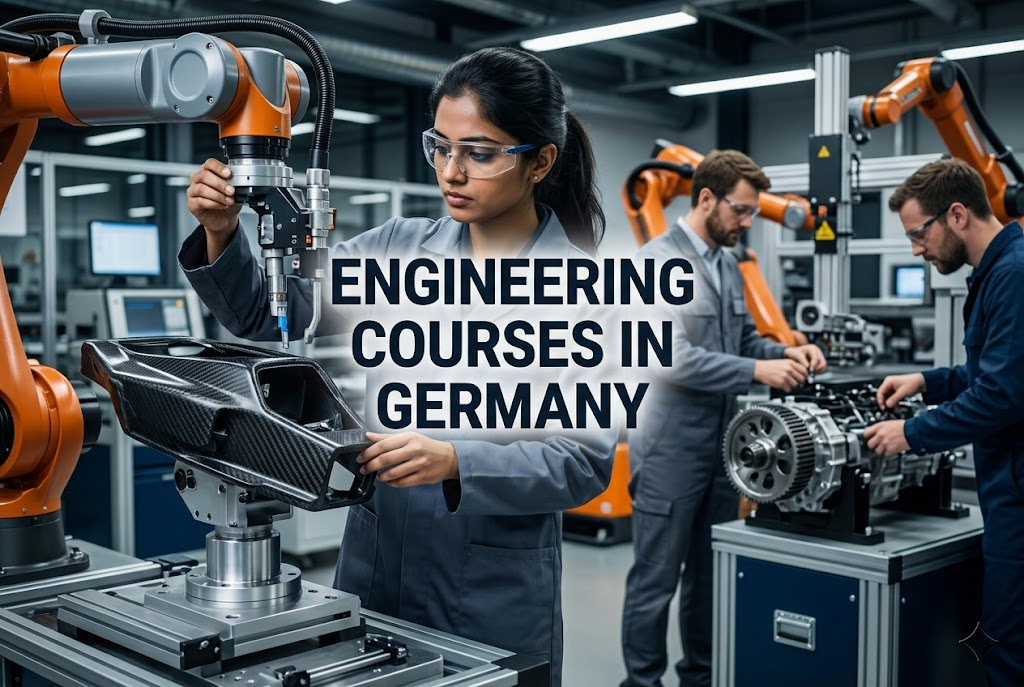
Germany is globally recognized as one of the strongest engineering destinations in the world. Known for innovation, advanced manufacturing, industrial automation, and cutting-edge technology, Germany attracts thousands of international students every year, especially from India. For Indian students, pursuing Engineering courses in Germany for Indian students offers access to world-class universities, affordable education, strong research ecosystems, and excellent long-term career opportunities.
Germany is home to global engineering giants like:
- BMW
- Mercedes-Benz
- Siemens
- Bosch
- Volkswagen
- Airbus
This strong industrial environment creates outstanding internship and employment opportunities for engineering graduates.
One of Germany’s biggest advantages is its public university system. Many universities offer highly ranked engineering programs at very low tuition fees compared to countries like the USA, UK, or Canada. This combination of affordability and academic excellence makes Germany increasingly popular among Indian students.
According to GradGermany, Germany continues facing high demand for engineering professionals across mechanical, automotive, robotics, AI, and energy sectors.
Why Study Engineering in Germany?
Germany offers several major advantages for engineering students.
Affordable Education
Most public universities charge:
- Very low tuition fees
- Semester contribution fees only
This makes Germany far more affordable compared to other major study destinations.
World-Class Technical Universities
Germany is famous for:
- Engineering excellence
- Advanced research
- Practical learning systems
- Industrial collaborations
German technical universities are respected globally.
Strong Industrial Ecosystem
Students gain exposure to:
- Automotive engineering
- AI and robotics
- Manufacturing systems
- Renewable energy technologies
- Industrial automation
Germany’s economy is heavily driven by engineering innovation.
Excellent Career Opportunities
Engineering graduates benefit from:
- Strong job demand
- Competitive salaries
- Internship opportunities
- Long-term work permits
- PR pathways
Germany continues facing shortages of skilled engineers.
Most Popular Engineering Courses in Germany
Germany offers multiple engineering specializations.
Mechanical Engineering
Mechanical Engineering is Germany’s most popular engineering field.
Why Mechanical Engineering Is Strong in Germany
Germany leads globally in:
- Manufacturing
- Automotive systems
- Industrial machinery
- Robotics
According to GradGermany, Germany remains one of the strongest destinations globally for Mechanical Engineering education.
Career Scope
Graduates work in:
- Automotive industries
- Aerospace
- Manufacturing companies
- Robotics firms
- Industrial automation
Top Recruiters
- BMW
- Mercedes-Benz
- Bosch
- Siemens
- Volkswagen
Automotive Engineering
Germany is considered the global hub of automotive engineering.
Why Students Prefer Automotive Engineering
Students gain exposure to:
- Electric vehicles (EVs)
- Autonomous driving
- Vehicle design
- Smart mobility systems
According to CollegeSimplified, Germany’s EV and mobility sector is expanding rapidly in 2026.
Career Opportunities
Graduates work in:
- Automobile companies
- EV startups
- Automotive R&D centers
- Mobility technology firms
Electrical Engineering
Electrical Engineering remains highly in demand.
Major Focus Areas
Students study:
- Power systems
- Renewable energy
- Electronics
- Embedded systems
- Automation
Career Scope
Graduates work in:
- Energy companies
- Semiconductor industries
- Electronics firms
- Smart grid technologies
Germany’s renewable energy investments are increasing engineering demand.
Computer Science & Engineering
Germany’s tech ecosystem is expanding rapidly.
Popular Areas
Students specialize in:
- Artificial Intelligence
- Software Engineering
- Cybersecurity
- Cloud Computing
- Data Science
According to CollegeSimplified, Germany continues facing shortages of skilled IT and software professionals.
Job Opportunities
Graduates work in:
- Technology companies
- AI startups
- Software firms
- Cloud infrastructure companies
Civil Engineering
Civil Engineering is important because of Germany’s infrastructure and sustainability projects.
Key Areas
Students focus on:
- Structural engineering
- Urban planning
- Transportation systems
- Sustainable construction
Career Scope
Graduates work in:
- Construction companies
- Smart city projects
- Infrastructure firms
- Environmental engineering projects
Aerospace Engineering
Germany has a strong aerospace ecosystem.
Why Aerospace Is Popular
Students gain exposure to:
- Aircraft systems
- Space engineering
- Aerodynamics
- Satellite technologies
Major Recruiters
- Airbus
- Lufthansa Technik
- Aerospace startups
Mechatronics & Robotics
Germany is one of the global leaders in robotics and automation.
Students Learn
- Automation systems
- Robotics engineering
- Intelligent manufacturing
- AI-integrated systems
Germany’s Industry 4.0 transformation has increased demand in this field.
Renewable Energy Engineering
Germany strongly supports green energy innovation.
Major Focus Areas
Students study:
- Solar energy
- Wind power
- Smart grids
- Sustainable systems
Germany’s energy transition policies continue increasing demand for renewable energy engineers.
Top Engineering Universities in Germany
Germany has several world-class technical universities.
Technical University of Munich (TUM)
Technical University of Munich
TUM is Germany’s top-ranked engineering university.
Popular Engineering Programs
- Mechanical Engineering
- Aerospace Engineering
- AI and Robotics
- Electrical Engineering
Why TUM Is Popular
Students benefit from:
- Global reputation
- Strong industry partnerships
- Advanced laboratories
- High employability
According to LeapScholar, TUM remains among Germany’s strongest engineering universities in 2026.
Tuition Fees
Some non-EU programs now charge:
- €2,000 – €6,000 per semester depending on course
RWTH Aachen University
RWTH Aachen University
RWTH Aachen is one of Europe’s strongest technical universities.
Best Known For
- Mechanical Engineering
- Robotics
- Automotive Engineering
- Industrial Engineering
Why Students Choose RWTH
Advantages include:
- Strong engineering ecosystem
- Industry collaboration
- Affordable public education
- Large Indian student community
According to multiple university guides, RWTH remains tuition-free except semester contributions.
Karlsruhe Institute of Technology (KIT)
Karlsruhe Institute of Technology
KIT is highly respected for engineering and technology innovation.
Popular Fields
- Mechatronics
- Electrical Engineering
- Informatics
- Energy Engineering
Key Advantages
Students benefit from:
- Research excellence
- Interdisciplinary innovation
- Advanced engineering labs
KIT has strong industry-oriented engineering programs.
TU Berlin
Technical University of Berlin
TU Berlin is highly popular among international students.
Strong Programs
- Civil Engineering
- Computer Engineering
- Industrial Engineering
- Environmental Engineering
Berlin’s startup ecosystem provides strong networking opportunities.
TU Dresden
Technical University of Dresden
TU Dresden is respected for:
- Microelectronics
- Semiconductor engineering
- Sustainable systems
- AI-driven technologies
Germany’s semiconductor investments are increasing opportunities in Dresden.
University of Stuttgart
University of Stuttgart
The university is famous for:
- Automotive Engineering
- Aerospace Engineering
- Process Engineering
It has strong collaborations with Germany’s automotive industry.
Eligibility Requirements for Indian Students
Most universities require:
- Class 12 PCM for Bachelor’s programs
- Bachelor’s degree for Master’s programs
- IELTS or TOEFL scores
- APS Certificate
- SOP and academic documents
Some Bachelor’s applicants may require:
- Studienkolleg pathway
- German language preparation
According to Reddit discussions, admissions can be competitive and often require German proficiency for Studienkolleg routes.
English-Taught Engineering Programs
Germany now offers many English-taught engineering programs.
Popular English-taught areas include:
- Mechanical Engineering
- Automotive Engineering
- AI and Robotics
- Computer Science
- Renewable Energy
This has increased Germany’s popularity among Indian students.
Tuition Fees for Engineering in Germany
Public Universities
Many public universities charge:
- No tuition fees
- Semester contribution only
Average semester contribution:
- €150 – €350 approximately
Universities Charging Tuition
Some universities now charge non-EU tuition fees.
Examples:
- TUM: €2,000 – €6,000 per semester depending on program
Private Universities
Private universities may charge:
- €10,000 – €25,000+ for complete programs
Cost of Living for Engineering Students
Average monthly expenses:
- €750 – €1,500 depending on city and lifestyle
Major expenses include:
- Accommodation
- Food
- Transportation
- Health insurance
Munich and Frankfurt are more expensive compared to cities like Leipzig and Aachen.
Scholarships for Indian Students
Popular scholarships include:
- DAAD Scholarships
- Deutschlandstipendium
- Erasmus+ funding
- University-specific scholarships
Scholarships help reduce financial burden significantly.
Career Scope After Engineering in Germany
Germany has excellent engineering career opportunities.
High-Demand Roles
Graduates work as:
- Mechanical Engineers
- Software Engineers
- Robotics Engineers
- AI Engineers
- Automotive Engineers
- Electrical Engineers
- Data Engineers
Industries Hiring Engineers
Major industries include:
- Automotive
- Manufacturing
- AI and Robotics
- Aerospace
- Renewable Energy
- Semiconductor industries
Germany’s engineering economy remains extremely strong.
Average Salary After Engineering in Germany
Approximate salary ranges:
- Entry-level: €50,000 – €70,000 annually
- Experienced professionals: €80,000+ annually
AI, robotics, and semiconductor engineers often receive higher salaries.
Internships and Co-op Opportunities
Engineering students are strongly encouraged to complete internships.
Benefits include:
- Practical experience
- Industry networking
- Resume building
- Better job opportunities
Many German universities integrate industrial projects into engineering programs.
Is German Language Necessary?
Many programs are available in English.
However, German language skills help with:
- Part-time jobs
- Internships
- Networking
- Long-term employment
Students with German communication skills generally have better career opportunities.
Latest Trends in Engineering Education in Germany (2026)
AI and Robotics Engineering Are Growing Rapidly
German universities are heavily investing in Artificial Intelligence, automation, robotics, and intelligent manufacturing systems because of Industry 4.0 transformation.
Electric Vehicle Engineering Demand Is Increasing
Germany’s transition toward EVs and smart mobility systems is creating strong demand for automotive and electrical engineers.
Public Universities Are Becoming More Competitive
Admissions to top engineering universities like TUM and RWTH Aachen are becoming increasingly competitive because of rising international demand.
Interdisciplinary Engineering Programs Are Expanding
Universities are increasingly combining:
- AI + Mechanical Engineering
- Robotics + Automation
- Data Science + Manufacturing
- Business + Engineering
to match changing industry needs.
Semiconductor and Green Energy Investments Are Rising
Germany is investing heavily in semiconductor manufacturing and renewable energy infrastructure, increasing demand for specialized engineers.
Practical Learning and Projects Are Increasing
Engineering education is becoming more industry-focused with:
- Project-based learning
- Internships
- Applied research
- Industry collaborations
Expert Insight: Is Germany Good for Engineering?
Education experts consider Germany one of the world’s strongest destinations for engineering because of:
- Affordable education
- Technical excellence
- Strong industrial ecosystem
- Long-term career opportunities
- Global engineering reputation
Experts recommend students focus on:
- Internships
- Technical projects
- German communication skills
- Networking
- Research experience
Students who combine academic performance with practical exposure usually achieve the best outcomes.
Real-Life Example
Karthik from Hyderabad moved to Germany for a Master’s degree in Mechanical Engineering at RWTH Aachen. Initially, he struggled with adapting to practical learning systems and project-based coursework.
Later, he joined university engineering clubs and completed an internship with an automotive supplier company. After graduation, he secured a full-time engineering role in Germany.
His experience highlights how:
- Internships
- Networking
- Technical projects
- Communication skills
significantly improve career opportunities.
Pros and Cons of Studying Engineering in Germany
| Pros | Cons |
|---|---|
| Affordable education | Competitive admissions |
| Strong global engineering reputation | German language helpful for jobs |
| Excellent salaries | Accommodation shortages in major cities |
| Strong internship opportunities | Technical coursework can be intensive |
| Long-term work opportunities | Visa documentation process |
Beginner vs Expert Approach
| Beginner | Expert |
|---|---|
| Focuses only on rankings | Evaluates specialization and industry demand |
| No internship planning | Builds strong practical experience |
| Ignores German language | Learns basic communication skills |
| Depends only on academics | Builds technical project portfolio |
Tools & Resources
- LinkedIn Jobs — https://www.linkedin.com
- Job Bank Canada — https://www.jobbank.gc.ca
- Indeed Canada — https://ca.indeed.com
- Glassdoor Canada — https://www.glassdoor.ca
- Google Trends — https://trends.google.com
- Canva Resume Builder — https://www.canva.com
Official resources:
Students can also explore: https://onegrasp.com/
Common Mistakes to Avoid
- Applying late to universities
- Ignoring internship opportunities
- Not building technical projects
- Underestimating living costs
- Depending only on classroom learning
- Ignoring German communication skills
What to Do Next
Before applying for engineering in Germany:
- Research engineering specializations carefully
- Compare university requirements
- Build technical projects
- Improve programming and analytical skills
- Learn basic German communication
- Apply early for accommodation and visas
- Prepare financial documents properly
Quick Checklist
- Engineering specialization selected
- University shortlist prepared
- IELTS completed
- APS certificate arranged
- Financial planning completed
- Technical portfolio prepared
- Internship strategy planned
Conclusion
Germany remains one of the best destinations globally for engineering education in 2026 because of affordable universities, strong industrial ecosystems, advanced research opportunities, and excellent career prospects. Universities such as TUM, RWTH Aachen, KIT, TU Berlin, and Stuttgart provide world-class engineering education combined with practical industry exposure.
Students who strategically combine technical skills, internships, engineering projects, and communication abilities can build highly successful international engineering careers in Germany’s rapidly growing technology and industrial economy.
FAQs
Yes, Germany is globally recognized for engineering excellence, affordable education, and strong industrial opportunities.
Mechanical Engineering, Automotive Engineering, AI, Robotics, Electrical Engineering, and Computer Science are among the most popular fields.
Yes, many universities offer English-taught Bachelor’s and Master’s engineering programs.
Many public universities charge only semester contributions, while some universities charge tuition for non-EU students.
Not always, but German communication skills significantly improve internships, networking, and long-term career opportunities.