May 19, 2026
 6 Min
 No Comment
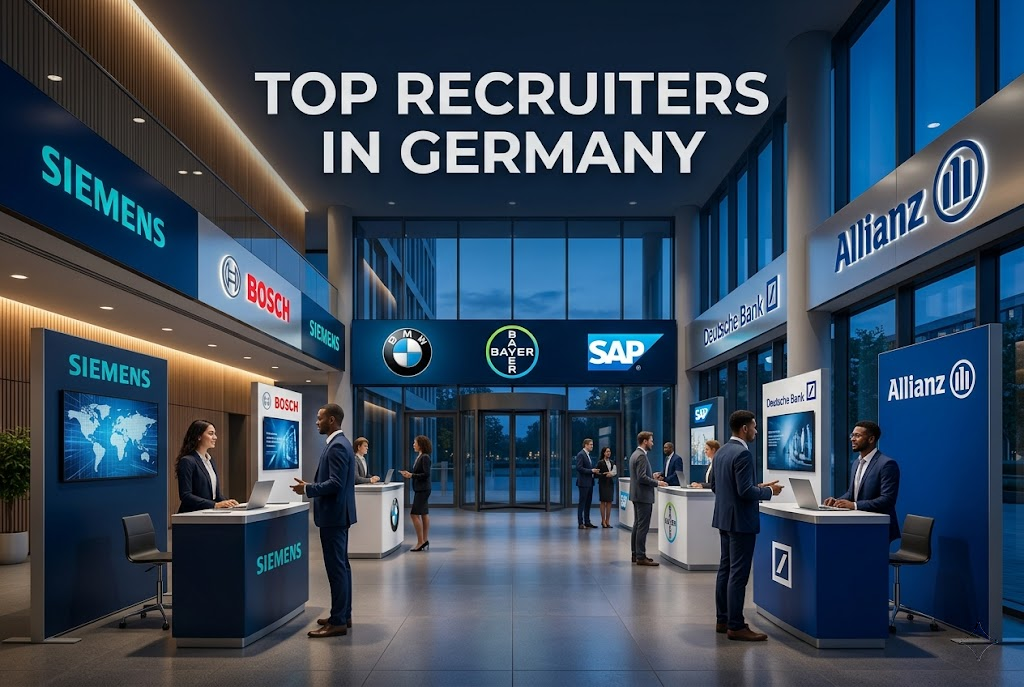
Germany has one of the strongest graduate employment markets in Europe, especially for international students with technical, engineering, business, and IT backgrounds. The country’s industrial economy, growing digital sector, and shortage of skilled professionals have created major opportunities for graduates from German universities.
In 2026, the Germany recruiters international graduates landscape is heavily driven by:
- Technology companies
- Automotive giants
- Manufacturing industries
- Consulting firms
- Financial institutions
- Healthcare and AI sectors
According to Germany’s labor market trends, sectors like software engineering, automation, data science, and renewable energy continue facing strong talent shortages. (Nepcoms)
For international students, this creates strong career potential after graduation.
Why Germany Attracts International Graduates
Germany’s graduate job market is attractive because of:
- Strong economy
- High salaries
- EU Blue Card opportunities
- Work-life balance
- Industrial innovation
- Research-driven companies
Unlike many countries, Germany also offers graduates:
- Post-study work opportunities
- Direct transition to skilled employment
- Long-term residency pathways
This is one reason Indian students increasingly target Germany for:
- Master’s degrees
- STEM education
- Technical careers
Top Recruiters in Germany for International Graduates
Several global companies actively hire international graduates from German universities.
SAP
SAP is Europe’s largest software company and one of the biggest recruiters for:
- Software engineers
- Data scientists
- Cloud specialists
- Business analysts
The company has strong international hiring pipelines and English-speaking work environments in many departments. (Kadamb Overseas)
Siemens
Siemens recruits graduates in:
- Mechanical engineering
- Electrical engineering
- AI and automation
- Energy systems
- Digital industries
Its graduate programs are highly respected among international students. (Kadamb Overseas)
BMW Group
BMW hires graduates for:
- Automotive software
- Robotics
- Data analytics
- Manufacturing systems
- Electric vehicle technologies
Munich remains one of the strongest automotive hiring hubs in Europe. (Kadamb Overseas)
Bosch
Bosch is known for recruiting international talent in:
- Embedded systems
- IoT
- AI
- Semiconductor technology
- Industrial automation
It has strong India-Germany engineering connections. (Kadamb Overseas)
Volkswagen Group
Volkswagen Group hires graduates across:
- Automotive engineering
- Supply chain
- Battery systems
- Software engineering
- Electric mobility
The company also supports international graduate programs. (Kadamb Overseas)
Allianz
Allianz recruits graduates for:
- Data science
- Business analytics
- Product management
- Digital transformation
- FinTech operations
Its digital divisions often operate in English-first environments. (Kadamb Overseas)
Germany Recruiters International Graduates: Most In-Demand Sectors
Some sectors are significantly more open to international graduates.
Information Technology
Germany’s tech sector continues growing rapidly.
High-demand roles include:
- Software development
- AI engineering
- Cloud computing
- Cybersecurity
- DevOps
- Data engineering
English-speaking opportunities are strongest in tech.
Automotive Engineering
Germany’s automotive industry remains globally dominant.
Key areas include:
- EV systems
- Autonomous driving
- Embedded software
- Smart manufacturing
Healthcare and Biotechnology
Germany’s aging population is increasing demand in:
- Healthcare systems
- Medical technology
- Bioinformatics
- Nursing support
Finance and Consulting
International graduates from MBA and business programs target:
- Deutsche Bank
- Allianz
- Consulting firms
- FinTech companies
However, German language skills become more important in finance roles.
Average Graduate Salaries in Germany
Entry-level salaries vary by sector.
| Sector | Average Salary Range |
|---|---|
| Software & IT | €50,000–€75,000 |
| Engineering | €48,000–€70,000 |
| Automotive | €50,000–€74,000 |
| Finance & Consulting | €55,000–€85,000 |
| Data Science & AI | €60,000–€90,000 |
Technical roles often provide the highest ROI for international students. (Kadamb Overseas)
Importance of German Language Skills
One of the biggest misconceptions is that English alone is enough everywhere in Germany.
The reality:
- English works strongly in tech and research
- German becomes highly valuable in broader job markets
Students with:
- B1/B2 German skills
usually gain:
- Better interview opportunities
- More networking success
- Wider company access
Several Reddit discussions from international graduates also highlight how networking and German communication significantly improve job outcomes. (Reddit)
Graduate Programs and Internships
Many German companies offer:
- Graduate trainee programs
- Working student jobs
- Internship pathways
These are extremely important because:
- German employers value practical experience
- Internships often convert into full-time jobs
Students who secure working student roles during studies usually have stronger employment outcomes after graduation.
Expert Insight: Skills Matter More Than University Rankings Alone
One important reality in Germany is this:
Employers often prioritize:
- Technical skills
- Internship experience
- Communication ability
- Problem-solving
over rankings alone.
Students from average universities can still secure excellent jobs if they:
- Build strong portfolios
- Gain internship experience
- Learn German
- Network strategically
Meanwhile, students relying only on university reputation may struggle.
Latest Trends and Updates
Germany’s graduate hiring market is increasingly focused on AI, automation, cloud computing, cybersecurity, semiconductor technology, and green energy sectors.

Large companies are expanding international hiring because Germany continues facing shortages of skilled technical professionals.

English-speaking graduate roles are increasing in Berlin, Munich, Hamburg, and Frankfurt, especially within startups and global technology firms.

At the same time, employers are placing greater emphasis on internships, project portfolios, and communication skills rather than academic scores alone.

Hybrid work models and cross-border international teams are also making Germany more accessible for global graduates.
Real-Life Example: How Internships Improved Job Chances
A master’s student from India joined a working student role at a technology company in Munich while studying data engineering.
During the internship, he:
- Built industry projects
- Improved communication skills
- Learned workplace German
- Networked internally
Before graduation, the company converted him into a full-time employee.
This pathway is extremely common in Germany’s hiring culture.
Pros and Cons of Germany’s Graduate Job Market
| Pros | Cons |
|---|---|
| Strong engineering and tech demand | German language can limit opportunities |
| High salary potential | Competitive hiring process |
| Global companies recruit internationally | Networking is important |
| Post-study work opportunities | Some industries remain German-dominant |
| Strong work-life balance | Hiring cycles can be slow |
Beginner vs Expert Job Search Strategy
| Beginner Approach | Expert Approach |
|---|---|
| Applies randomly online | Targets companies strategically |
| Ignores internships | Prioritizes working student roles |
| Focuses only on grades | Builds technical portfolio |
| Avoids networking | Connects with alumni and recruiters |
| Ignores German language | Learns B1/B2 German gradually |
What to Do Next for Better Job Opportunities
To improve your job chances in Germany:
- Build internship experience early
- Learn basic German communication
- Create strong LinkedIn and GitHub profiles
- Attend university career fairs
- Apply through company career portals
- Network with alumni
- Tailor CVs to German standards
You can also explore additional international education resources through OneGrasp Study Abroad Insights.
Quick Checklist
- Build practical skills
- Gain internship experience
- Improve German language ability
- Create Germany-style CV
- Apply consistently
- Build recruiter connections
- Research graduate programs
Conclusion
Germany remains one of Europe’s strongest destinations for international graduates because of its:
- Industrial economy
- Technical innovation
- Global companies
- High-quality work culture
- Skilled worker demand
For Indian students, sectors like:
- IT
- Engineering
- AI
- Automotive
- Data Science
offer particularly strong opportunities.
However, students who succeed in Germany usually combine:
- Technical expertise
- Internship experience
- Communication skills
- Networking
- Long-term planning
In Germany, employability is driven less by shortcuts and more by consistent skill-building and practical experience.
FAQs
SAP, Siemens, BMW, Bosch, Allianz, and Volkswagen are among the top recruiters.
Yes. Germany has strong demand for software, AI, cloud, and cybersecurity professionals.
Job opportunities are strong, but success depends on skills, internships, networking, and language ability.
Not always, especially in tech, but German significantly improves opportunities.
Berlin, Munich, Frankfurt, Hamburg, and Stuttgart are major hiring hubs.