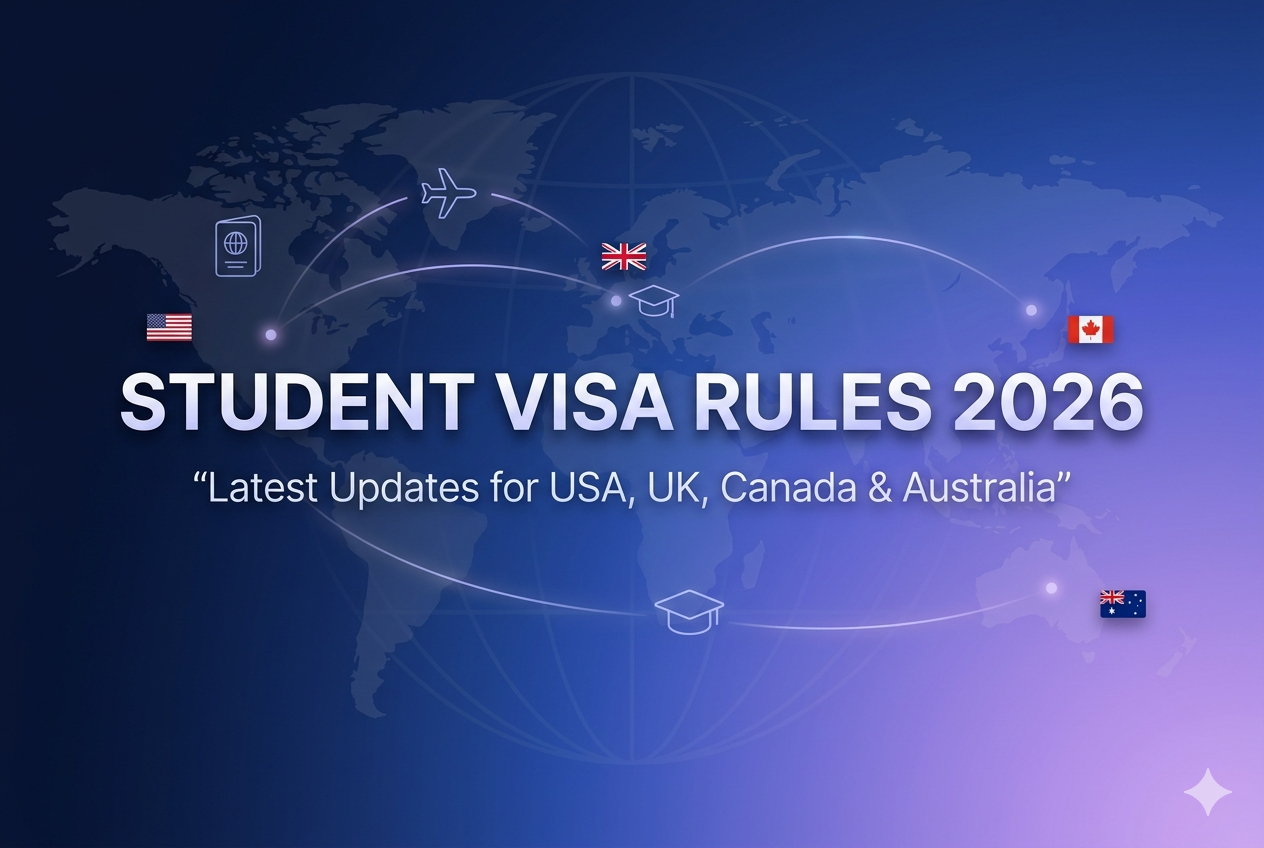
The student visa rules 2026 have introduced major changes for Indian students planning to study abroad. Countries like United States, United Kingdom, Canada, and Australia are tightening visa policies to control rising international student numbers and improve education quality.
However, these changes do not mean fewer opportunities. Instead, they require better preparation, stronger profiles, and clear intent from students. Students planning their journey can explore expert guidance and options here: https://onegrasp.edumilestones.com/abroad-studies/
The student visa rules 2026 mainly focus on stricter screening and transparency.
• Higher financial proof requirements • Stronger English language criteria • Limited work hours during study • Revised post-study work options
Moreover, governments are ensuring that only genuine students benefit from these programs. Therefore, applicants must be more careful while preparing their documents.
USA Student Visa Updates
In the United States, the F-1 visa process has become slightly more demanding. Financial documentation checks are stricter, and visa processing time has increased by around 10–15%. However, STEM students still benefit from extended OPT (up to 3 years), making the USA a strong choice.
Currently, over 200,000 Indian students are studying in the USA, according to the U.S. Department of State (travel.state.gov), highlighting its continued popularity.
UK Student Visa Changes
The United Kingdom has introduced significant restrictions in 2026. Most postgraduate students can no longer bring dependents, and financial requirements have increased.
However, the Graduate Route still allows students to stay and work for 2 years after completing their degree, as outlined by official updates on the UK government website (gov.uk).
Canada Student Visa Updates
In Canada, new rules focus on controlling student intake and maintaining infrastructure. The government has introduced caps on study permits and increased proof of funds to approximately CAD 20,000+.
Work hours are now limited to 20 hours per week during academic sessions, according to Immigration, Refugees and Citizenship Canada (canada.ca).
Australia Student Visa Changes
The Australia has also tightened its visa system. Students now need higher IELTS scores, typically between 6.5 and 7.0 for many programs.
Additionally, post-study work options have been reduced for certain courses, and stricter Genuine Temporary Entrant (GTE) checks are in place, based on updates from the Australian Department of Home Affairs (homeaffairs.gov.au).
Key Trends for Indian Students
Across all major destinations, some clear patterns are emerging under the student visa rules 2026.
• Increased scrutiny on financial stability • Preference for academically strong applicants • Greater focus on genuine study intent
For example, students with clear career goals and well-written Statements of Purpose (SOPs) are more likely to receive approvals.
FAQs
1. What are the biggest changes in student visa rules 2026? Stricter financial proof, limited work hours, and higher English requirements are the key changes.
2. Which country is easiest for student visas in 2026? Canada and Australia are still accessible but now have stricter limits and eligibility rules.
3. Has the UK stopped allowing dependents? Yes, most postgraduate students can no longer bring dependents under new rules.
4. Is the USA still good for Indian students? Yes, especially for STEM courses due to strong OPT opportunities.
5. How can I improve my visa approval chances? Focus on strong academics, a clear SOP, and proper financial documentation.
Conclusion
The student visa rules 2026 reflect a global shift toward stricter and more selective student immigration systems. However, opportunities remain strong for students who prepare strategically.
Therefore, staying informed, meeting all requirements, and applying early can significantly improve your chances of studying abroad successfully.
Students should also consider the role of scholarships and financial aid in meeting the higher proof‑of‑funds requirements. Many universities now offer merit‑based scholarships specifically for Indian applicants, which can offset the increased financial thresholds and strengthen the overall visa profile.
Another emerging factor is the importance of digital presence. Consular officers are increasingly reviewing applicants' online footprints, so maintaining a professional LinkedIn profile and showcasing relevant academic or project work can reinforce the genuine study intent highlighted in the student visa rules 2026.
Finally, staying updated with policy changes is crucial. OneGrasp regularly publishes alerts and webinars on visa developments, ensuring that Indian students can adapt quickly to any further adjustments before submitting their applications.
Frequently Asked Questions
What are the key changes in the student visa rules 2026?
The main updates include higher financial proof, stricter English language scores, limited work hours, and revised post‑study work options.
Which destination remains the most favorable for Indian students under the new rules?
The USA still offers strong STEM opportunities with extended OPT, while Canada and Australia remain accessible but with tighter limits.
Can postgraduate students bring dependents to the UK under the new rules?
No, most postgraduate applicants can no longer bring dependents under the 2026 UK visa changes.
How can I improve my chances of visa approval?
Focus on a strong academic record, a clear SOP, accurate financial documentation, and meet the higher English language requirements.

 April 15, 2026
  5 Min
5 Min  No Comment