May 19, 2026
 6 Min
 No Comment
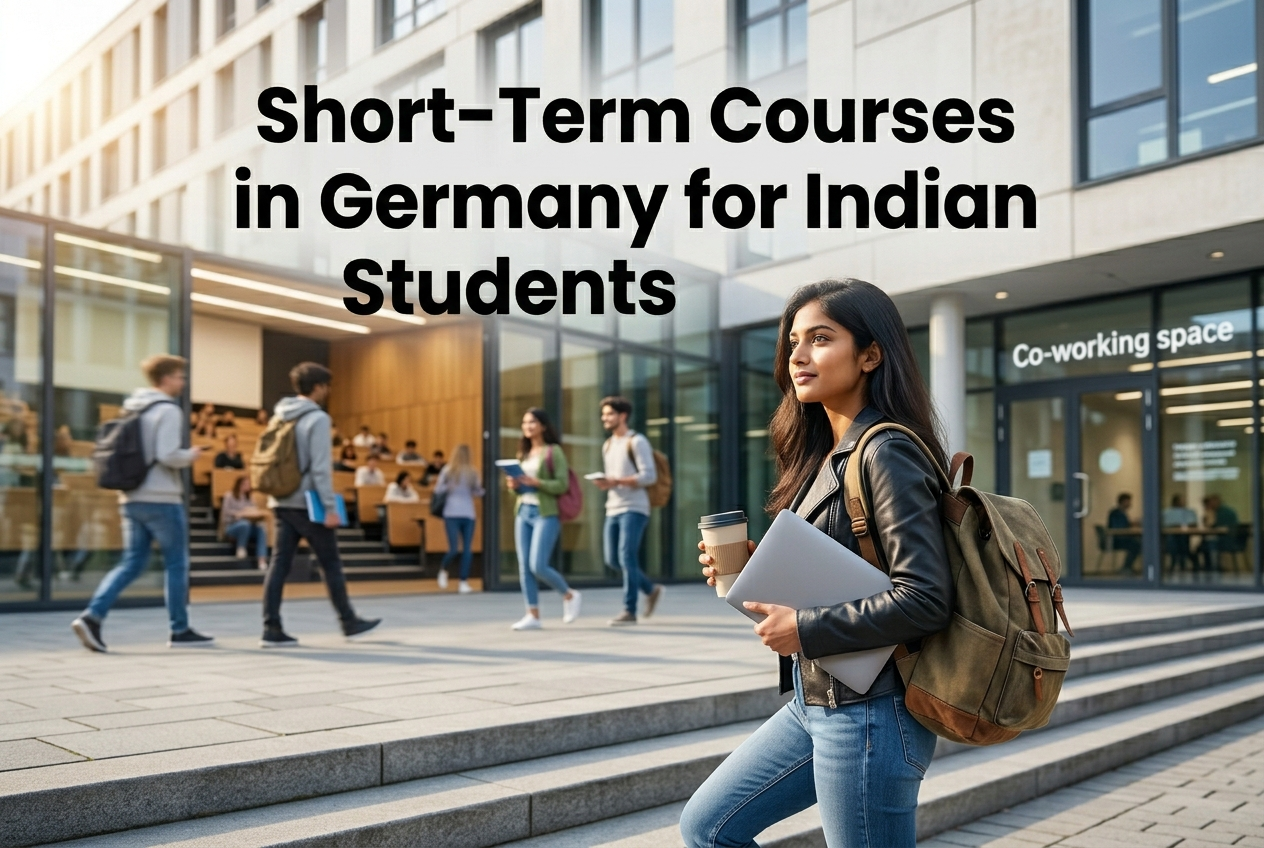
The Germany short term courses market is expanding rapidly because students now want:
- Faster career growth
- International certifications
- Affordable global exposure
- Skill-focused learning
- Internship opportunities
These programs are especially attractive for students who:
- Want to test international education first
- Need specialized certifications
- Plan career switching
- Want affordable European exposure
- Aim to improve employability quickly
According to DAAD Language and Short Courses Database, Germany offers hundreds of short-term and summer programs for international students across technical, business, and language-related fields. (DAAD)
What Are Short-Term Courses in Germany?
Short-term courses are specialized programs that usually last:
- A few weeks
- 3 months
- 6 months
- Up to 1 year
These programs focus more on:
- Practical skills
- Industry exposure
- Certifications
- Technical training
instead of full academic degrees.
Popular formats include:
- Certificate courses
- Diploma programs
- Summer schools
- Winter schools
- Language courses
- Vocational training
- Internship-linked programs
Popular Germany Short Term Courses for Indian Students
Germany offers short-term programs in multiple industries.
Highly popular fields include:
- Artificial Intelligence
- Data Analytics
- Cybersecurity
- Automotive Engineering
- Renewable Energy
- Business Analytics
- Digital Marketing
- Healthcare Assistance
- German Language Training
- Logistics and Supply Chain
Germany’s industrial economy creates strong demand in:
- Manufacturing
- IT
- Automation
- Healthcare
- Research
This makes technical short-term courses especially valuable.
Germany Short Term Courses: Duration and Structure
Most short-term programs follow flexible learning structures.
Average durations:
| Course Type | Duration |
|---|---|
| Summer/Winter Schools | 2–8 weeks |
| Certificate Programs | 3–6 months |
| Diploma Courses | 6–12 months |
| Language Courses | Flexible |
| Vocational Training Modules | 6–12 months |
Many programs also include:
- Workshops
- Projects
- Industry visits
- Research exposure
- Internship opportunities
Cost of Short-Term Courses in Germany
Costs depend on:
- Institution type
- Course duration
- City
- Accommodation inclusion
Average tuition fee ranges:
500\text{ EUR to }5,000\text{ EUR per program}
Living expenses remain additional.
Average monthly student expenses include:
| Expense | Monthly Cost |
|---|---|
| Accommodation | €300–€800 |
| Food | €150–€300 |
| Insurance | €120–€150 |
| Transportation | €30–€80 |
| Miscellaneous | €100–€250 |
Affordable cities like:
- Leipzig
- Dresden
- Aachen
are usually cheaper than:
- Munich
- Frankfurt
- Hamburg
Are Short-Term Courses Worth It?
Yes — if chosen strategically.
Short-term courses are especially useful for:
- Skill upgrading
- Portfolio building
- International exposure
- Career transition preparation
However, they should not be viewed as guaranteed job pathways automatically.
The real value comes from:
- Industry networking
- Practical skills
- Internship exposure
- Language improvement
- German work culture understanding
German Language Courses in Germany
German language programs are among the most popular short-term options.
According to DAAD German Language Learning Guide, learning German significantly improves daily life and employability for international students. (DAAD)
Students can choose:
- Intensive German programs
- University summer schools
- Combined language + culture courses
Many DAAD-supported programs also offer:
- Cultural immersion
- Academic preparation
- Networking opportunities
Internship and Summer School Opportunities
Germany’s summer and winter schools are becoming increasingly popular among Indian students.
According to DAAD Internships and Short-Term Programmes, universities across Germany offer:
- Research internships
- Technical workshops
- Innovation bootcamps
- Academic exchange programs
These programs help students:
- Experience German university life
- Build global exposure
- Strengthen resumes
- Explore future degree opportunities
Visa Requirements for Short-Term Courses
Visa type depends on course duration.
Common options include:
- Schengen Visa (short durations)
- Language Course Visa
- Student Applicant Visa
- Short-term Student Visa
Required documents often include:
- Admission letter
- Financial proof
- Health insurance
- Passport
- Accommodation proof
Students should always verify visa rules carefully because short-term visas may not automatically allow full-time work rights.
Expert Insight: Short-Term Courses Are Best Used Strategically
The students who benefit most from short-term courses usually:
- Align programs with career goals
- Use them for networking
- Build technical portfolios
- Improve language skills
- Combine learning with internships
Meanwhile, students expecting:
- Instant jobs
- Guaranteed PR pathways
- Easy immigration shortcuts
may face unrealistic expectations.
Germany values:
- Skills
- Practical experience
- Consistency
- Technical competence
far more than certificates alone.
Latest Trends and Updates
Germany is rapidly expanding short-term technical and skill-based programs because industries are facing increasing shortages in IT, AI, healthcare, logistics, and engineering sectors.

Universities are also offering more English-taught summer schools and hybrid learning formats to attract international students.

AI, automation, renewable energy, and cybersecurity certifications are becoming especially popular among Indian students.

Meanwhile, internship-linked certificate programs are gaining importance because employers increasingly prioritize practical experience over theoretical credentials alone.

German language training combined with technical certification is also becoming one of the strongest employability combinations for international students.
Real-Life Example: How a Short-Term Course Became a Career Gateway
Nikhil completed a 6-month data analytics certification program in Berlin after his engineering degree in India.
During the program, he:
- Built real-world projects
- Learned SQL and Python
- Improved basic German communication
- Joined networking workshops
He later secured:
- A startup internship
- Freelance analytics projects
- A pathway toward a future master’s degree in Germany
The short-term course became a stepping stone instead of just a certificate.
Pros and Cons of Short-Term Courses in Germany
| Pros | Cons |
|---|---|
| Faster skill development | Limited long-term visa options |
| Affordable international exposure | No guaranteed job placement |
| Practical industry learning | Some courses lack strong recognition |
| Strong networking opportunities | Language barriers may exist |
| Flexible learning duration | Requires strategic planning |
Beginner vs Expert Approach
| Beginner Approach | Expert Approach |
|---|---|
| Chooses random certificates | Aligns courses with career demand |
| Ignores language learning | Learns basic German simultaneously |
| Focuses only on duration | Focuses on ROI and internships |
| Expects automatic jobs | Builds networking actively |
| Avoids technical projects | Creates strong portfolio during course |
What to Do Next Before Applying
Before applying for short-term courses in Germany:
- Research accredited institutions carefully
- Compare internship opportunities
- Verify visa eligibility
- Analyze total living costs
- Learn basic German communication
- Build technical portfolio
- Plan long-term career strategy
You can also explore additional international education resources through OneGrasp Study Abroad Insights.
Quick Checklist
- Select industry-relevant course
- Verify course accreditation
- Research visa requirements
- Estimate full budget
- Prepare language skills
- Build resume and LinkedIn profile
- Research accommodation early
Conclusion
Short-term courses in Germany offer Indian students an affordable and practical pathway toward international exposure, technical skill development, and career enhancement.
However, success depends heavily on:
- Choosing the right course
- Building practical skills
- Networking actively
- Learning German gradually
- Planning long-term career goals
Students who approach short-term programs strategically often turn them into valuable stepping stones for internships, higher education, and future global career opportunities.
FAQs
Yes, especially for skill development, networking, and international exposure.
It is possible, but jobs depend more on skills, internships, and language ability than certificates alone.
Most programs range from a few weeks to 12 months.
Not always, but German significantly improves employability and daily life.
AI, data analytics, cybersecurity, automotive engineering, healthcare, and German language programs are highly popular.