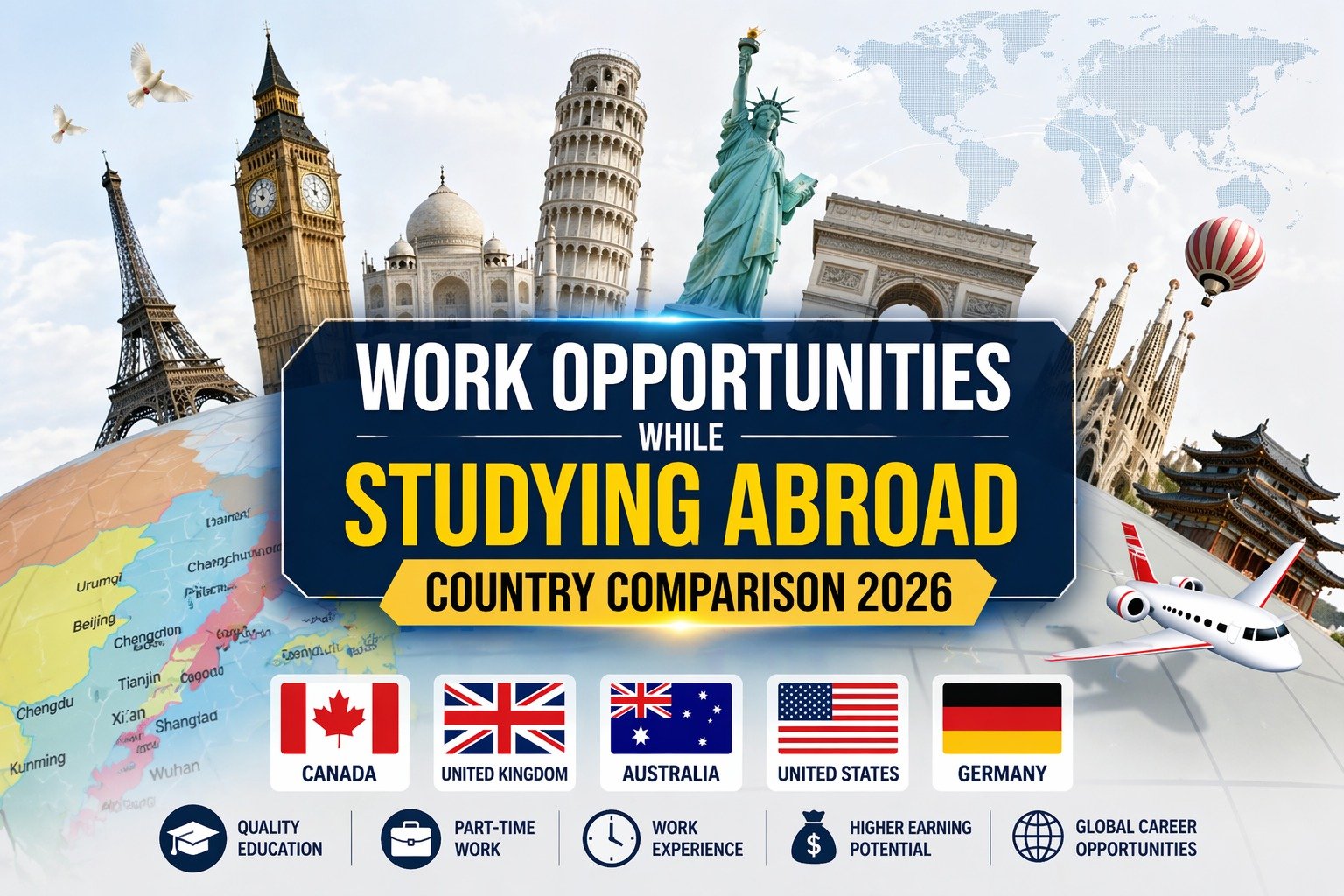
Why work while studying abroad matters for Indian students
Studying abroad is exciting—but let’s be honest, it’s also expensive. Tuition fees, living costs, and travel expenses can quickly add up. That’s why understanding work opportunities while studying becomes crucial for students planning their global education journey.
But here’s the catch—not all countries offer the same work benefits. Some allow flexible part-time jobs, while others have stricter rules.
So, which country gives you the best balance between studying and earning? Let’s break it down with a clear 2026 comparison.
Why Work Opportunities Matter for Students
For many Indian students, working while studying isn’t just optional—it’s essential.
According to recent data, over 70% of Indian students abroad take up part-time jobs to manage expenses. Moreover, working during studies offers:
Financial independence
Real-world work experience
Better employability after graduation
Therefore, choosing a country with favorable work policies can significantly impact your overall experience.
Work Opportunities While Studying – Country Comparison 2026
1. Canada: Student-Friendly Work Policies
Canada remains one of the top choices for Indian students.
Work up to 20 hours/week during semester
Full-time work allowed during breaks
Post-study work permit up to 3 years
In addition, Canada’s strong job market makes it easier to find part-time roles in retail, hospitality, and administration.
2. Australia: Flexible and High-Paying Options
Australia offers excellent earning potential.
Work up to 48 hours per fortnight
Minimum wages among the highest globally
Strong demand for student workers
However, balancing work and studies is important due to academic pressure.
3. United Kingdom: Structured Yet Competitive
The UK offers solid opportunities but requires planning.
Additionally, [Explore more career guidance resources] to align your study abroad plans with long-term goals.
Common Mistakes to Avoid
Students often make avoidable mistakes that impact their experience.
Choosing a country based only on earnings
Ignoring visa work restrictions
Overworking and affecting academics
Not researching job availability
Relying entirely on part-time income
For example, assuming you can cover all expenses through part-time work can lead to financial stress.
Career Impact: How Work Experience Shapes Your Future
Working while studying gives you a competitive edge.
Builds communication and soft skills
Enhances your resume
Increases chances of full-time employment
In addition, employers value candidates with international work exposure, making it easier to secure global roles.
FAQs
1. Can international students work while studying abroad?
Yes, most countries allow part-time work with specific hour limits and visa conditions.
2. Which country offers the best work opportunities for students?
Canada and Australia are considered the most student-friendly in terms of work policies.
3. How many hours can I work as a student abroad?
Typically 20 hours per week during semesters, depending on the country.
4. Can part-time jobs cover all expenses?
No, they can support living costs but usually don’t cover full tuition fees.
5. Is work experience important while studying abroad?
Yes, it improves employability and helps in securing better job opportunities after graduation.
Conclusion
Understanding work opportunities while studying is essential for making the right study abroad decision in 2026. Each country offers unique benefits, and your choice should align with your career goals, financial needs, and lifestyle preferences.
Frequently Asked Questions
Can international students work while studying abroad?
Yes, most countries allow part‑time work for students, but each has specific hour limits and visa conditions.
Which country offers the best work opportunities for students?
Canada and Australia are generally considered the most student‑friendly due to generous work hour allowances and high wages.
How many hours can I work as a student abroad?
Typically up to 20 hours per week during semesters, though limits vary—for example, Australia permits 48 hours per fortnight.
Can part‑time jobs cover all study expenses?
Part‑time jobs usually help with living costs but rarely cover full tuition fees; budgeting and scholarships are still important.
Why is work experience important while studying abroad?
It builds soft skills, enhances your resume, and increases the chances of securing full‑time employment after graduation.

 April 21, 2026
  5 Min
5 Min  No Comment