April 24, 2026
  5 Min
5 Min  No Comment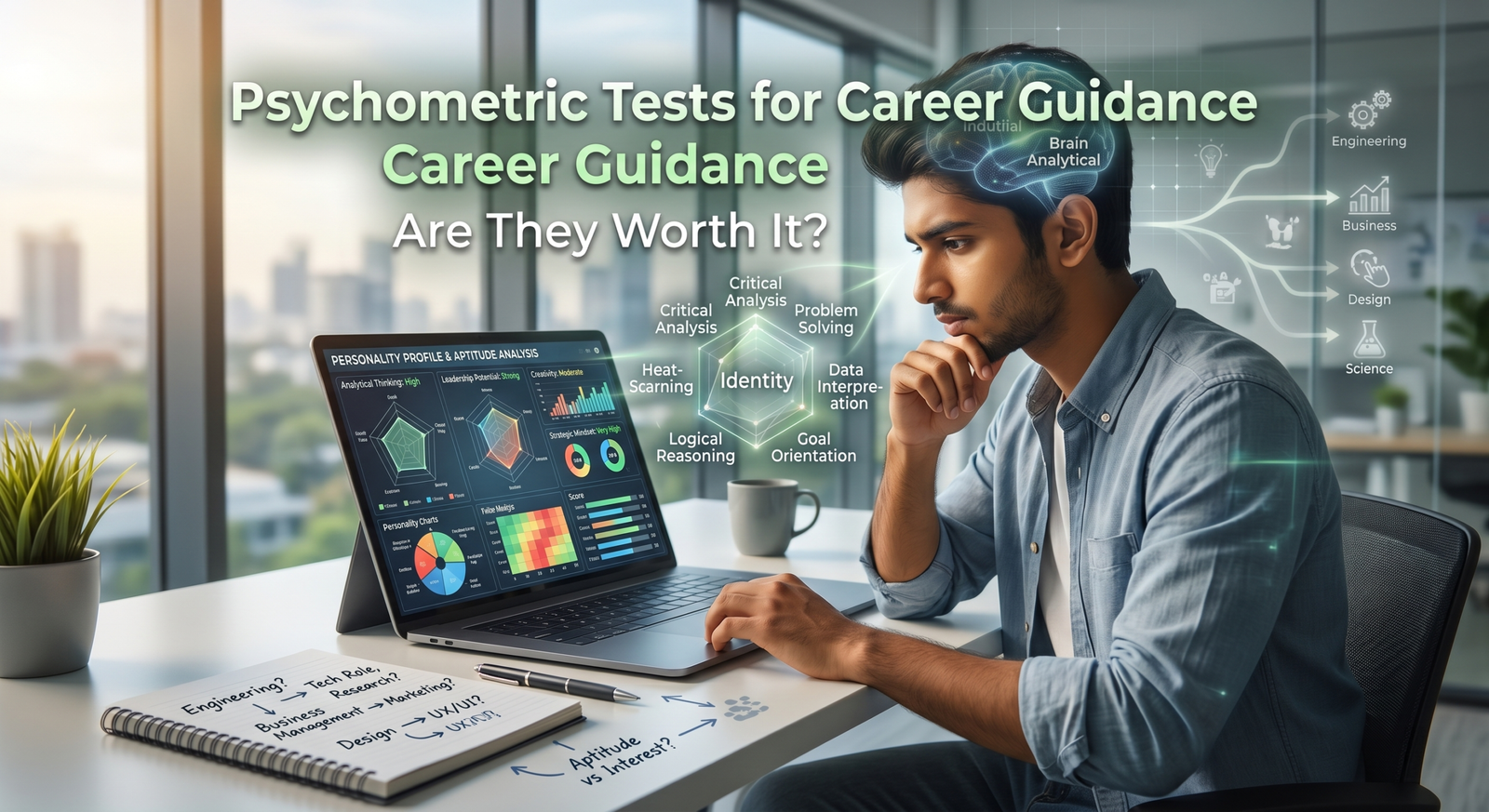
Psychometric tests career guidance offers a scientific way to clarify your strengths and explore suitable career options.
Understanding Psychometric Tests Career Guidance
If you’ve ever felt confused about which career path to choose, you’ve probably come across psychometric tests.
They are often presented as a scientific way to “discover your ideal career.”
But are they actually reliable, or just another overhyped tool?
The answer is not a simple yes or no.
Psychometric tests can be useful, but only if you understand what they do well and where they fall short. You can also explore structured career programs alongside testing to gain practical exposure through
Career Development Courses
What Are Psychometric Tests?
Psychometric tests are structured assessments designed to measure:
• Aptitude (logical reasoning, numerical ability)
• Personality traits
• Interests and preferences
These tests are widely used in education, recruitment, and career counseling. The idea is simple: by understanding your strengths and tendencies, you can make better career decisions.
You can explore how such assessments are used globally in career planning through resources like
APA Career Assessment Guide
Types of Psychometric Tests
Not all tests are the same. Most career-related assessments fall into three categories:
1. Aptitude Tests
These measure your ability to perform specific tasks.
Examples include:
• Numerical reasoning
• Logical reasoning
• Verbal ability
They help identify what you are naturally good at.
2. Personality Tests
These focus on your behavioral traits.
They assess factors like:
• Introversion vs extroversion
• Decision-making style
• Work preferences
3. Interest-Based Tests
These analyze what you enjoy doing.
They help answer questions like:
• Do you prefer analytical or creative work?
• Do you enjoy working with people or data?
Are Psychometric Tests Accurate?
This is where most students get confused.
Psychometric tests are scientifically designed, but they are not perfect predictors of your future.
They can:
• Identify patterns in your strengths
• Suggest suitable career directions
• Highlight areas for improvement
But they cannot:
• Guarantee career success
• Replace real-world experience
• Predict long-term satisfaction
Accuracy depends on:
• Quality of the test
• Honesty of your responses
• Interpretation of results
Research on test validity and reliability can be explored here:
British Psychological Society Guidelines
Benefits of Psychometric Tests
When used correctly, these tests offer real value:
• Provide clarity when you feel confused
• Help narrow down career options
• Highlight strengths and weaknesses
• Support informed decision-making
For students who are unsure about their path, this can be a useful starting point. To apply these insights practically, you can explore programs like
Career Development Courses
Limitations You Should Know
Psychometric tests are often misunderstood because of unrealistic expectations.
Common limitations include:
• Results can feel generic
• Different tests may give different outcomes
• They do not consider real-world exposure
• They cannot measure motivation or discipline
Relying only on a test result can lead to poor decisions.
When Are Psychometric Tests Actually Usefu
These tests work best when:
• You are at an early stage of career exploration
• You have multiple interests and need direction
• You want to understand your strengths better
They are less useful if you are already clear about your goals.
How to Use Psychometric Tests the Right Way
Instead of treating them as final answers, use them as guidance tools.
A better approach:
• Take a reliable test
• Discuss results with a counselor
• Combine insights with real experience
• Explore suggested career options
You can also strengthen your career direction by combining test results with hands-on learning from
Career Development Courses
Think of the test as a starting point, not a decision-maker.
Psychometric Tests vs Real-World Experience
One of the biggest mistakes students make is relying only on assessments.
In reality:
• Tests show potential
• Experience shows reality
For example, a test might suggest marketing, but actual work experience will tell you if you enjoy it.
Combining both gives the best results.
Why This Matters for Indian Students
Many students in India face pressure to choose careers early without proper guidance.
Psychometric tests can help:
• Reduce confusion
• Provide structured insights
• Support better decision-making
However, they should always be combined with:
• Career counseling
• Internships or practical exposure
You can gain practical exposure through platforms like
Career Development Courses
FAQs
Are psychometric tests reliable?
They are useful but not 100% accurate. They should be used as guidance tools.
Can they decide my career?
No, they can only suggest options based on your profile.
Which is better: aptitude or personality tests?
Both are useful, as they measure different aspects.
Should I take multiple tests?
Yes, comparing results can provide better insights.
Do employers use psychometric tests?
Yes, many companies use them during hiring.
How to Get Started
If you want to try a psychometric test:
• Choose a reputable platform
• Answer honestly
• Review results carefully
• Discuss with a mentor or counselor
You can also complement your results with practical learning from
Career Development Courses
This approach gives more meaningful insights.
Final Thoughts
Psychometric tests are neither a magic solution nor a waste of time.
They are tools.
Used correctly, they can provide valuable direction.
Used blindly, they can create confusion.
The smartest approach is simple:
Use tests to understand yourself, then validate those insights through real-world experience.
That combination leads to better career decisions.
Frequently Asked Questions
Are psychometric tests reliable for career decisions?
They provide useful insights but are not 100% accurate; combine them with real‑world experience and counseling.
Can a psychometric test decide my future job?
No, the test suggests options based on your profile; final decisions should consider internships and personal interests.
Should I take both aptitude and personality tests?
Yes, because aptitude measures skills while personality reveals work style; together they give a fuller picture.
Do Indian employers use psychometric assessments?
Many companies in India incorporate psychometric tests in hiring to evaluate candidates' fit and potential.
How can I get the most out of a psychometric test?
Choose a reputable platform, answer honestly, discuss results with a counselor, and apply insights through practical learning.