Data has become one of the world’s most valuable resources. From healthcare diagnostics and financial forecasting to artificial intelligence and climate modeling, statistics and data science now drive critical decisions across industries. As organizations increasingly rely on data-driven strategies, the need for advanced statistical methods and innovative analytical approaches continues to grow.
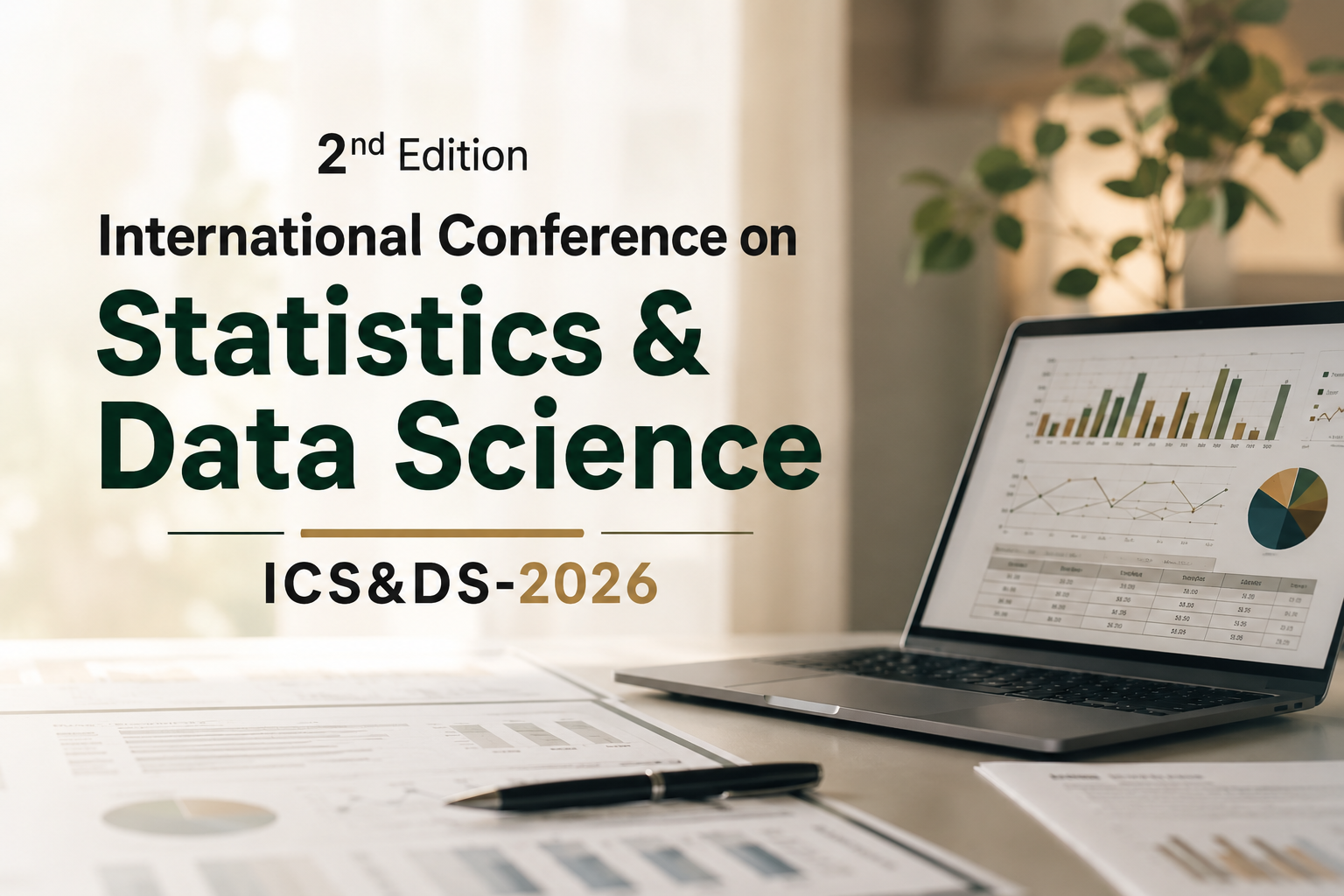
The Statistics Data Science Conference represented by the 2nd Edition International Conference on Statistics & Data Science (ICS&DS-2026) offers researchers, academicians, industry experts, and students a global platform to exchange ideas, present groundbreaking research, and explore the future of data-driven innovation.
Researchers interested in participating can register through the official conference page:
The conference is designed to bring together professionals working across statistics, machine learning, artificial intelligence, data analytics, predictive modeling, business intelligence, and computational sciences.
As data volumes continue to increase worldwide, organizations face growing challenges related to data quality, governance, privacy, and interpretation. Conferences such as ICS&DS-2026 help address these challenges by creating opportunities for collaboration between academia and industry.
According to the World Economic Forum, data and AI-related skills remain among the fastest-growing professional competencies globally. This trend highlights the importance of platforms that encourage knowledge sharing and interdisciplinary research.
Why Statistics and Data Science Matter More Than Ever
Statistics provides the foundation for evidence-based decision-making, while data science transforms raw information into actionable insights.
Today, governments use statistical models to shape public policies, healthcare organizations rely on predictive analytics for disease management, and businesses leverage machine learning algorithms to improve customer experiences.
Research published by OECD emphasizes that data-driven innovation plays a critical role in economic growth, productivity, and technological advancement.
As a result, the demand for skilled statisticians and data scientists continues to rise across nearly every sector.
Key Research Themes at the Statistics Data Science Conference
ICS&DS-2026 is expected to attract research contributions across a wide range of emerging areas.
Major themes include:
Applied Statistics
Machine Learning
Artificial Intelligence
Big Data Analytics
Data Mining
Statistical Computing
Predictive Modeling
Deep Learning
Data Visualization
Business Analytics
Health Data Science
Financial Analytics
Time Series Analysis
Data Governance
Responsible AI
These themes reflect the growing convergence between traditional statistical methods and modern computational technologies.
Statistics Data Science Conference and the Future of AI
Artificial intelligence depends heavily on statistical principles.
While AI often receives significant attention, many of its most powerful techniques are rooted in probability theory, statistical inference, and predictive modeling. Without robust statistical frameworks, machine learning systems would struggle to generate reliable predictions.
According to McKinsey, organizations that successfully integrate advanced analytics into decision-making processes often achieve substantial improvements in operational performance and innovation outcomes.
This makes conferences such as ICS&DS-2026 particularly relevant for researchers working at the intersection of statistics and AI.
Emerging Technologies Reshaping Data Science
Several technological developments are transforming how organizations collect, analyze, and utilize data.
These include:
Generative AI
Edge Analytics
Real-Time Data Processing
Federated Learning
Explainable AI
Automated Machine Learning
Quantum Computing Applications
Synthetic Data Generation
The rapid evolution of these technologies creates new research opportunities while also introducing challenges related to ethics, governance, and transparency.
Career Opportunities Through Conference Participation
Participating in international conferences can provide substantial professional benefits.
Researchers gain opportunities to:
Present original work
Receive expert feedback
Build international collaborations
Improve academic visibility
Discover publication opportunities
Learn emerging methodologies
Connect with industry professionals
For students and early-career researchers, conferences often serve as valuable stepping stones toward future academic and professional success.
Expert Analysis: Why Data Science Is Becoming a Strategic Discipline
Data science is no longer limited to technical departments. It has evolved into a strategic function influencing business decisions, government policies, healthcare systems, and scientific discoveries.
Organizations increasingly seek professionals capable of combining statistical rigor with practical problem-solving skills.
The long-term future of data science will likely depend on three key factors:
Responsible AI development
Ethical data governance
Human-centered analytics
Researchers contributing to these areas are expected to shape the next generation of intelligent systems and decision-support technologies.
[Latest Trends & Updates]
Artificial Intelligence governance frameworks are receiving increased attention as policymakers seek to balance innovation with accountability. Researchers are exploring methods for creating transparent and explainable AI systems.
Generative AI technologies continue expanding beyond content creation into scientific research, healthcare analytics, and advanced business intelligence applications.
Digital public infrastructure projects are generating vast datasets that support evidence-based policymaking and improved public service delivery.
Responsible innovation has become a major research priority, focusing on fairness, privacy protection, algorithmic transparency, and societal impact assessments.
Sustainable data science practices are gaining momentum as organizations seek environmentally responsible approaches to large-scale computing and analytics.
Emerging research directions include synthetic data generation, privacy-preserving machine learning, federated analytics, and AI-assisted scientific discovery.
[/Latest Trends & Updates]
Real-Life Example
A postgraduate researcher studying healthcare analytics developed a machine learning model to predict patient readmission risks.
After presenting preliminary findings at an international data science conference, the researcher received valuable feedback from experts in biostatistics and medical informatics.
The revised methodology significantly improved model performance and later resulted in publication within a peer-reviewed journal. Additionally, the conference connections led to a collaborative research project with a healthcare technology company.
This example demonstrates how conference participation can accelerate both research quality and career development.
Traditional Analytics vs Modern Data Science
Traditional Analytics
Modern Data Science
Historical reporting
Predictive insights
Manual analysis
Automated analytics
Structured datasets
Structured and unstructured data
Descriptive focus
Prescriptive and predictive focus
Limited scalability
Cloud-scale processing
Beginner vs Expert Perspective
Beginners
Experts
Focus on tools
Focus on outcomes
Learn algorithms
Understand systems thinking
Isolated analysis
End-to-end problem solving
Limited data context
Domain-aware analytics
Technical execution
Strategic decision-making
Pros and Cons of Conference Participation
Pros
Cons
Research visibility
Preparation time
Global networking
Registration costs
Expert feedback
Competitive review process
Publication opportunities
Requires planning
Career advancement
Learning curve for newcomers
Common Mistakes to Avoid
One common mistake is focusing solely on technical implementation while ignoring practical impact.
Researchers should also avoid weak literature reviews, unclear methodologies, and insufficient validation of results.
Another frequent error is neglecting interdisciplinary perspectives. Data science increasingly intersects with healthcare, finance, public policy, sustainability, and social sciences.
Finally, many participants underestimate the importance of networking preparation. Building meaningful professional relationships often creates opportunities beyond the conference itself.
What to Do Next
Review conference themes carefully.
Select a relevant research topic.
Conduct a comprehensive literature review.
Prepare a high-quality abstract.
Register before deadlines.
Develop presentation materials early.
Engage actively with speakers and attendees.
Follow emerging developments in statistics and data science.
Quick Checklist
✔ Select research topic
✔ Prepare abstract
✔ Verify submission guidelines
✔ Complete registration
✔ Update literature review
✔ Prepare presentation
✔ Practice delivery
✔ Network with participants
Conclusion
The Statistics Data Science Conference represented by ICS&DS-2026 arrives at a pivotal moment when data-driven decision-making influences nearly every aspect of society. From artificial intelligence and predictive analytics to responsible data governance and scientific discovery, the conference provides a valuable platform for exploring the future of statistics and data science.
For researchers, students, and professionals, participation offers opportunities to learn, collaborate, present innovative work, and stay ahead of rapidly evolving technological developments. As the demand for data expertise continues to grow worldwide, engaging with conferences like ICS&DS-2026 can become an important step toward academic excellence, professional growth, and meaningful innovation.
FAQs
Researchers, statisticians, data scientists, academicians, industry professionals, and students interested in analytics and data-driven technologies.
Yes. Students are encouraged to present research, attend sessions, and network with experts.
No. Many conferences welcome submissions from early-career researchers and students.
Presenting research increases visibility, improves feedback quality, and creates collaboration opportunities.
It strengthens professional networks, enhances academic profiles, and provides exposure to emerging industry trends.

 June 12, 2026
 7 Min
 No Comment