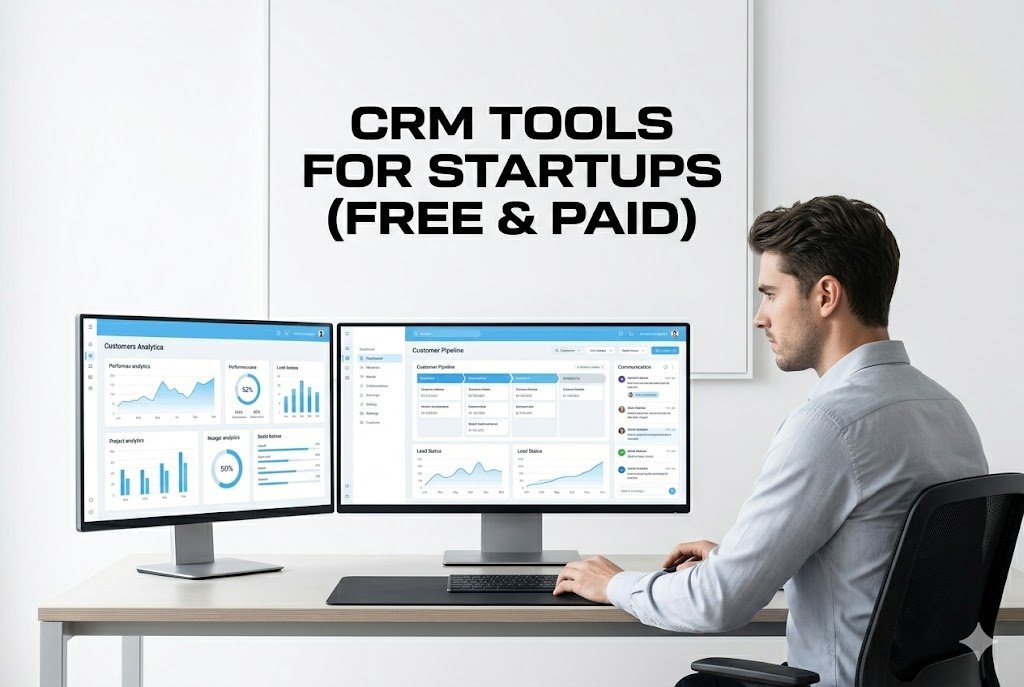
CRM tools for startups are essential for managing customer relationships, tracking sales, and improving overall business efficiency. In 2026, startups cannot rely on spreadsheets or manual tracking anymore—customer data needs to be organized, automated, and actionable.
A CRM (Customer Relationship Management) tool helps startups store customer information, track interactions, manage leads, and improve conversions. Whether you are a small founder or scaling a team, using the right CRM can significantly impact growth.
If you’re building a startup from scratch, you can also explore structured business insights on https://onegrasp.com/startups/ to understand how modern startups scale efficiently.
Startups operate in fast-moving environments where managing leads and customers manually becomes difficult very quickly. This is where CRM tools for startups provide a major advantage.
They help you:
Track leads and sales pipelines
Manage customer communication
Automate repetitive tasks
Improve customer retention
Without a CRM system, startups often lose potential customers due to poor follow-ups and disorganized data.
Best Free CRM Tools for Startups
1. HubSpot CRM
One of the most popular free CRM tools available today. It offers contact management, email tracking, and basic automation features.
Best for: Beginners and small startups Key advantage: Easy to use with powerful free features
2. Zoho CRM
A flexible CRM solution with both free and paid plans. It offers lead management, workflow automation, and analytics.
Best for: Growing startups Key advantage: Customization and scalability
3. Freshsales
Freshsales is known for its intuitive interface and AI-based insights. It provides lead scoring, email tracking, and pipeline management.
Best for: Sales-focused teams Key advantage: Built-in AI features
Best Paid CRM Tools for Startups
4. Salesforce
Salesforce is one of the most powerful CRM platforms in the world. It offers advanced automation, analytics, and integrations.
Best for: Scaling startups Key advantage: Enterprise-level features
5. Pipedrive
Pipedrive focuses on sales pipeline management. It is simple, visual, and highly effective for tracking deals.
Best for: Sales teams Key advantage: Easy pipeline visualization
6. Monday.com CRM
This tool combines project management with CRM functionality, making it useful for teams handling both operations and sales.
Best for: Teams managing multiple workflows Key advantage: Flexibility and collaboration
How to Choose the Right CRM Tools for Startups
Choosing the right CRM tools for startups depends on your business stage and needs.
Consider the following:
Budget: Start with free tools if you’re early-stage
Team size: Choose scalable tools if you plan to grow
Features: Focus on lead tracking, automation, and reporting
Ease of use: Simple tools help faster adoption
Many startups begin with free CRM tools and upgrade as their customer base grows.
Key Features to Look for in CRM Tools for Startups
Not all CRM tools are the same. The best CRM tools for startups should include:
Contact and lead management
Sales pipeline tracking
Email integration
Automation features
Analytics and reporting
These features help you manage your business efficiently and make data-driven decisions.
Strategic Insight
CRM tools are not just software—they are growth systems. Startups that implement CRM early gain a major advantage in customer management and sales efficiency.
While using CRM tools for startups, avoid these mistakes:
Choosing overly complex tools
Not training your team
Ignoring data updates
Using CRM only as a contact list instead of a sales tool
A CRM should be actively used, not just installed.
Conclusion
CRM tools for startups play a crucial role in building strong customer relationships and scaling efficiently. Whether you choose a free tool like HubSpot or a paid platform like Salesforce, the key is consistent usage.
Start simple, focus on your needs, and upgrade as your business grows. The right CRM system can turn leads into loyal customers and help your startup scale faster.
FAQs
CRM tools help startups manage customer relationships, track leads, and improve sales processes.
HubSpot and Zoho CRM are great for beginners, while Salesforce is ideal for scaling businesses.
Yes, many startups can operate efficiently using free CRM tools in the early stages.
When your customer base grows and you need advanced automation and analytics.
Yes, they help track leads, improve follow-ups, and increase conversion rates.

 May 6, 2026
 4 Min
 No Comment