May 11, 2026
 5 Min
 No Comment
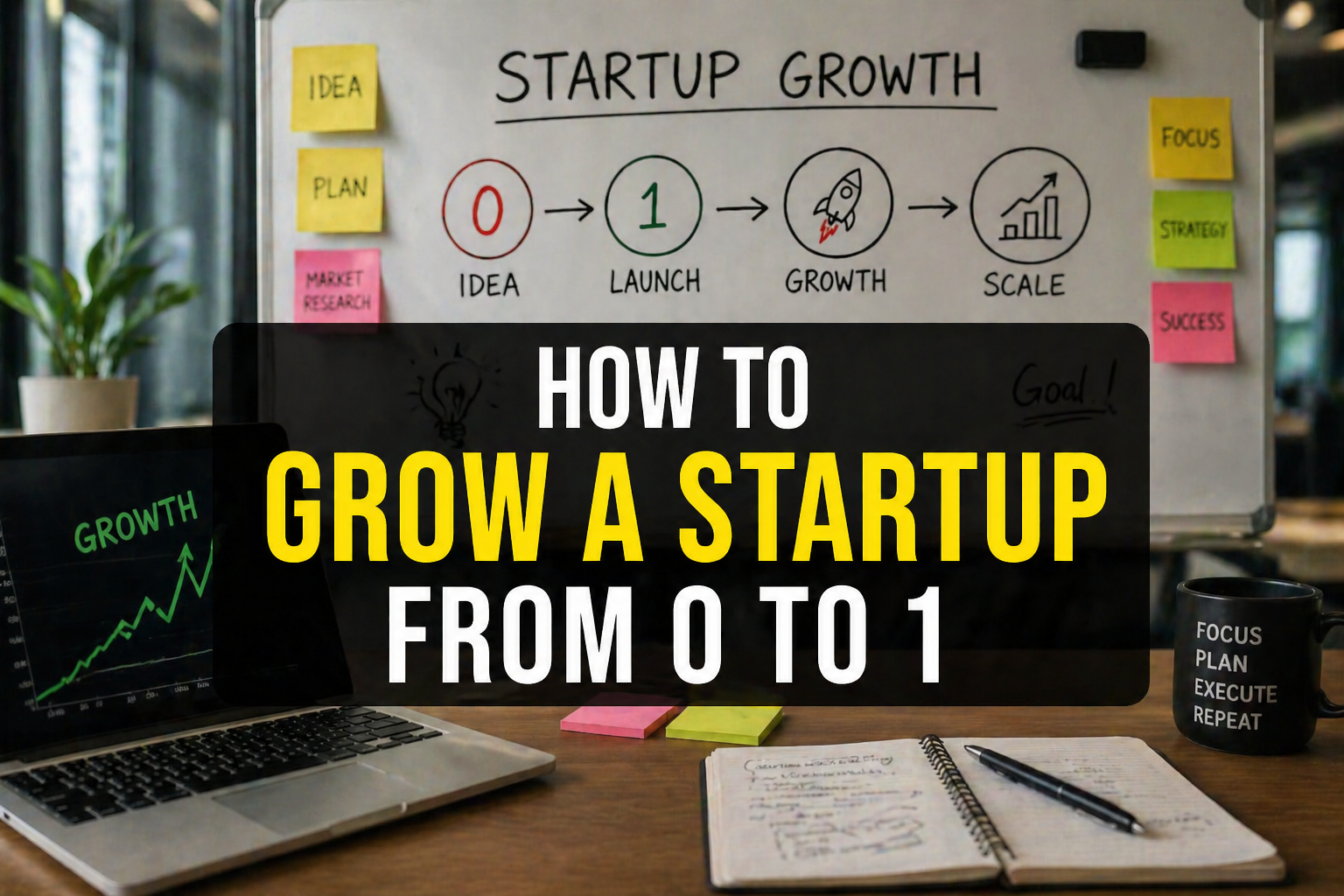
Building a startup from zero is one of the hardest but most rewarding journeys in business. Many startups begin with only an idea, limited resources, and a small team. However, successful companies grow because founders focus on solving real problems consistently.
The journey from 0 to 1 means transforming an idea into a real working business with customers, revenue, and growth potential.
Most startups fail during the early stage because they scale too fast, ignore customer feedback, or build products nobody truly needs. Therefore, understanding the right startup growth process is essential for long-term success.
If you want more startup growth guides and entrepreneurship insights, visit https://onegrasp.com/startups/
Understand the Problem Before Building
Many founders start by building products immediately. However, successful startups usually begin with deep problem understanding.
Before creating a product, ask:
- What exact problem are you solving?
- Who experiences this problem?
- How serious is the pain point?
- Are people willing to pay for a solution?
The best startups solve painful and recurring problems.
For example, companies like Uber, Airbnb, and Notion succeeded because they simplified real-world frustrations.
Understanding user pain points clearly gives startups a stronger foundation.
Validate Your Startup Idea Quickly
Validation is one of the most important steps in startup growth.
Instead of spending months building a perfect product, founders should test demand early.
You can validate ideas through:
- Landing pages
- Surveys
- Social media feedback
- Waitlists
- Prototype demos
- Small beta launches
Validation helps startups avoid wasting money and time.
Experts often recommend launching a minimum viable product (MVP) first rather than building large feature-heavy systems immediately.
Build a Minimum Viable Product (MVP)
An MVP is the simplest version of your product that solves the core problem.
The goal is not perfection. Instead, the goal is learning from real users quickly.
A good MVP should:
- Solve one main problem
- Be easy to use
- Collect user feedback
- Test market demand
Many famous startups initially launched with very basic products before improving gradually.
Moreover, startups that launch early often learn faster than businesses waiting too long.
Focus on Your First Customers
The first 100 customers are often the hardest to acquire.
In the beginning, founders should focus heavily on direct customer interaction.
Early-stage strategies include:
- Cold outreach
- Social media engagement
- Online communities
- Referral programs
- Founder-led sales
- Networking events
Listening carefully to early users helps improve the product rapidly.
Customer feedback often reveals problems founders never noticed initially.
Build Distribution Early
Many startups fail not because of bad products, but because nobody discovers them.
Therefore, distribution is just as important as product development.
Startups should build growth channels early such as:
- SEO content
- Social media marketing
- Email newsletters
- Community building
- Influencer partnerships
- Paid advertisements
Content marketing has become especially powerful for startup growth.
Founders who consistently create useful content usually build stronger trust and visibility.
Manage Cash Carefully
Financial discipline is critical during early startup stages.
Many startups fail because they spend aggressively before generating stable revenue.
Founders should focus on:
- Controlling unnecessary expenses
- Maintaining runway
- Tracking cash flow
- Prioritizing revenue-generating activities
Lean startups usually survive longer and adapt better during uncertain market conditions.
In addition, investors increasingly prefer startups with sustainable growth strategies.
Build a Strong Team Slowly
Hiring too quickly is one of the biggest startup mistakes.
Instead of building large teams immediately, founders should hire carefully based on actual business needs.
A strong early startup team usually includes people who are:
- Adaptable
- Problem-solvers
- Mission-driven
- Comfortable with uncertainty
Culture matters significantly during early startup growth.
Small high-performing teams often outperform large inefficient teams.
Expert Insight and Analysis
Startup experts believe consistency matters more than sudden viral growth.
Many successful startups spent years refining products before becoming widely known.
Experts also suggest founders should focus on:
- Customer retention
- Product quality
- Sustainable growth
- Market positioning
- Operational efficiency
The goal is not only acquiring users, but building long-term value.
Modern startup ecosystems reward businesses that solve meaningful problems consistently.
Latest Startup Growth Trends
Several major trends are shaping startup growth in 2026.
AI-Driven Operations
Startups increasingly use AI tools for automation, customer support, and analytics.
Community-Led Growth
Building loyal online communities has become a powerful growth strategy.
Lean Startup Models
Modern startups prefer smaller teams with efficient workflows.
Personal Branding for Founders
Founder-led content and social media visibility now play a major role in startup marketing.
Remote-First Companies
Remote operations allow startups to access global talent and reduce infrastructure costs.
These trends show that startups now prioritize adaptability and efficiency more than ever before.
Common Mistakes Founders Should Avoid
- Building products without validation
- Scaling too early
- Ignoring customer feedback
- Hiring large teams too fast
- Spending heavily without revenue clarity
What Founders Should Do Next
- Validate your idea with real users
- Build a simple MVP quickly
- Focus on customer acquisition early
- Create consistent marketing content
- Track finances and runway carefully
Conclusion
Learning how to grow startup from 0 to 1 requires patience, discipline, and continuous learning. Successful startups are built through problem-solving, customer understanding, and smart execution rather than sudden shortcuts.
Founders who validate ideas early, manage finances carefully, and focus on customer needs usually create stronger long-term businesses.
In today’s competitive startup ecosystem, sustainable growth and adaptability are becoming more valuable than aggressive scaling alone.
The startups that survive are often the ones that learn, improve, and execute consistently over time.
FAQs
It refers to transforming an idea into a real functioning business with customers and revenue.
Many startups fail due to poor validation, cash flow issues, or lack of market demand.
An MVP is a minimum viable product designed to test market demand with basic features.
Customer feedback helps startups improve products and identify market needs faster.
Early startups often prioritize growth, but sustainable financial management remains essential.