May 19, 2026
 7 Min
 No Comment
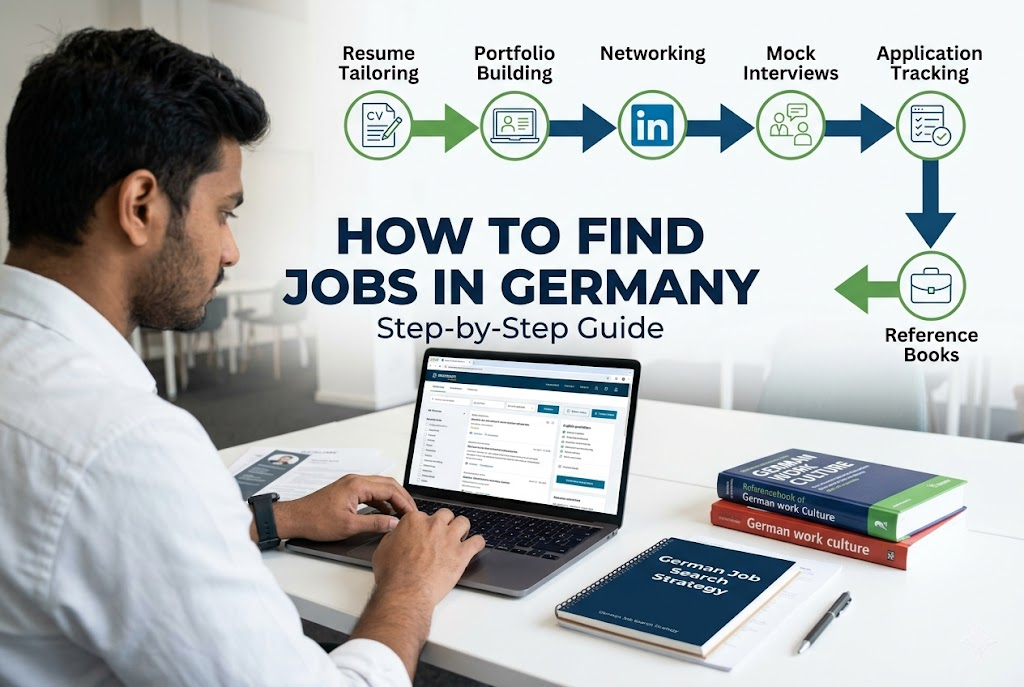
For many international students, graduating from a German university is only the beginning of a much larger goal — building a successful career in Europe. Germany has become one of the best countries for international graduates because of its strong economy, skilled worker shortages, and growing demand for technical talent. However, finding a job after graduation is not automatic.
The Germany jobs after study process requires planning, strategy, networking, and understanding how the German job market actually works. Many students assume that simply earning a German degree guarantees employment. In reality, students who prepare early, build practical skills, and understand employer expectations usually achieve far better outcomes.
Germany currently faces major shortages in:
- Software engineering
- Healthcare
- Artificial intelligence
- Data science
- Mechanical engineering
- Skilled manufacturing
- Renewable energy
According to the Make it in Germany Official Portal, Germany actively encourages international graduates to remain in the country through post-study work pathways and skilled migration programs.
For Indian students especially, Germany offers a rare combination of affordable education and long-term career potential. But success depends heavily on preparation.
Step 1: Understand Germany’s Post-Study Work Rules
Germany gives international graduates an important advantage.
After completing your degree, you can apply for an 18-month post-study residence permit to search for jobs related to your qualification. During this period, graduates can work in almost any role while searching for a permanent skilled position.
This is one of Germany’s biggest strengths compared to several other countries.
The residence permit allows students to:
- Attend interviews
- Work temporarily
- Build industry contacts
- Transition into long-term employment
Detailed information about post-study residence pathways is available through the German Federal Foreign Office.
Step 2: Start Job Preparation Before Graduation
One of the biggest mistakes students make is waiting until graduation to begin job hunting.
In Germany, employers value:
- Internships
- Practical projects
- Research experience
- Technical portfolios
- Industry exposure
Students who begin networking and applying for internships during their studies often receive job offers much faster.
The ideal timeline looks like this:
| Timeline | Recommended Action |
|---|---|
| First Semester | Build LinkedIn profile |
| Second Semester | Learn German basics |
| Third Semester | Apply for internships |
| Final Year | Attend career fairs |
| Before Graduation | Start full-time applications |
Early preparation significantly improves employability.
Step 3: Build an ATS-Friendly German CV
Germany uses a slightly different resume style compared to India.
German recruiters generally prefer:
- Clean formatting
- Clear structure
- Concise details
- Professional photos (sometimes optional)
- Practical achievements
A strong German CV should include:
- Education
- Technical skills
- Internships
- Certifications
- Research projects
- Language proficiency
Avoid overly colorful or complex resume designs.
Meanwhile, practical experience matters more than theoretical descriptions.
Step 4: Use the Best German Job Portals
Job portals play a huge role in Germany’s hiring system.
Some of the best platforms include:
| Job Portal | Best For |
|---|---|
| Professional networking | |
| StepStone | Corporate jobs |
| Indeed Germany | General job search |
| German professional networking | |
| Glassdoor | Company reviews |
| Honeypot | Tech recruitment |
| Academic Positions | Research careers |
The Federal Employment Agency Germany also provides official employment resources for international graduates.
Many companies post openings only in German, so learning basic German significantly expands job opportunities.
Step 5: Learn German Even If Your Course Was in English
This is one of the most important long-term career strategies.
While many international students study in English-taught programs, the German labor market still strongly values local language ability.
German skills improve:
- Interview success
- Workplace integration
- Networking
- Salary growth
- Long-term residence opportunities
In sectors like:
- Healthcare
- Manufacturing
- Administration
- Consulting
German proficiency is often essential.
However, tech startups and international companies may operate mainly in English.
Students targeting Germany long-term should ideally aim for at least B1–B2 German proficiency.
Step 6: Focus on High-Demand Industries
Germany’s strongest opportunities currently exist in industries facing labor shortages.
High-demand sectors include:
- Software engineering
- AI and machine learning
- Cybersecurity
- Mechanical engineering
- Renewable energy
- Healthcare
- Data analytics
- Industrial automation
According to discussions among international graduates in Germany, technical and analytical skills currently matter more than university rankings alone. (reddit.com)
Students who align themselves with shortage industries generally secure jobs faster.
Step 7: Attend Career Fairs and Networking Events
Germany’s hiring culture values direct interaction more than many students expect.
Career fairs help students:
- Meet recruiters directly
- Learn about company culture
- Understand hiring expectations
- Build professional connections
Many universities organize:
- Employer networking events
- Internship fairs
- Startup meetups
- Industry conferences
Networking often opens opportunities that never appear on public job portals.
Expert Insight: Skills and Adaptability Matter More Than Prestige
One major misconception among international students is believing that a degree alone guarantees employment.
In reality, Germany increasingly rewards:
- Practical problem-solving
- Technical specialization
- Adaptability
- Communication skills
- Internship experience
For example, a student with:
- Cloud computing skills
- AI certifications
- Internship projects
- Basic German proficiency
may outperform someone from a higher-ranked university with only theoretical knowledge.
Germany’s economy is becoming increasingly skills-driven.
Students who combine academic learning with practical experience achieve the strongest career outcomes.
Latest Trends and Updates
Germany is actively expanding skilled migration reforms to attract international graduates into engineering, AI, cybersecurity, healthcare, and renewable energy sectors.

AI-driven hiring systems are becoming increasingly common, meaning ATS-friendly resumes and LinkedIn optimization now play a major role in recruitment success.

German employers are also placing greater emphasis on internships, project portfolios, and practical experience rather than academic grades alone.

English-speaking jobs are growing rapidly in Berlin, Munich, and Frankfurt, especially in technology startups and multinational companies.

Meanwhile, international graduates with German language proficiency continue to enjoy significantly better long-term employment and integration opportunities.
Real-Life Example: How Early Preparation Changed the Outcome
Ankit came to Germany for a master’s in data science. During his first semester, he focused on improving his LinkedIn profile and learning German basics.
By his second semester, he secured a student internship with a Berlin startup. That internship later became a full-time offer before graduation.
Meanwhile, several classmates who delayed networking and internship applications struggled for months after completing their degrees.
The difference was not intelligence — it was preparation timing and market awareness.
Pros and Cons of Finding Jobs in Germany After Study
| Pros | Cons |
|---|---|
| Strong demand for skilled workers | German language barriers |
| Affordable education leads to lower debt | Competitive hiring in major cities |
| EU Blue Card opportunities | Bureaucratic paperwork |
| Excellent work-life balance | Slower recruitment processes |
| Strong engineering and tech sectors | Cultural adaptation challenges |
Beginner vs Expert Approach to Job Hunting in Germany
| Beginner Approach | Expert Approach |
|---|---|
| Starts applying after graduation | Prepares during studies |
| Focuses only on degrees | Builds practical skills |
| Ignores networking | Attends career fairs |
| Avoids German language learning | Learns German gradually |
| Uses generic resumes | Creates ATS-optimized CVs |
What to Do Next If You Want a Job in Germany
If your goal is long-term employment in Germany:
- Learn at least basic German
- Build internship experience early
- Optimize LinkedIn and CV
- Focus on shortage industries
- Attend networking events
- Create technical project portfolios
- Understand visa and Blue Card requirements
Explore more practical visa and university advice through OneGrasp Abroad Planning Resources.
Quick Checklist for International Graduates
- Apply for post-study residence permit
- Build ATS-friendly CV
- Improve German language skills
- Apply for internships early
- Attend university career fairs
- Focus on high-demand industries
- Optimize LinkedIn profile
Conclusion
Germany offers one of Europe’s strongest career ecosystems for international students — but success rarely happens by accident.
Students who start early, build practical experience, learn German gradually, and align themselves with high-demand industries usually achieve the best outcomes. Meanwhile, those who rely only on degrees often struggle in a competitive job market.
The German economy is actively searching for skilled international talent. For prepared graduates, this creates enormous opportunities not only for employment, but also for long-term career growth and European settlement.
Finding a job in Germany after study is absolutely possible — if you approach the process strategically.
FAQs
Yes, especially in high-demand sectors like IT, engineering, healthcare, and AI, though preparation and language skills matter greatly.
International graduates can usually stay for up to 18 months to search for skilled employment.
Not always in tech and multinational companies, but German skills significantly improve long-term opportunities.
Berlin, Munich, Frankfurt, Hamburg, and Stuttgart offer strong opportunities across different industries.
Yes. Skilled workers can eventually qualify for long-term residence and permanent settlement pathways.