May 20, 2026
 7 Min
 No Comment
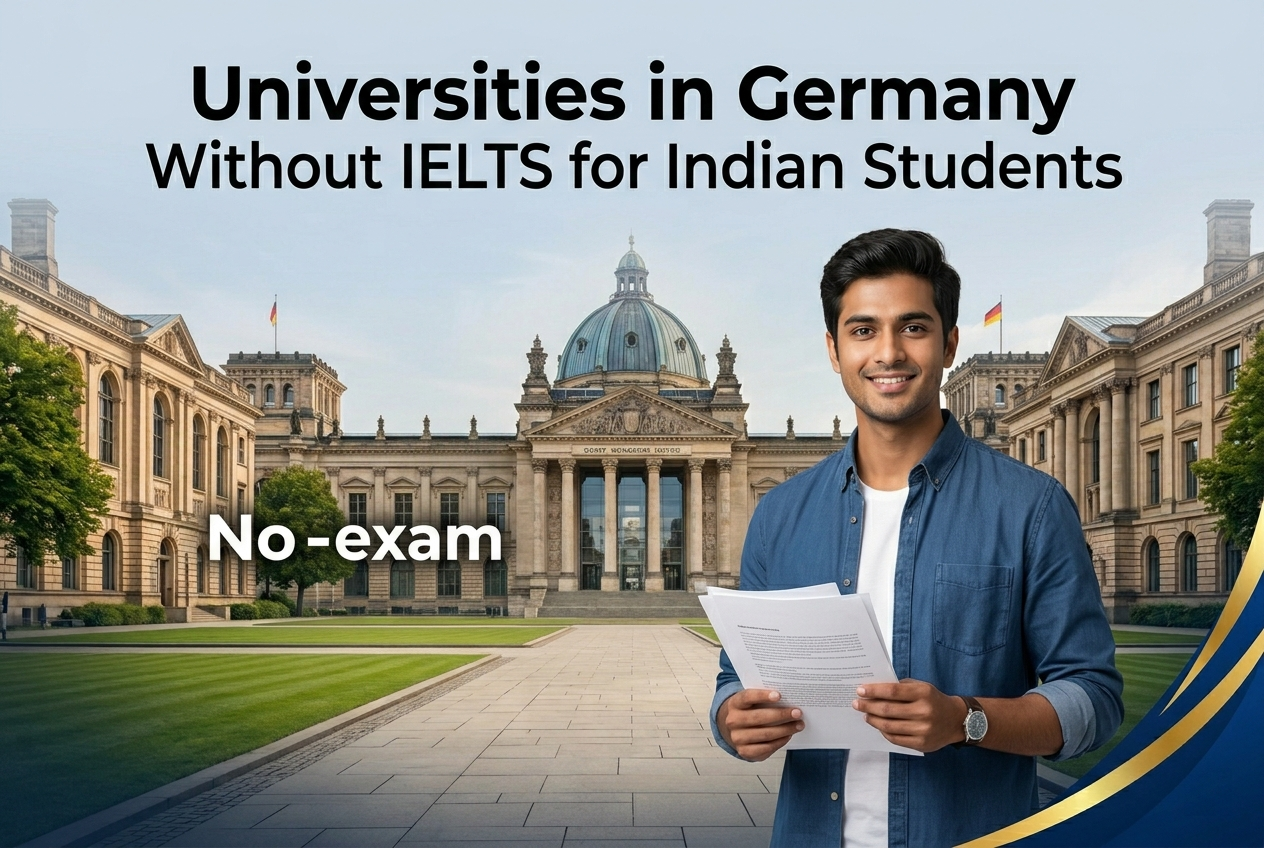
Germany has become one of the top destinations for Indian students because of its affordable education system, strong global reputation, and growing career opportunities. However, many students worry about one major requirement during the admission process:
Is IELTS mandatory for studying in Germany?
The good news is that several Germany universities without IELTS options are available for Indian students in 2026. Many universities accept alternative proof of English proficiency instead of IELTS, especially if students previously studied in English-medium institutions.
This flexibility has made Germany even more attractive for international applicants.
According to the Study in Germany Official Portal, admission requirements vary depending on the university and program, meaning students should carefully check individual university criteria instead of assuming IELTS is compulsory everywhere.
Is IELTS Mandatory for Germany?
No, IELTS is not always mandatory.
Many German universities accept alternatives such as:
- Medium of Instruction (MOI) certificate
- Previous education in English
- TOEFL scores
- Duolingo English Test (some universities)
- Internal university interviews
However, requirements differ by:
- University
- Program
- Degree level
- English-taught or German-taught courses
Students should always verify official admission criteria before applying.
What Is an MOI Certificate?
An MOI (Medium of Instruction) certificate is a document issued by your previous school or university confirming that your education was conducted in English.
Many German universities accept this certificate instead of IELTS for:
- Bachelor’s programs
- Master’s programs
- Certain technical courses
This is especially common for Indian students from English-medium colleges.
Top Universities in Germany Without IELTS
Several German universities may accept students without IELTS depending on profile and program.
Popular options often include:
- University of Siegen
- University of Kaiserslautern
- University of Giessen
- Free University of Berlin
- University of Koblenz and Landau
- Esslingen University of Applied Sciences
- Hochschule Stralsund
- University of Passau
Admission policies can change yearly, so students must verify official university websites before applying.
Germany Universities Without IELTS: Alternative English Proof
Many universities now offer flexible English verification methods because international student demand is rising globally.
Accepted alternatives may include:
- MOI certificate
- TOEFL
- Cambridge English qualifications
- Duolingo English Test
- Online interviews
- Previous international education
Some universities conduct direct communication assessments during admission review.
English-Taught Programs in Germany
Germany offers thousands of English-taught programs, especially in:
- Engineering
- Data science
- Artificial intelligence
- Business management
- Computer science
According to the DAAD Germany Official Portal, English-taught master’s programs continue expanding to attract global talent.
This growth has also increased flexibility in English proficiency evaluation.
Admission Requirements Beyond IELTS
Even if IELTS is waived, students still need strong application documents.
Typical requirements include:
- Academic transcripts
- SOP (Statement of Purpose)
- Passport
- Resume/CV
- Recommendation letters
- MOI certificate (if applicable)
Technical programs may also require:
- Relevant academic background
- Subject prerequisites
- Portfolio or projects
Germany Student Visa Without IELTS
This is where students must be careful.
Even if universities waive IELTS, visa officers may still evaluate English proficiency during the visa process.
Students may need:
- MOI certificate
- Admission letter
- Communication ability during visa interview
Visa approval depends on overall profile strength, not only IELTS.
According to the German Missions in India, students should ensure all academic and language documents are properly prepared before visa application.
Benefits of Studying in Germany Without IELTS
For many students, IELTS waiver options provide:
- Faster application process
- Reduced exam pressure
- Lower application costs
- Flexible admission pathways
This especially helps students with:
- Strong academics
- English-medium education background
- Technical skills
However, communication skills still remain extremely important after arrival in Germany.
Challenges Students Should Understand
Skipping IELTS does not remove all communication challenges.
Students may still face:
- Academic writing difficulties
- Presentation challenges
- Cultural adaptation
- German language barriers in daily life
Meanwhile, many jobs in Germany still prefer:
- German communication ability
- Practical teamwork skills
Students should continue improving English and German even if IELTS is waived.
Expert Insight: IELTS Waiver Is Helpful, But Skills Matter More
Many students focus too heavily on avoiding IELTS instead of building actual communication skills.
German universities and employers care more about:
- Real communication ability
- Academic readiness
- Practical competence
A student with strong speaking, writing, and professional communication skills will always perform better than someone who only “avoided the exam.”
Students should view IELTS waiver as a convenience — not as a replacement for communication preparation.
Common Mistakes Students Make
- Assuming every university waives IELTS
- Ignoring visa communication requirements
- Submitting weak MOI certificates
- Applying without checking official university criteria
- Neglecting German language preparation
Many admission problems happen because students rely on outdated information from unofficial sources.
What to Do Next Before Applying
Before applying to universities in Germany without IELTS:
- Research university-specific requirements
- Request MOI certificate early
- Improve English communication skills
- Learn basic German
- Prepare strong SOP and CV
- Verify visa documentation carefully
- Apply early for competitive intakes
You can also explore additional international education resources through OneGrasp Study Abroad Insights.
Latest Trends and Updates
Germany is increasingly offering flexible admission pathways to attract more international students in technology, engineering, and AI-related fields.

Many universities now evaluate overall communication ability instead of relying only on standardized English tests.

Online interviews, MOI certificates, and alternative English assessments are becoming more common during admissions.

At the same time, German employers continue prioritizing practical communication skills and teamwork ability alongside academic qualifications.

Students are also increasingly combining English-taught degrees with German language learning to improve long-term career opportunities.
Real-Life Example
Ravi, an engineering student from India, wanted to apply for a master’s program in Germany but had not taken IELTS.
Instead of delaying his application, he:
- Obtained an MOI certificate from his university
- Applied to universities accepting English-medium education proof
- Prepared a strong SOP and project portfolio
He later secured admission into an English-taught engineering program and successfully obtained his visa after demonstrating clear communication ability during the process.
Pros and Cons of Studying in Germany Without IELTS
| Pros | Cons |
|---|---|
| Faster application process | Not accepted by all universities |
| Saves exam costs | Visa officers may still evaluate English |
| Flexible admission pathways | Communication skills still necessary |
| Helpful for English-medium students | German language challenges remain |
| Easier application preparation | Requirements vary heavily |
Beginner vs Expert Approach
| Beginner Thinking | Expert Thinking |
|---|---|
| Focuses only on avoiding IELTS | Focuses on communication ability |
| Applies randomly | Verifies official requirements |
| Ignores visa preparation | Builds complete profile carefully |
| Avoids language learning | Learns English and basic German |
| Relies on outdated online advice | Uses official university sources |
Quick Checklist Before Applying
- Verify IELTS waiver eligibility
- Obtain MOI certificate
- Prepare SOP and CV
- Research English-taught programs
- Improve speaking skills
- Learn basic German
- Prepare visa documents carefully
Conclusion
Germany has made international education more accessible by offering flexible English proficiency requirements for many programs.
For Indian students, universities in Germany without IELTS provide excellent opportunities to:
- Save time
- Reduce exam pressure
- Access affordable global education
- Build international careers
However, avoiding IELTS should never mean ignoring communication skills.
Students who:
- Prepare strong application profiles
- Improve practical communication
- Learn basic German
- Verify official admission requirements
usually achieve the best long-term outcomes.
In Germany, real skills and preparation matter far more than simply avoiding an English exam.
FAQs
Yes. Many universities accept MOI certificates or alternative English proof.
Yes, several German universities accept Medium of Instruction certificates.
No. Requirements vary depending on university and program.
Yes, but visa officers may still assess communication ability and documentation.
Yes. Germany offers thousands of English-taught programs, especially for master’s degrees.