May 20, 2026
 6 Min
 No Comment
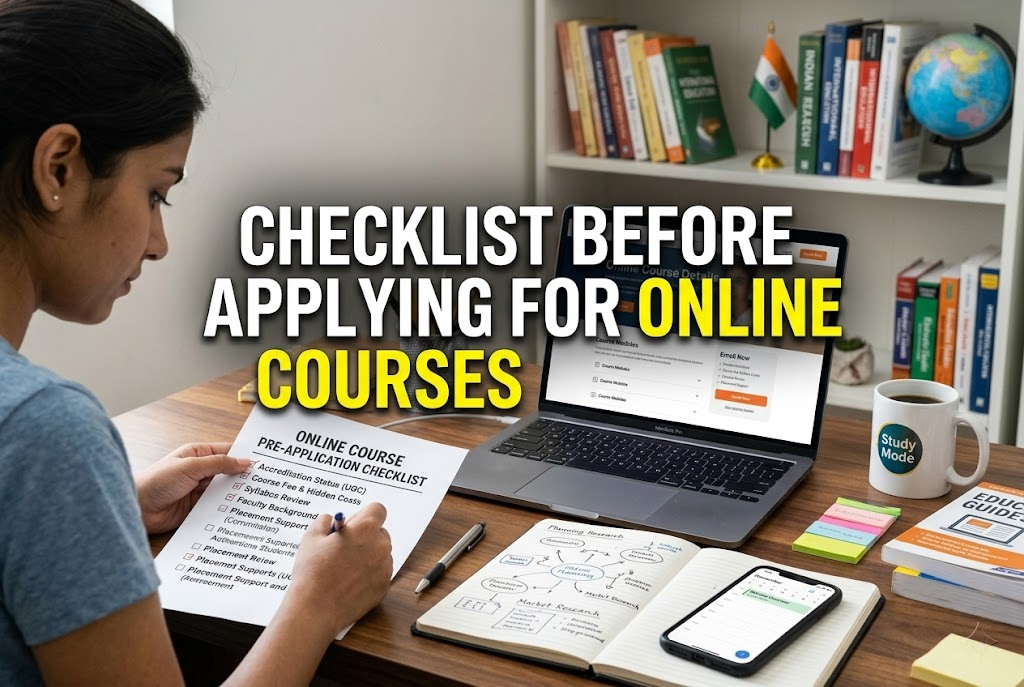
Online education in India has grown rapidly over the past few years. From online degrees and certifications to AI, coding, MBA, and government exam preparation programs, students now have thousands of options available at their fingertips.
However, this explosion of online learning has also created confusion.
Many students enroll in expensive programs without checking accreditation, placement support, learning quality, or career relevance. As a result, they often waste time, money, and valuable career opportunities.
This is why having a proper checklist before online courses becomes extremely important.
This guide explains the most important things students and working professionals should verify before joining any online course or university in 2026.
According to UGC India Official Guidelines, students should always verify recognition and approval status before enrolling in online degree programs.
Why a Proper Online Course Checklist Matters
The online education market is growing quickly because learners want:
- Flexible learning
- Affordable education
- Career-focused skills
- Remote accessibility
- Faster upskilling
However, not all platforms deliver genuine value.
Some courses provide:
- Poor-quality content
- Fake placement promises
- Unrecognized certificates
- Weak mentorship
- Outdated curriculum
Therefore, careful evaluation is critical before investing time and money.
For students exploring trusted career guidance, certifications, and modern education opportunities, OneGrasp’s education platform also provides useful resources related to online learning and skill development.
Checklist Before Online Courses: Most Important Things to Verify
Check UGC or Accreditation Approval
This is the most important step.
Always verify whether the university or institution is officially recognized.
For degrees in India:
- Verify UGC-DEB approval
- Check NAAC accreditation
- Confirm AICTE approval if applicable
Unrecognized courses may create problems during:
- Government job applications
- Higher education admissions
- Corporate verification processes
Understand Your Career Goal First
Many students buy trending courses without knowing why they need them.
Before enrolling, ask yourself:
- Do I want a job?
- Career switch?
- Promotion?
- Freelancing?
- Government exams?
- International opportunities?
Your goal should decide the course — not advertisements.
Research Placement Support Carefully
Many platforms advertise “100% placement,” but students rarely verify the actual details.
Check:
- Real placement statistics
- Alumni reviews
- Hiring partners
- Internship opportunities
- Resume support
- Interview preparation
According to professional discussions on LinkedIn Career Resources, practical projects and networking often matter more than certificates alone.
Evaluate Course Curriculum Properly
A modern curriculum should include:
- Industry-relevant tools
- Updated technologies
- Practical projects
- Real-world case studies
- Hands-on assignments
Avoid programs using outdated content.
For example:
- AI courses should include modern AI tools
- Marketing courses should include SEO and analytics
- Coding courses should include real projects
Check Faculty and Mentor Quality
Good instructors significantly improve learning quality.
Research:
- Faculty experience
- Industry background
- Student reviews
- Teaching style
- Mentor accessibility
Experienced mentors often provide career insights beyond theoretical lessons.
Compare Fees and Hidden Costs
Some platforms advertise low fees initially but later add:
- Examination charges
- Certification fees
- LMS access fees
- Placement fees
Always check total program cost carefully.
Verify Learning Flexibility
Working professionals and students should evaluate:
- Live classes vs recorded sessions
- Mobile learning access
- Flexible schedules
- Exam flexibility
- Course duration
Flexibility becomes especially important for busy learners.
Check Alumni Reviews and Success Stories
Real student experiences reveal more than advertisements.
Research:
- LinkedIn alumni outcomes
- Reddit discussions
- Google reviews
- YouTube student feedback
Community-based discussions often provide more honest insights.
According to multiple Reddit education discussions, students increasingly prioritize mentorship quality and practical implementation over marketing promises. (reddit.com)
Compare Free vs Paid Courses
| Free Courses | Paid Courses |
|---|---|
| Good for exploration | Better structured learning |
| Lower financial risk | Strong mentorship |
| Flexible learning | Career support |
| Limited accountability | More practical guidance |
| Useful for beginners | Often industry-focused |
The best choice depends on goals and learning style.
Expert Insight: Skills Matter More Than Certificates Alone
One major shift in modern hiring is the growing focus on practical implementation.
Employers increasingly evaluate:
- Portfolio quality
- Real projects
- Problem-solving ability
- Communication skills
- Adaptability
This means students should avoid “certificate collecting” without actual skill development.
For example:
- A developer with GitHub projects
- A marketer with campaign experience
- A data analyst with dashboards
often gains stronger opportunities than someone with multiple certificates only.
Latest Trends and Updates
AI-powered learning systems are increasingly helping students personalize skill development paths and identify weaknesses more efficiently.

Online universities and edtech platforms are expanding industry-focused certifications in AI, cybersecurity, cloud computing, and analytics.

Employers are increasingly valuing practical portfolios, internships, and real-world projects over theoretical certifications alone.

Flexible learning models combining recorded lectures, live mentorship, and mobile-first education are becoming the new standard.

Students are increasingly researching alumni outcomes and placement transparency before enrolling in expensive online programs.
Real-Life Example: Smart Evaluation Preventing a Bad Decision
Rahul planned to enroll in an expensive online coding bootcamp after seeing social media advertisements promising guaranteed placements.
However, before paying fees, he researched alumni feedback, LinkedIn profiles, and Reddit discussions.
He discovered:
- Weak placement support
- Outdated curriculum
- Poor mentorship quality
Instead, he chose a more affordable platform with stronger project-based learning and mentor support.
Within one year, he secured an internship and eventually a junior developer role.
His experience highlights why proper research matters before enrollment.
Common Mistakes Students Should Avoid
Choosing Based Only on Advertisements
Marketing campaigns rarely reveal complete reality.
Ignoring Accreditation
Recognition verification is essential for degree validity.
Buying Too Many Courses
Focus on one strong learning path instead of random certifications.
Ignoring Practical Learning
Theory alone rarely creates employable skills.
Following Social Media Hype
Trending courses may not align with your strengths or goals.
Beginner vs Smart Learner Approach
| Beginner Approach | Smart Learner Approach |
|---|---|
| Follows trends blindly | Researches career demand |
| Chooses based on ads | Verifies credibility |
| Focuses only on certificates | Builds practical skills |
| Ignores alumni reviews | Researches outcomes |
| Studies passively | Creates projects consistently |
Pros and Cons of Online Courses
| Pros | Cons |
|---|---|
| Flexible learning | Requires self-discipline |
| Affordable education | Quality varies widely |
| Learn from anywhere | Some programs lack credibility |
| Career-focused skills | Information overload |
| Supports working professionals | Placement promises vary |
What to Do Next (Actionable Steps)
Before joining any online course:
- Define your career goal clearly
- Verify accreditation carefully
- Compare multiple platforms
- Research alumni outcomes
- Evaluate curriculum quality
- Build practical projects during learning
- Avoid emotional buying decisions
Most importantly, focus on long-term value instead of short-term marketing promises.
Quick Checklist
- Verify UGC approval
- Define career goals
- Compare curriculum quality
- Research placements
- Check mentor quality
- Analyze fee transparency
- Read alumni reviews
- Focus on practical learning
Conclusion
Online education offers incredible opportunities for students and professionals in India. However, success depends heavily on choosing the right course, university, or platform strategically.
A proper checklist before online courses can help learners avoid scams, save money, improve career outcomes, and build genuinely valuable skills.
In 2026, the smartest learners are not joining random trending programs — they are carefully selecting education pathways aligned with future demand, practical implementation, and long-term career growth.
Making informed decisions today can significantly improve opportunities tomorrow.
FAQs
Always verify accreditation, curriculum quality, placement support, mentor experience, and alumni reviews.
Yes, certificates from recognized institutions and platforms are generally accepted.
You can verify universities through the UGC Official Website
Some affordable courses provide excellent value, but quality verification is important.
Yes, especially when combined with practical projects and real-world skills.