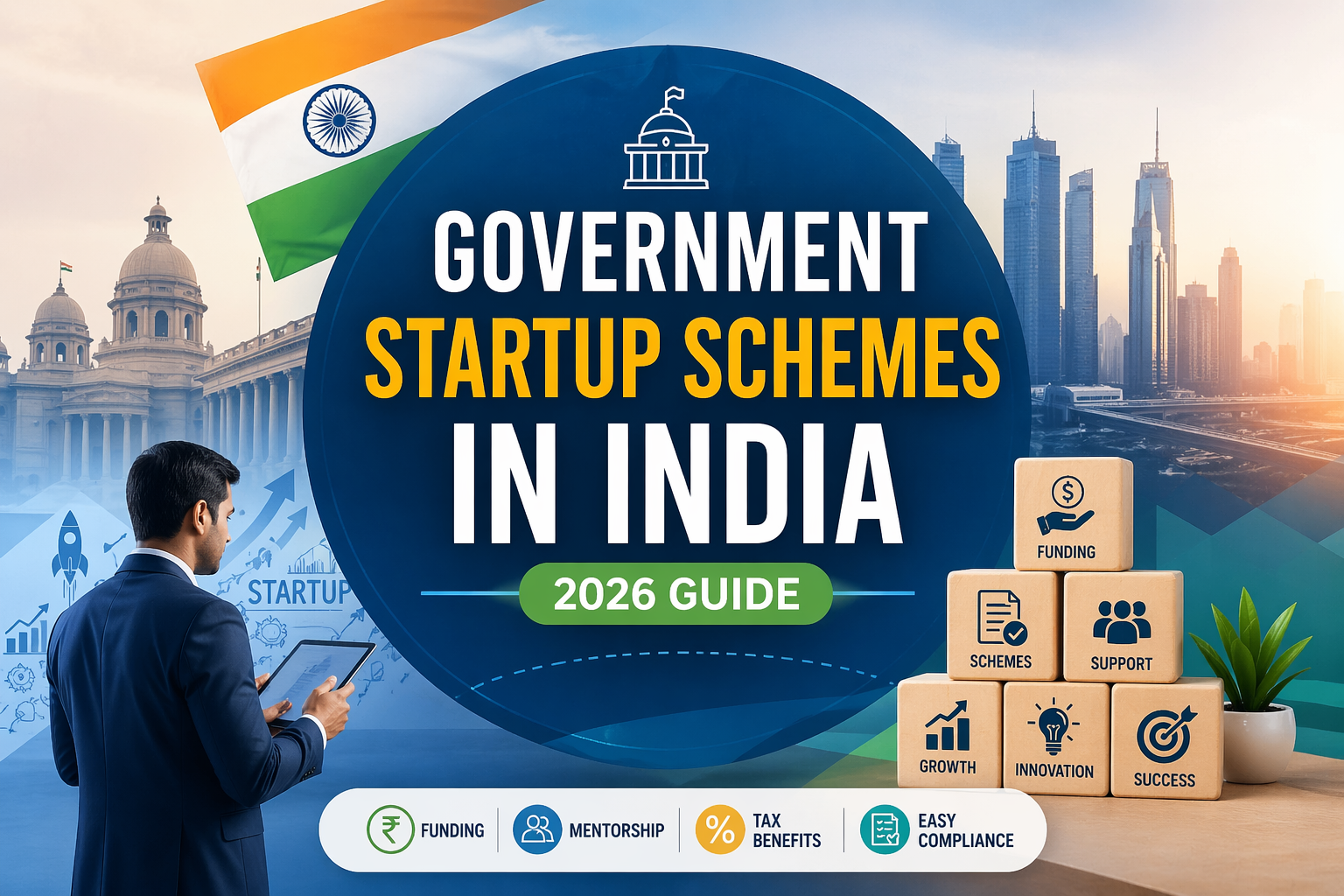
The Startup India Scheme is one of the biggest government initiatives launched to support entrepreneurs and strengthen India’s startup ecosystem. It was introduced to encourage innovation, generate employment, and simplify the startup journey for founders.
Understanding Startup India Scheme Guide helps entrepreneurs access tax benefits, funding support, easier compliance systems, and official startup recognition.
In 2026, the Indian startup ecosystem continues to grow rapidly, with government-backed support becoming more accessible for early-stage businesses.
Startup experts believe the Startup India initiative has significantly improved the entrepreneurial environment in India.
The scheme has:
Increased startup awareness
Improved funding access
Encouraged innovation culture
Simplified startup registration processes
However, experts also believe founders should focus beyond government benefits and prioritize sustainable business models, customer acquisition, and financial discipline.
Government support helps, but long-term success still depends on execution quality.
Latest Startup India Trends in 2026
India’s startup ecosystem is evolving rapidly in 2026, creating major opportunities for entrepreneurs.
AI and deep-tech startups are receiving stronger government attention due to growing global competition in technology sectors.
Tier-2 and Tier-3 cities are becoming major startup hubs because of lower operational costs, increasing digital adoption, and government innovation programs.
Women-led startups are receiving increased funding and mentorship support through specialized startup initiatives and ecosystem partnerships.
Green technology and climate-focused startups are also gaining policy-level encouragement as sustainability becomes a national and global priority.
Another major trend is the rise of startup incubators connected with universities and private innovation centers, helping founders access mentorship and funding earlier.
The government is also improving digital approval systems, reducing paperwork and making startup registration faster compared to previous years.
Investors are now focusing more on startups with stronger profitability potential rather than only rapid user growth.
In 2026, startups that combine innovation, operational efficiency, and sustainable scaling are attracting the most attention from investors and ecosystem partners.
Common Mistakes Founders Make
Applying without proper documentation
Assuming all startups automatically qualify
Ignoring compliance requirements
Focusing only on tax benefits
Delaying DPIIT recognition unnecessarily
What Startup Founders Should Do Next
Register business legally first
Check Startup India eligibility carefully
Prepare proper documentation
Apply for DPIIT recognition early
Focus on innovation and scalable growth
Conclusion
Understanding Startup India Scheme Guide is essential for entrepreneurs planning to build startups in India.
The initiative has significantly improved startup support through tax benefits, funding opportunities, easier compliance, and innovation-focused policies.
In 2026, India continues strengthening its position as one of the world’s fastest-growing startup ecosystems.
Founders who combine government support with strong execution, customer focus, and financial discipline are more likely to build sustainable and scalable businesses.
FAQs
It is a government initiative supporting startups through benefits, funding, and easier compliance.
Eligible startups registered as companies, LLPs, or partnerships focusing on innovation.
Basic registration on the platform is free, but business incorporation costs may apply.
It is official government startup recognition under the Startup India initiative.
Yes, eligible startups may receive specific tax exemptions.

 May 12, 2026
 5 Min
 No Comment